
Science
Brown University Researchers Enhance High-Res Imaging Using Motion Blur

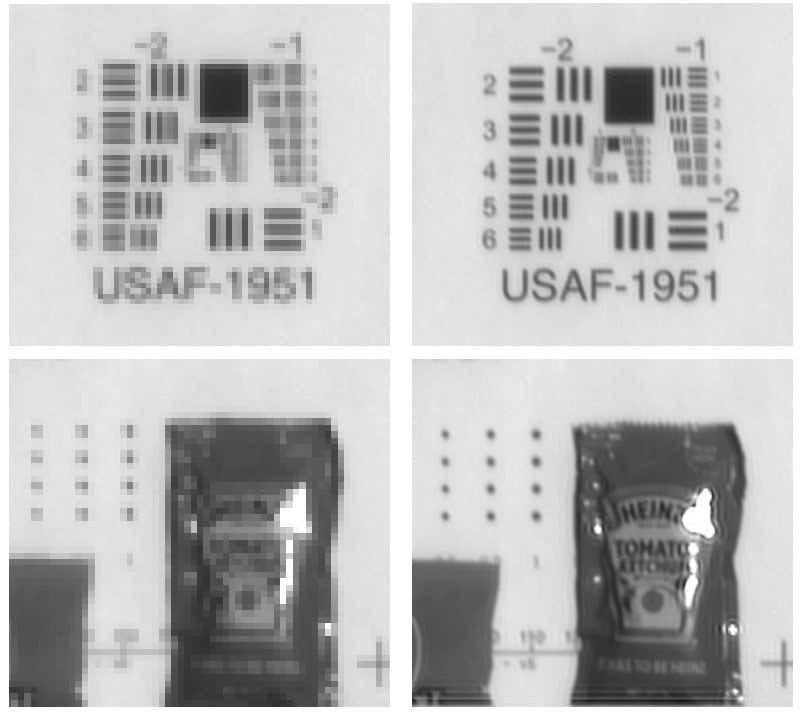
Researchers at Brown University have developed an innovative algorithm that leverages motion blur to enhance the resolution of images taken by moving cameras. This breakthrough could enable standard cameras to produce images with gigapixel-quality, offering significant implications for fields such as biological imaging and archival work.
The study, led by team co-leader Rashid Zia and his colleague Pedro Felzenszwalb, addresses the limitations of conventional techniques that rely on mathematical models to reconstruct high-resolution images from lower-resolution counterparts. Traditional methods yield only modest improvements in image quality, particularly when the original images are blurred due to camera movement.
Revolutionizing Computational Photography
The researchers focused on decoding the higher-resolution information captured during camera motion. Their algorithm utilizes the “tracks” left by light sources, allowing for a precise reconstruction of fine details on a sub-pixel grid. Zia explained, “We were interested in the limits of computational photography,” emphasizing the potential of their method to recover more information than previously believed possible.
Felzenszwalb noted that prior theoretical research suggested the technique might not be feasible. “We show that there were a few assumptions in those earlier theories that turned out not to be true,” he remarked, highlighting the significance of their findings as a proof of concept.
During testing, the algorithm successfully transformed images captured while the camera was in motion into higher-resolution versions. In one experiment, a standard camera recorded a sequence of images across a grid of high-resolution locations. Another scenario involved capturing multiple images while the sensor moved, simulating conditions applicable to aerial or satellite imaging.
Expanding Applications in Various Fields
The implications of this technology are vast. Zia noted, “Our results are especially interesting for applications where one wants high resolution over a relatively large field of view.” This capability is critical across various scales, from microscopy to satellite imaging. The researchers also identified potential applications in archival photography of artworks and artifacts, as well as photography from moving aircraft.
Looking ahead, the team plans to further explore the mathematical limits of their approach and conduct practical demonstrations. Zia mentioned the intention to share results from experiments using consumer cameras and mobile devices, as well as scientific-grade CCDs and thermal focal plane arrays.
Felzenszwalb added, “While there are existing systems that cameras use to take motion blur out of photos, no one has tried to use that to actually increase resolution. We’ve shown that’s something you could definitely do.”
The groundbreaking study was presented at the International Conference on Computational Photography and is available on the arXiv pre-print server, marking a significant advancement in the field of imaging technology.

Cattle Showcases Thrive at RUAS Winter Fair 2023

UK and US Strike Zero Tariff Agreement on Pharmaceuticals

Maya Jama Stuns in Strapless Ensemble at Qatar Grand Prix

Russia and Saudi Arabia Launch Visa-Free Travel Agreement

ISOLDE Facility Marks 10 Years of Advancements in Nuclear Research

Voters Demand Resignation of Chancellor Rachel Reeves Over Tax Hikes

Shoppers Save 30% on Marks & Spencer’s Viral Velvet Dress

Health Campaigners Urge End to Smoking Exemption for Lounges

Charity Shop Surprise: Woman Finds Joggers Worth £2,000 for £8

Iconic 90s TV Show House Hits Market for £1.1 Million

Milk Bank Urges Mothers to Donate for Premature Babies’ Health

Alessia Russo Signs Long-Term Deal with Arsenal Ahead of WSL Season

Shoppers Flock to Discounted Neck Pillow on Amazon for Travel Comfort

Museums Body Critiques EHRC Proposals on Gender Facilities

Trump Visits Europe: Business, Politics, or Leisure?

Japanese Teen Sorato Shimizu Breaks U18 100m Record in 10 Seconds

Couple Shares Inspiring Love Story Defying Height Stereotypes

Anglian Water Raises Concerns Over Proposed AI Data Centre
-
 Entertainment2 months ago
Iconic 90s TV Show House Hits Market for £1.1 Million
-
 Lifestyle4 months ago
Milk Bank Urges Mothers to Donate for Premature Babies’ Health
-
 Sports3 months ago
Alessia Russo Signs Long-Term Deal with Arsenal Ahead of WSL Season
-
 Lifestyle4 months ago
Shoppers Flock to Discounted Neck Pillow on Amazon for Travel Comfort
-
 Politics4 months ago
Museums Body Critiques EHRC Proposals on Gender Facilities
-
 Business4 months ago
Trump Visits Europe: Business, Politics, or Leisure?
-
 Lifestyle4 months ago
Japanese Teen Sorato Shimizu Breaks U18 100m Record in 10 Seconds
-
 Politics4 months ago
Couple Shares Inspiring Love Story Defying Height Stereotypes
-
 World4 months ago
Anglian Water Raises Concerns Over Proposed AI Data Centre
-

 Sports4 months ago
Bournemouth Dominates Everton with 3-0 Victory in Premier League Summer Series
-

 World4 months ago
Wreckage of Missing Russian Passenger Plane Discovered in Flames
-

 Lifestyle4 months ago
Shoppers Rave About Roman’s £42 Midi Dress, Calling It ‘Elegant’