
Science
Dogs Demonstrate Ability to Sort Toys by Function, Study Reveals

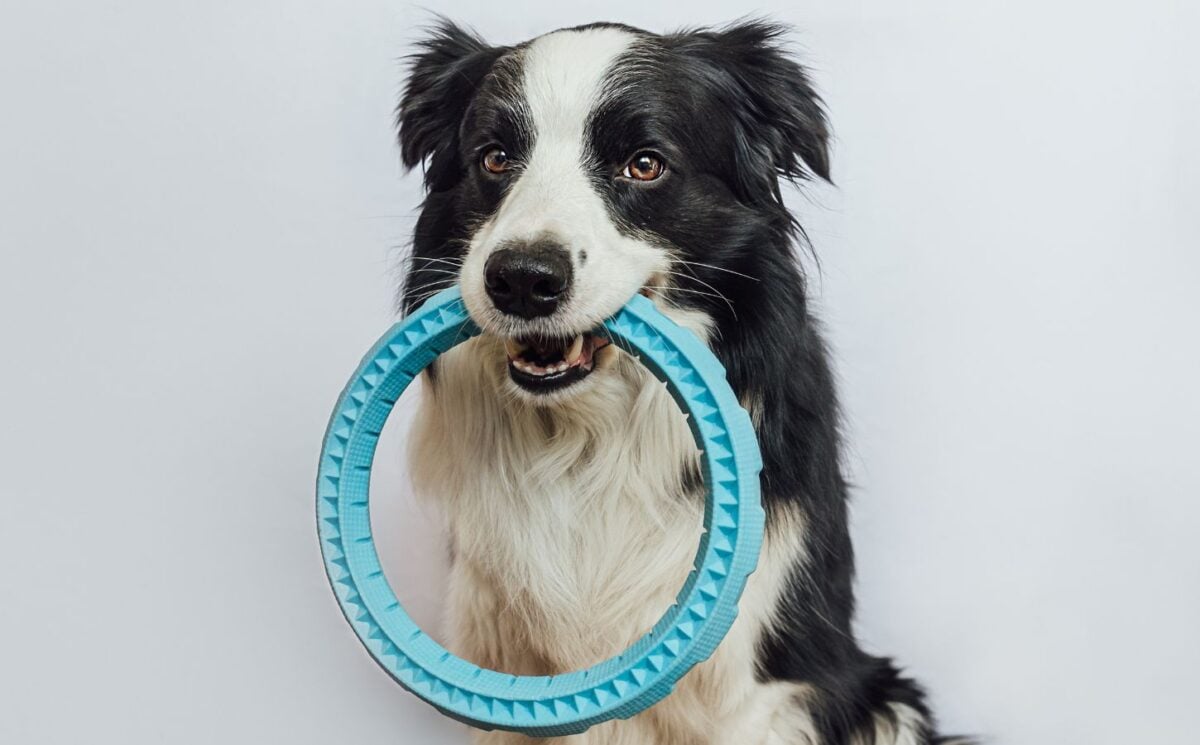
A recent study published in the journal Current Biology reveals that some dogs possess the remarkable ability to sort toys not just by appearance but by their functions. Researchers found that certain dogs can apply learned labels for familiar toys to new, unlabeled objects based on how these items are used. For instance, dogs were able to differentiate between pull toys and fetch toys, even when the toys did not visually resemble one another.
This cognitive ability, known as “label extension,” is a critical aspect of early language development in humans. Until now, it had been observed only in a limited number of non-human species after extensive training. The findings from this study shed light on the potential for advanced cognitive processes in dogs, challenging existing notions about animal intelligence.
Research Findings and Methodology
The study, conducted by a team led by Claudia Fugazza, involved seven dogs identified as “gifted learners,” including six border collies and a blue heeler. The researchers designed a four-stage experiment to assess the dogs’ ability to select unlabeled toys based on verbal commands indicating their function, such as “pull” or “fetch.” Remarkably, the dogs demonstrated a high success rate in completing these tasks.
Fugazza noted, “Our results show that these dogs do not just memorize object names. They understand the meaning behind those labels well enough to apply them to new, very different-looking toys—by recognizing what the toys were for.” This insight into canine cognition opens up new avenues for exploring how language-related skills develop in various species.
Implications for Understanding Canine Communication
The report contributes to a growing body of evidence regarding dogs’ capabilities to process and interpret human language. Previous studies have indicated that dogs exhibit a left hemisphere bias when processing meaningful words and praise, along with neural mechanisms that allow them to analyze word meanings and intonations separately.
For example, another study found that dogs could recognize 2D rotated objects, while a report from last year provided “neural evidence” for their understanding of noun-like words. Despite these impressive abilities, it is essential to recognize that dogs are complex, social animals with their own specialized communication systems.
Zoologist Arik Kershenbaum, author of the upcoming book *Why Animals Talk*, cautioned against interpreting animal communication solely through the lens of human language. He stated, “We have to be careful not to think of animals having a language that we can translate. They are sending messages. But it’s not language. If we try to understand their communication as if it were human language, all we’re doing is imposing our own nature on them.”
As studies continue to explore the depths of canine cognition, the findings from this research highlight the sophisticated ways in which dogs can learn and categorize their environment. This not only enhances our understanding of dog behavior but also invites further investigation into the cognitive abilities of other non-human species.

Cattle Showcases Thrive at RUAS Winter Fair 2023

UK and US Strike Zero Tariff Agreement on Pharmaceuticals

Maya Jama Stuns in Strapless Ensemble at Qatar Grand Prix

Russia and Saudi Arabia Launch Visa-Free Travel Agreement

ISOLDE Facility Marks 10 Years of Advancements in Nuclear Research

Voters Demand Resignation of Chancellor Rachel Reeves Over Tax Hikes

Shoppers Save 30% on Marks & Spencer’s Viral Velvet Dress

Health Campaigners Urge End to Smoking Exemption for Lounges

Charity Shop Surprise: Woman Finds Joggers Worth £2,000 for £8

Iconic 90s TV Show House Hits Market for £1.1 Million

Milk Bank Urges Mothers to Donate for Premature Babies’ Health

Alessia Russo Signs Long-Term Deal with Arsenal Ahead of WSL Season

Shoppers Flock to Discounted Neck Pillow on Amazon for Travel Comfort

Museums Body Critiques EHRC Proposals on Gender Facilities

Trump Visits Europe: Business, Politics, or Leisure?

Japanese Teen Sorato Shimizu Breaks U18 100m Record in 10 Seconds

Couple Shares Inspiring Love Story Defying Height Stereotypes

Anglian Water Raises Concerns Over Proposed AI Data Centre
-
 Entertainment2 months ago
Iconic 90s TV Show House Hits Market for £1.1 Million
-
 Lifestyle4 months ago
Milk Bank Urges Mothers to Donate for Premature Babies’ Health
-
 Sports3 months ago
Alessia Russo Signs Long-Term Deal with Arsenal Ahead of WSL Season
-
 Lifestyle4 months ago
Shoppers Flock to Discounted Neck Pillow on Amazon for Travel Comfort
-
 Politics4 months ago
Museums Body Critiques EHRC Proposals on Gender Facilities
-
 Business4 months ago
Trump Visits Europe: Business, Politics, or Leisure?
-
 Lifestyle4 months ago
Japanese Teen Sorato Shimizu Breaks U18 100m Record in 10 Seconds
-
 Politics4 months ago
Couple Shares Inspiring Love Story Defying Height Stereotypes
-
 World4 months ago
Anglian Water Raises Concerns Over Proposed AI Data Centre
-

 Sports4 months ago
Bournemouth Dominates Everton with 3-0 Victory in Premier League Summer Series
-

 World4 months ago
Wreckage of Missing Russian Passenger Plane Discovered in Flames
-

 Lifestyle4 months ago
Shoppers Rave About Roman’s £42 Midi Dress, Calling It ‘Elegant’