
Science
NASA Investigates Comet 3I/ATLAS After Bizarre Discovery

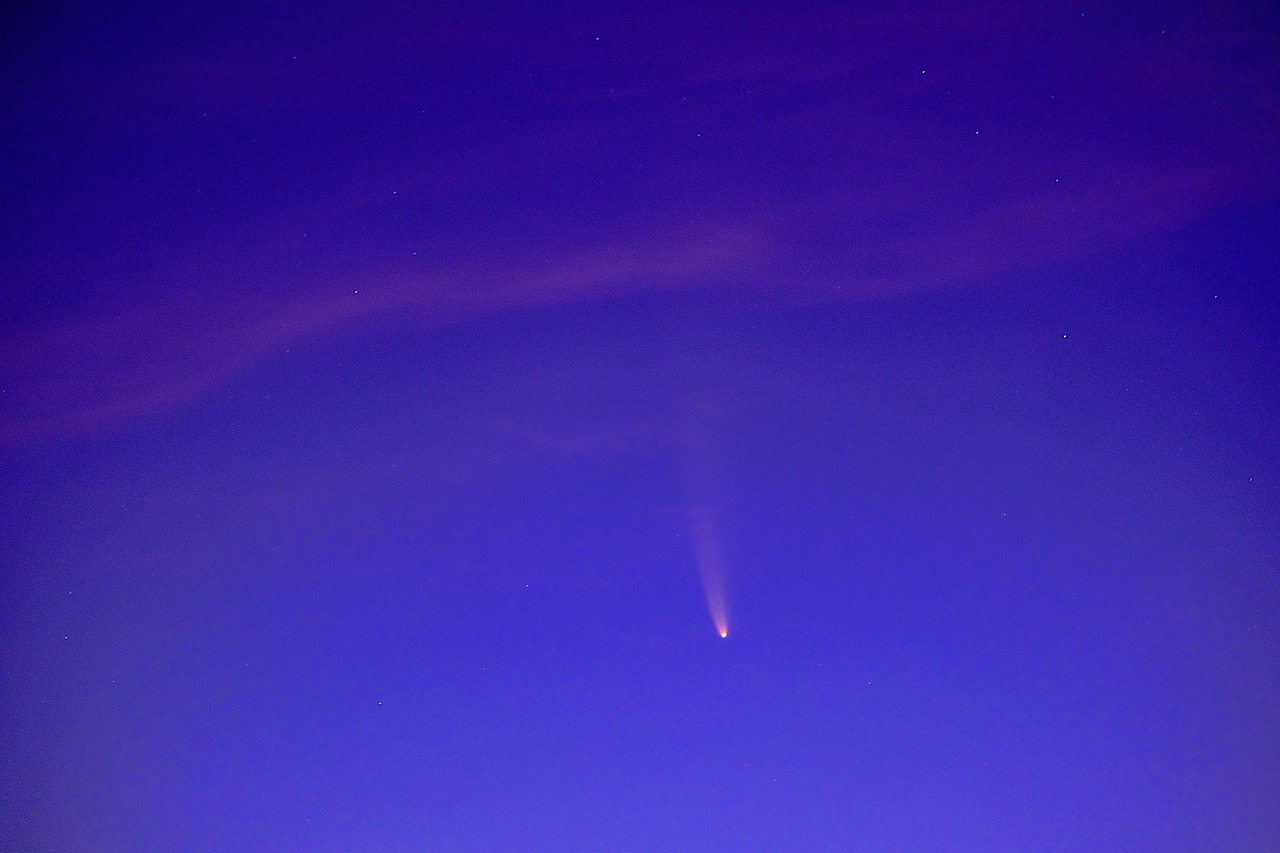
A recent image of the comet 3I/ATLAS has ignited discussions among scientists and space enthusiasts due to its unusual characteristics. As the comet approaches the sun, a photograph shared on October 20, 2025, reveals a circular shape that appears distinct from the comet itself. The image was posted by a space enthusiast known as Dobsonian Power on the social media platform X, raising questions about the comet’s true nature.
In the post, the user provided the official NASA coordinates for 3I/ATLAS, stating, “It looks like a front heated shield (the jet) towards the Sun and also a faint extended puff like a small cone towards the upper left.” The post emphasized that the image was unprocessed, showcasing a dark nucleus and the absence of a tail, which is typically seen in comets. This lack of a tail has caught the attention of researchers, given that comets generally exhibit beautiful tails extending away from the sun.
Unusual Emissions Raise Eyebrows
The New York Post reported that the comet may be emitting a rare alloy known as nickel tetracarbonyl, as explained by Dr. Avi Loeb, a Harvard astrophysicist. This alloy has only been associated with human industrial processes. Images taken by the Keck II telescope in August revealed that 3I/ATLAS was releasing approximately four grams of nickel per second, without any detectable iron—a phenomenon that is rare for comets.
Dr. Loeb noted, “There is only one place where that is known to exist, and that is in industrially produced nickel alloys.” He emphasized the uniqueness of this occurrence, stating it has never been observed in comets before. The anomaly raises the possibility that 3I/ATLAS may have a composition that deviates significantly from typical cometary structures.
Scientific Perspectives on the Findings
While Dr. Loeb’s comments have sparked speculation about potential alien life forms associated with the comet, researchers from the Keck Observatory provide a different perspective. They acknowledge the rarity of nickel tetracarbonyl in cometary emissions but suggest that the phenomenon may have natural explanations. This aligns with traditional expectations that comets contain various minerals, including nickel and iron.
The observation of 3I/ATLAS marks a significant milestone in the study of cometary behavior. The comet was first documented by the Hubble Telescope on July 21, 2025, further contributing to ongoing investigations into its composition and behavior as it approaches the sun.
As researchers prepare to study 3I/ATLAS further, many in the scientific community remain intrigued by the comet’s unusual characteristics. The upcoming perihelion, when the comet reaches its closest point to the sun, is expected to provide additional insights into its nature and the implications of its emissions. The dialogue surrounding 3I/ATLAS exemplifies the fascination with space exploration and the continuous quest for understanding the universe’s mysteries.

Liverpool Activates Backup Plan as Man City Targets Antoine Semenyo

British Father Drowns in Thailand After Being Swept Away by Waves

TorroFX Set to Transform Trading Landscape with Launch on December 1, 2025

BBC Breakfast’s Sally Nugent Apologizes for News Disruption

Recognize Bowel Cancer Signs During Festive Overindulgence

Marie Helvin Discusses Dating Challenges and Body Confidence at 73

Danny Morrison Reflects on United Ireland, Gerry Adams, and Stormont’s Future

Southampton University and Siemens Collaborate to Advance MEMS Technology

Barcelona’s Deco Highlights Rashford’s Burden at Manchester United

Iconic 90s TV Show House Hits Market for £1.1 Million

Milk Bank Urges Mothers to Donate for Premature Babies’ Health

Alessia Russo Signs Long-Term Deal with Arsenal Ahead of WSL Season

Shoppers Flock to Discounted Neck Pillow on Amazon for Travel Comfort

Museums Body Critiques EHRC Proposals on Gender Facilities

Trump Visits Europe: Business, Politics, or Leisure?

Japanese Teen Sorato Shimizu Breaks U18 100m Record in 10 Seconds

Couple Shares Inspiring Love Story Defying Height Stereotypes

Anglian Water Raises Concerns Over Proposed AI Data Centre
-
 Entertainment2 months ago
Iconic 90s TV Show House Hits Market for £1.1 Million
-
 Lifestyle4 months ago
Milk Bank Urges Mothers to Donate for Premature Babies’ Health
-
 Sports3 months ago
Alessia Russo Signs Long-Term Deal with Arsenal Ahead of WSL Season
-
 Lifestyle4 months ago
Shoppers Flock to Discounted Neck Pillow on Amazon for Travel Comfort
-
 Politics4 months ago
Museums Body Critiques EHRC Proposals on Gender Facilities
-
 Business4 months ago
Trump Visits Europe: Business, Politics, or Leisure?
-
 Lifestyle4 months ago
Japanese Teen Sorato Shimizu Breaks U18 100m Record in 10 Seconds
-
 Politics4 months ago
Couple Shares Inspiring Love Story Defying Height Stereotypes
-
 World4 months ago
Anglian Water Raises Concerns Over Proposed AI Data Centre
-

 Sports4 months ago
Bournemouth Dominates Everton with 3-0 Victory in Premier League Summer Series
-

 World4 months ago
Wreckage of Missing Russian Passenger Plane Discovered in Flames
-

 Lifestyle4 months ago
Shoppers Rave About Roman’s £42 Midi Dress, Calling It ‘Elegant’