
Science
NASA Selects 10 Astronauts for Historic Return to the Moon

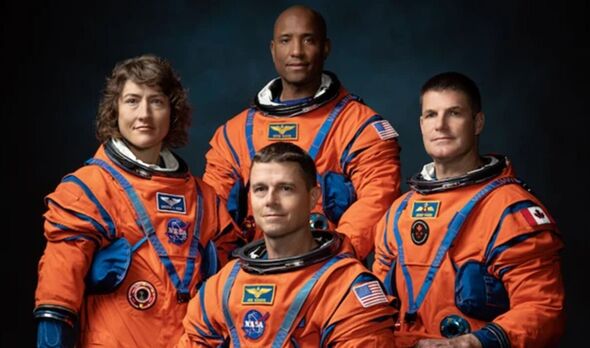
NASA has officially selected ten new astronauts from a pool of over 8,000 applicants as part of its Artemis program, marking a significant step towards humanity’s return to the Moon. This announcement, made during a ceremony in Houston on March 15, 2024, signifies the first crewed lunar mission in 50 years, aiming to establish a sustainable presence on the Moon and pave the way for future Mars exploration.
This historic astronaut class, the 24th since the Mercury Seven in 1959, is notable for its diversity, comprising more women than men for the first time. Such a selection reflects a broader commitment to inclusivity in space exploration and underscores NASA’s goal to land the first woman and the first Black person on the Moon.
The Apollo missions, which spanned from 1961 to 1972, set a high bar for human achievement in space. The most iconic moment came during the Apollo 11 mission when astronauts Neil Armstrong and Buzz Aldrin became the first humans to walk on the lunar surface in 1969. Armstrong’s famous words, “That’s one small step for man, one giant leap for mankind,” marked a pivotal moment in history. Over six Apollo missions, a total of 12 astronauts collected samples and conducted experiments, enhancing our understanding of the Moon. The last crewed mission, Apollo 17, took place in December 1972, after which NASA shifted its focus to low-Earth orbit projects like the Space Shuttle and the International Space Station.
Significant budget constraints and shifting political priorities stalled lunar exploration for decades. However, the Artemis program aims to revitalize these ambitions with concrete objectives, including establishing a lunar gateway and surface habitats. These developments are intended to facilitate longer stays on the Moon and advance scientific research, ultimately serving as a testing ground for technologies vital for Mars missions.
The newly selected astronauts bring a wealth of expertise. Among them is a geologist who contributed to NASA’s Curiosity Mars rover, providing critical insights into planetary surfaces essential for both lunar and Martian expeditions. Another member, a SpaceX engineer, was part of a billionaire-funded spaceflight that achieved the world’s first private spacewalk, highlighting the increasing significance of commercial partnerships in space exploration. Additionally, a former launch director from SpaceX joins the group, contributing valuable operational experience.
These diverse backgrounds exemplify NASA’s strategy to integrate scientific rigor with innovative industry expertise, preparing the team for the complexities of deep-space exploration. Over the next two years, the astronauts will undergo intensive training at NASA’s Johnson Space Center in Houston. They will learn essential skills including spacewalking, operating the Orion spacecraft, and survival techniques in extreme environments. Upon completion, they will join the 41 active U.S. astronauts and may be eligible for Artemis missions, which could see them walking on the Moon within months.
In a statement regarding the new class, Acting Administrator Sean Duffy expressed optimism about their potential role in future Mars missions. Duffy indicated that these astronauts could be among the first humans to set foot on Mars, aligning with broader aspirations in the space community. Notably, Elon Musk, founder of SpaceX, envisions colonizing Mars with a self-sustaining city by 2050, utilizing SpaceX’s Starship, a reusable rocket designed for transporting humans and cargo to the Red Planet.
While NASA’s timeline remains more measured, focusing on lunar missions in the 2020s before aiming for Mars in the 2030s or 2040s, collaborations with SpaceX highlight a shared objective of making humanity multi-planetary. The astronaut selection process is highly competitive; only 370 individuals have been chosen in NASA’s 66-year history, a testament to the elite status of this corps, which has historically been male-dominated.
Flight operations director Norm Knight praised the new astronauts as “distinguished” and “exceptional,” emphasizing the rigorous selection process they underwent. The Artemis program, building on the legacy of the Apollo missions, seeks to create a robust infrastructure on the Moon that will enable scientific research and technological tests critical for future Mars missions.
As Artemis nears its first crewed lunar landing, the selection of this new class of astronauts embodies hope for a transformative era of exploration. Their contributions could redefine humanity’s place in the cosmos, bridging the historic achievements of the Apollo program with a future where Mars is not just a distant dream but a potential second home.

Liverpool Activates Backup Plan as Man City Targets Antoine Semenyo

British Father Drowns in Thailand After Being Swept Away by Waves

TorroFX Set to Transform Trading Landscape with Launch on December 1, 2025

BBC Breakfast’s Sally Nugent Apologizes for News Disruption

Recognize Bowel Cancer Signs During Festive Overindulgence

Marie Helvin Discusses Dating Challenges and Body Confidence at 73

Danny Morrison Reflects on United Ireland, Gerry Adams, and Stormont’s Future

Southampton University and Siemens Collaborate to Advance MEMS Technology

Barcelona’s Deco Highlights Rashford’s Burden at Manchester United

Iconic 90s TV Show House Hits Market for £1.1 Million

Milk Bank Urges Mothers to Donate for Premature Babies’ Health

Alessia Russo Signs Long-Term Deal with Arsenal Ahead of WSL Season

Shoppers Flock to Discounted Neck Pillow on Amazon for Travel Comfort

Museums Body Critiques EHRC Proposals on Gender Facilities

Trump Visits Europe: Business, Politics, or Leisure?

Japanese Teen Sorato Shimizu Breaks U18 100m Record in 10 Seconds

Couple Shares Inspiring Love Story Defying Height Stereotypes

Anglian Water Raises Concerns Over Proposed AI Data Centre
-
 Entertainment2 months ago
Iconic 90s TV Show House Hits Market for £1.1 Million
-
 Lifestyle4 months ago
Milk Bank Urges Mothers to Donate for Premature Babies’ Health
-
 Sports3 months ago
Alessia Russo Signs Long-Term Deal with Arsenal Ahead of WSL Season
-
 Lifestyle4 months ago
Shoppers Flock to Discounted Neck Pillow on Amazon for Travel Comfort
-
 Politics4 months ago
Museums Body Critiques EHRC Proposals on Gender Facilities
-
 Business4 months ago
Trump Visits Europe: Business, Politics, or Leisure?
-
 Lifestyle4 months ago
Japanese Teen Sorato Shimizu Breaks U18 100m Record in 10 Seconds
-
 Politics4 months ago
Couple Shares Inspiring Love Story Defying Height Stereotypes
-
 World4 months ago
Anglian Water Raises Concerns Over Proposed AI Data Centre
-

 Sports4 months ago
Bournemouth Dominates Everton with 3-0 Victory in Premier League Summer Series
-

 World4 months ago
Wreckage of Missing Russian Passenger Plane Discovered in Flames
-

 Lifestyle4 months ago
Shoppers Rave About Roman’s £42 Midi Dress, Calling It ‘Elegant’