
Science
New Perovskite Detector Revolutionizes Nuclear Medicine Imaging

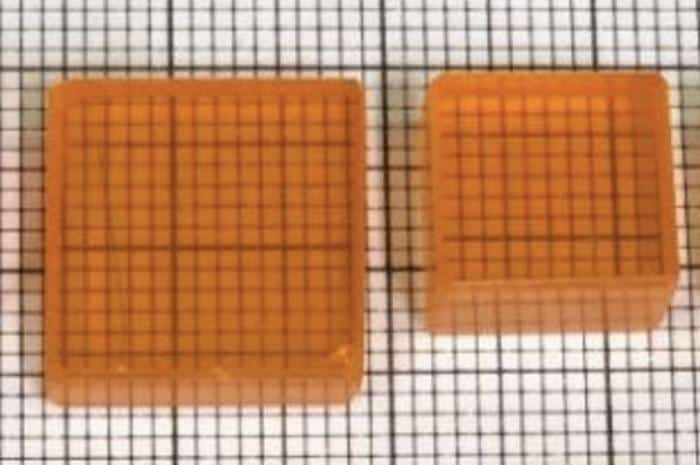
Researchers have developed a groundbreaking perovskite semiconductor that can detect and image single gamma-ray photons with remarkable precision, paving the way for next-generation nuclear medicine scanners. This innovation, a collaboration between teams at Northwestern University in the United States and Soochow University in China, promises faster imaging and clearer results than current technologies.
Traditional nuclear medicine imaging techniques, such as single-photon emission computed tomography (SPECT), rely on detecting gamma rays emitted by a short-lived radiotracer administered to patients. Each gamma ray acts as a pixel of light, and after millions are collected, a three-dimensional image can be constructed. Current detectors typically use materials like cadmium zinc telluride (CZT) or scintillators such as sodium iodide (NaI) or cesium iodide (CsI). However, CZT detectors are costly, often ranging from hundreds of thousands to millions of dollars, while NaI detectors are bulkier and produce lower-quality images.
In their research published in Nature Communications, the team, led by Mercouri Kanatzidis and Yihui He, focused on the lead halide perovskite crystal CsPbBr3. Initially known for its efficiency in solar cells, this material has shown promising results for detecting both X-rays and gamma rays. The researchers successfully grew high-quality crystals of CsPbBr3 and constructed detector devices, demonstrating their capability to resolve gamma rays at energies used in SPECT imaging with exceptional resolution.
“When a gamma-ray photon enters the crystal, it interacts with the material and produces electron–hole pairs,” Kanatzidis explains. “These charge carriers are collected as an electrical signal that we can measure to determine both the energy of the photon and its point of interaction.” Their findings revealed that the new detectors could detect weak signals from the medical tracer technetium-99m, which is routinely used in hospitals, while producing sharp images capable of distinguishing features as small as 3.2 mm. This level of sensitivity is significant, as it means patients could receive scans with shorter durations or smaller doses of radiation compared to those using existing technologies.
Kanatzidis notes, “A parallel study published in Advanced Materials directly compared perovskite performance with CZT, the only commercial semiconductor material available today for SPECT, which showed that perovskites can even surpass CZT in certain aspects.” He attributes the success of their research to a decade of optimizing the crystal growth process of CsPbBr3 and improving the electrical contacts and carrier transport within the detectors.
Looking ahead, the Northwestern–Soochow team is focused on scaling up the fabrication of these detectors and enhancing their long-term stability. “We are also trying to better understand the fundamental physics of how gamma rays interact in perovskites, which could help optimize future materials,” Kanatzidis adds.
In an effort to bring this technology to practical use in hospitals, the team established a new company, Actinia. “High-quality nuclear medicine shouldn’t be limited to hospitals that can afford the most expensive equipment,” Kanatzidis emphasizes. “With perovskites, we can open the door to clearer, faster, safer scans for many more patients around the world. The ultimate goal is better scans, better diagnoses, and better care for patients.”
The development of perovskite detectors marks a significant advancement in nuclear medicine imaging, promising to enhance the quality of patient care while making advanced imaging technologies more accessible.

Cattle Showcases Thrive at RUAS Winter Fair 2023

UK and US Strike Zero Tariff Agreement on Pharmaceuticals

Maya Jama Stuns in Strapless Ensemble at Qatar Grand Prix

Russia and Saudi Arabia Launch Visa-Free Travel Agreement

ISOLDE Facility Marks 10 Years of Advancements in Nuclear Research

Voters Demand Resignation of Chancellor Rachel Reeves Over Tax Hikes

Shoppers Save 30% on Marks & Spencer’s Viral Velvet Dress

Health Campaigners Urge End to Smoking Exemption for Lounges

Charity Shop Surprise: Woman Finds Joggers Worth £2,000 for £8

Iconic 90s TV Show House Hits Market for £1.1 Million

Milk Bank Urges Mothers to Donate for Premature Babies’ Health

Alessia Russo Signs Long-Term Deal with Arsenal Ahead of WSL Season

Shoppers Flock to Discounted Neck Pillow on Amazon for Travel Comfort

Museums Body Critiques EHRC Proposals on Gender Facilities

Trump Visits Europe: Business, Politics, or Leisure?

Japanese Teen Sorato Shimizu Breaks U18 100m Record in 10 Seconds

Couple Shares Inspiring Love Story Defying Height Stereotypes

Anglian Water Raises Concerns Over Proposed AI Data Centre
-
 Entertainment2 months ago
Iconic 90s TV Show House Hits Market for £1.1 Million
-
 Lifestyle4 months ago
Milk Bank Urges Mothers to Donate for Premature Babies’ Health
-
 Sports3 months ago
Alessia Russo Signs Long-Term Deal with Arsenal Ahead of WSL Season
-
 Lifestyle4 months ago
Shoppers Flock to Discounted Neck Pillow on Amazon for Travel Comfort
-
 Politics4 months ago
Museums Body Critiques EHRC Proposals on Gender Facilities
-
 Business4 months ago
Trump Visits Europe: Business, Politics, or Leisure?
-
 Lifestyle4 months ago
Japanese Teen Sorato Shimizu Breaks U18 100m Record in 10 Seconds
-
 Politics4 months ago
Couple Shares Inspiring Love Story Defying Height Stereotypes
-
 World4 months ago
Anglian Water Raises Concerns Over Proposed AI Data Centre
-

 Sports4 months ago
Bournemouth Dominates Everton with 3-0 Victory in Premier League Summer Series
-

 World4 months ago
Wreckage of Missing Russian Passenger Plane Discovered in Flames
-

 Lifestyle4 months ago
Shoppers Rave About Roman’s £42 Midi Dress, Calling It ‘Elegant’