
Science
New Research Reveals Secrets of 4,000-Year-Old Karnak Temple

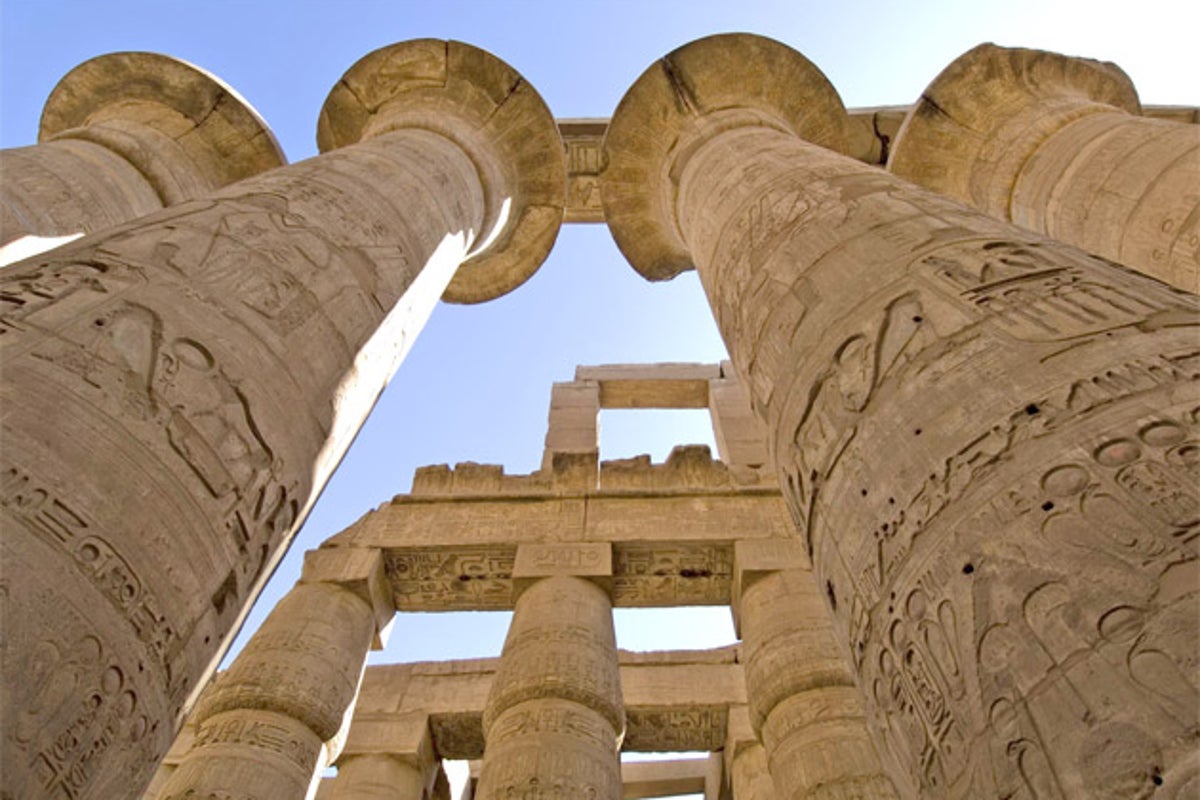
Archaeologists have uncovered significant insights into the Karnak Temple, a monumental structure dating back approximately 4,000 years and often regarded as a quintessential institution of Ancient Egypt. This UNESCO World Heritage site, located near Luxor, attracts millions of visitors annually, drawn by its historical significance and magnificent architecture. The temple, dedicated to the supreme deity Amun-Ra, is intricately linked to the civilization’s creation myth, which describes the sun-god Ra emerging from the “waters of chaos.”
Groundbreaking Findings on the Temple’s Origins
A collaborative study by researchers from the University of Southampton and Uppsala University has yielded new evidence regarding the age and origins of the temple complex, providing archaeologists with what they describe as “unprecedented detail.” The team’s analysis of 61 sediment cores from within and around the temple site has allowed them to map the evolution of the landscape since ancient times. Their findings, published in the journal Antiquity, indicate that the earliest possible date for the site’s occupation is between 2591–2152 BC, approximately 4,500 years ago.
Previous theories about the temple’s dating varied, with some experts suggesting it could date back as early as 3000 BC, while others proposed a more recent timeframe. The new research supports the latter view, concluding that any earlier date is implausible due to the site’s regular flooding by the Nile’s swift waters prior to around 2520 BC.
Dr. Kristian Strutt, a co-author of the study from the University of Southampton, highlighted the importance of these findings in the ongoing debate surrounding the temple’s age. “The age of Karnak Temple has been hotly contested in archaeological circles,” he stated. “Our new evidence places a temporal constraint on its earliest occupation and construction.”
The Ancient Egyptians’ Ingenious Modifications
The research further reveals how the ancient Egyptians actively modified the river landscape surrounding the temple. By depositing sand into river channels, they expanded the island and facilitated the construction of new structures. Co-author Dominic Barker explained, “The river channels surrounding the site shaped how the temple could develop and where, with new construction taking place on top of old rivers as they silted up.”
This manipulation of the landscape underscores the advanced engineering capabilities of the ancient Egyptians and sheds light on their motivations for selecting the temple’s location. The findings suggest that the temple was built on elevated ground, which would have emerged during the annual floods, echoing themes from Egyptian mythology.
Dr. Ben Pennington, lead author of the paper and a Visiting Fellow in Geoarchaeology at the University of Southampton, emphasized the significance of this research. “This new research provides unprecedented detail on the evolution of Karnak Temple, from a small island to one of the defining institutions of Ancient Egypt,” he remarked.
He proposed that the location was intentionally chosen by Theban elites to represent a new manifestation of the creator god, “Ra-Amun,” aligning with the mythological imagery of high ground rising from surrounding waters. This notion is further supported by texts from the Middle Kingdom (circa 1980–1760 BC), which describe a “primeval mound” emerging from the “Waters of Chaos.”
During this historical period, the retreat of annual floodwaters would have created the visual effect of the mound on which Karnak is situated appearing to “rise” from the waters, reinforcing its sacred status.
The recent discoveries at Karnak Temple not only enrich our understanding of ancient Egyptian civilization but also highlight the dynamic interplay between humans and their environment in shaping cultural and religious landscapes. As research continues, the legacy of this magnificent temple remains a testament to the ingenuity and architectural prowess of the ancient Egyptians.

Cattle Showcases Thrive at RUAS Winter Fair 2023

UK and US Strike Zero Tariff Agreement on Pharmaceuticals

Maya Jama Stuns in Strapless Ensemble at Qatar Grand Prix

Russia and Saudi Arabia Launch Visa-Free Travel Agreement

ISOLDE Facility Marks 10 Years of Advancements in Nuclear Research

Voters Demand Resignation of Chancellor Rachel Reeves Over Tax Hikes

Shoppers Save 30% on Marks & Spencer’s Viral Velvet Dress

Health Campaigners Urge End to Smoking Exemption for Lounges

Charity Shop Surprise: Woman Finds Joggers Worth £2,000 for £8

Iconic 90s TV Show House Hits Market for £1.1 Million

Milk Bank Urges Mothers to Donate for Premature Babies’ Health

Alessia Russo Signs Long-Term Deal with Arsenal Ahead of WSL Season

Shoppers Flock to Discounted Neck Pillow on Amazon for Travel Comfort

Museums Body Critiques EHRC Proposals on Gender Facilities

Trump Visits Europe: Business, Politics, or Leisure?

Japanese Teen Sorato Shimizu Breaks U18 100m Record in 10 Seconds

Couple Shares Inspiring Love Story Defying Height Stereotypes

Anglian Water Raises Concerns Over Proposed AI Data Centre
-
 Entertainment2 months ago
Iconic 90s TV Show House Hits Market for £1.1 Million
-
 Lifestyle4 months ago
Milk Bank Urges Mothers to Donate for Premature Babies’ Health
-
 Sports3 months ago
Alessia Russo Signs Long-Term Deal with Arsenal Ahead of WSL Season
-
 Lifestyle4 months ago
Shoppers Flock to Discounted Neck Pillow on Amazon for Travel Comfort
-
 Politics4 months ago
Museums Body Critiques EHRC Proposals on Gender Facilities
-
 Business4 months ago
Trump Visits Europe: Business, Politics, or Leisure?
-
 Lifestyle4 months ago
Japanese Teen Sorato Shimizu Breaks U18 100m Record in 10 Seconds
-
 Politics4 months ago
Couple Shares Inspiring Love Story Defying Height Stereotypes
-
 World4 months ago
Anglian Water Raises Concerns Over Proposed AI Data Centre
-

 Sports4 months ago
Bournemouth Dominates Everton with 3-0 Victory in Premier League Summer Series
-

 World4 months ago
Wreckage of Missing Russian Passenger Plane Discovered in Flames
-

 Lifestyle4 months ago
Shoppers Rave About Roman’s £42 Midi Dress, Calling It ‘Elegant’