
Science
Quantum Physicist Rupamanjari Ghosh Illuminates Science During Diwali

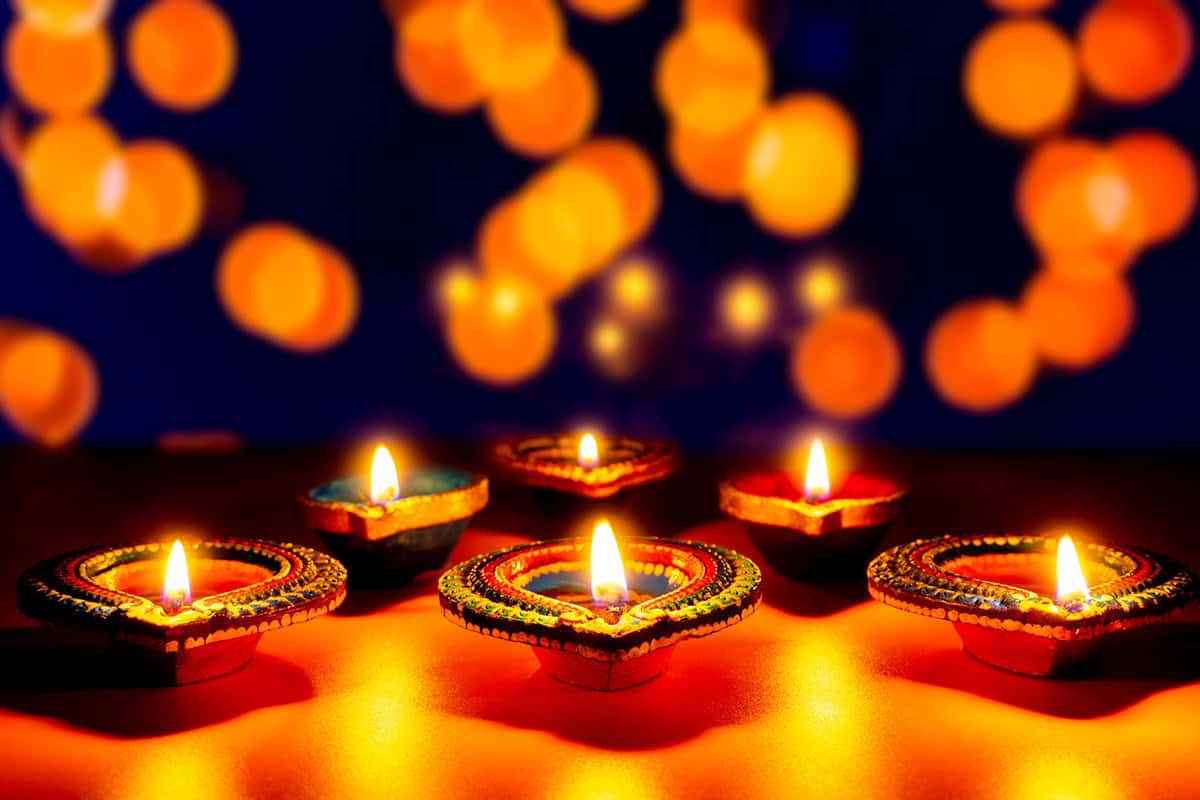
As homes and cities globally celebrate Diwali, the Indian “festival of lights,” renowned physicist Rupamanjari Ghosh draws parallels between this cultural event and advancements in quantum science. Ghosh, who previously served as vice chancellor of Shiv Nadar University, emphasizes that Diwali symbolizes the triumph of knowledge over ignorance, a sentiment that resonates profoundly in the realm of quantum technology.
“Diwali comes from Deepavali, meaning a ‘row of lights’. It marks the triumph of light over dark; good over evil; and knowledge over ignorance,” Ghosh stated. With the upcoming International Year of Quantum Science and Technology in 2025, she believes this metaphor is particularly poignant. “It has taken us a hundred years since the birth of quantum mechanics to arrive at this point, where quantum technologies are poised to transform our lives,” she added.
Innovative Recognition and Global Dialogue
Ghosh’s achievements in quantum optics have recently earned her the title of this year’s Institute of Physics (IOP) Homi Bhabha lecturer. This prestigious role is part of a bilateral exchange program aimed at fostering global discourse on physics and its challenges. Ghosh’s online lecture, titled “Illuminating quantum frontiers: from photons to emerging technologies,” is scheduled to air at 15:00 GMT on October 22, 2023.
Her journey in physics began in the mid-1980s, when she collaborated with American physicist Leonard Mandel to demonstrate a new quantum source of twin photons through spontaneous parametric down-conversion. This process allows a high-energy photon to split into two correlated lower-energy photons, marking a significant milestone in the understanding of quantum nonlocality.
“Before that,” Ghosh recalled, “no one was looking for quantum effects in this nonlinear optical process. The correlations between the photons defied classical explanation.” Today, those entangled photon pairs serve as foundational elements in quantum communication and computation.
Bridging Connections and Promoting Inclusivity
Ghosh likens the festival’s lamps, which create a shimmering network of light, to the entanglement of photons that connect across distances. “Quantum entanglement reminds us that connection transcends locality,” she explained. “In the same way, the lights of Diwali connect us across borders and cultures through shared histories.”
Her research extends this metaphor, focusing on mapping quantum states of light onto collective atomic excitations. By employing “slow-light” techniques, her team enhances long-distance quantum communication, which she metaphorically describes as passing the flame from one diya to another. “We’re not just spreading light – we’re preserving, encoding and transmitting it,” Ghosh noted, underscoring the importance of collaboration in scientific advancement.
While Ghosh acknowledges the challenges posed by quantum decoherence, she asserts that these challenges also offer insights into the nature of time and the universe. “Decoherence isn’t just a technical problem – it helps us understand the arrows of time, why the universe evolves irreversibly,” she explained. She warns that human errors in engineering can also create vulnerabilities in quantum communication devices, stating, “Security is only as strong as the weakest engineering link.”
Beyond her laboratory work, Ghosh’s vision for the future of science encompasses a commitment to inclusivity. “No corner should remain dark,” she said, advocating for diversity in scientific fields. “Diverse teams ask broader questions and imagine richer answers. It’s not just morally right – it’s good for science.”
She emphasizes that equity must recognize unique contributions rather than pursue uniformity. “Innovation doesn’t come from conformity. Gender diversity, for example, brings varied cognitive and collaborative styles – essential in a field like quantum science, where intuition is constantly stretched.”
Ghosh expresses concern over systemic biases within academia that can limit visibility for underrepresented groups. “Unconscious biases in mentorship or gatekeeping in opportunity can accumulate to limit visibility,” she stated. Her call for action includes dismantling these barriers through structural and cultural change.
As the diyas are lit this Diwali, Ghosh’s insights remind us that illumination—whether in the realm of classical physics or quantum science—serves to connect and inspire. “Each advance in quantum science,” she concluded, “is another step in the age-old journey from darkness to light.” This article is part of Physics World’s coverage of the 2025 International Year of Quantum Science and Technology, aimed at enhancing global awareness of quantum physics and its practical applications.

Liverpool Activates Backup Plan as Man City Targets Antoine Semenyo

British Father Drowns in Thailand After Being Swept Away by Waves

TorroFX Set to Transform Trading Landscape with Launch on December 1, 2025

BBC Breakfast’s Sally Nugent Apologizes for News Disruption

Recognize Bowel Cancer Signs During Festive Overindulgence

Marie Helvin Discusses Dating Challenges and Body Confidence at 73

Danny Morrison Reflects on United Ireland, Gerry Adams, and Stormont’s Future

Southampton University and Siemens Collaborate to Advance MEMS Technology

Barcelona’s Deco Highlights Rashford’s Burden at Manchester United

Iconic 90s TV Show House Hits Market for £1.1 Million

Milk Bank Urges Mothers to Donate for Premature Babies’ Health

Alessia Russo Signs Long-Term Deal with Arsenal Ahead of WSL Season

Shoppers Flock to Discounted Neck Pillow on Amazon for Travel Comfort

Museums Body Critiques EHRC Proposals on Gender Facilities

Trump Visits Europe: Business, Politics, or Leisure?

Japanese Teen Sorato Shimizu Breaks U18 100m Record in 10 Seconds

Couple Shares Inspiring Love Story Defying Height Stereotypes

Anglian Water Raises Concerns Over Proposed AI Data Centre
-
 Entertainment2 months ago
Iconic 90s TV Show House Hits Market for £1.1 Million
-
 Lifestyle4 months ago
Milk Bank Urges Mothers to Donate for Premature Babies’ Health
-
 Sports3 months ago
Alessia Russo Signs Long-Term Deal with Arsenal Ahead of WSL Season
-
 Lifestyle4 months ago
Shoppers Flock to Discounted Neck Pillow on Amazon for Travel Comfort
-
 Politics4 months ago
Museums Body Critiques EHRC Proposals on Gender Facilities
-
 Business4 months ago
Trump Visits Europe: Business, Politics, or Leisure?
-
 Lifestyle4 months ago
Japanese Teen Sorato Shimizu Breaks U18 100m Record in 10 Seconds
-
 Politics4 months ago
Couple Shares Inspiring Love Story Defying Height Stereotypes
-
 World4 months ago
Anglian Water Raises Concerns Over Proposed AI Data Centre
-

 Sports4 months ago
Bournemouth Dominates Everton with 3-0 Victory in Premier League Summer Series
-

 World4 months ago
Wreckage of Missing Russian Passenger Plane Discovered in Flames
-

 Lifestyle4 months ago
Shoppers Rave About Roman’s £42 Midi Dress, Calling It ‘Elegant’