
Science
Researchers Develop Kirigami Parachute for Precision Deliveries

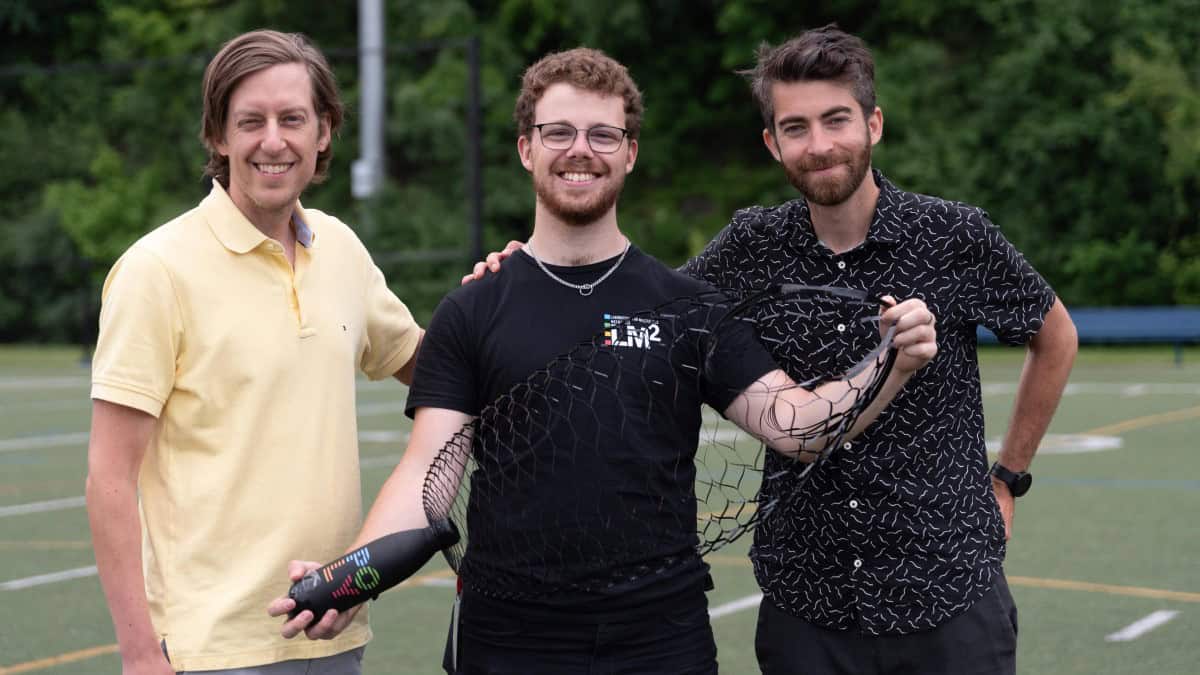
A team of researchers from Canada and France has successfully designed a kirigami-inspired parachute that can deliver payloads with remarkable accuracy. This innovative parachute, tested in real-world outdoor conditions, is capable of slowing down deliveries, such as water bottles from drones, ensuring they land directly on target.
Traditional parachutes rely on gliding angles to stabilize their descent, which often leads to significant drift from the intended landing spot. This drift can be particularly problematic in operations that require precision, such as humanitarian aid deliveries. To counter this challenge, the research team, led by David Mélancon at Polytechnique Montréal, has incorporated principles from the Japanese art of kirigami, which involves cutting and folding paper to create intricate three-dimensional designs.
The team’s approach leverages kirigami’s ability to morph flat sheets into complex shapes. As Mélancon explains, “We proposed to leverage kirigami’s shape morphing capability under fluid flow to design new kinds of ballistic parachutes.” This innovative design allows the parachute to stabilize airflow around its porous structure, negating the need for a gliding angle.
Nature provided additional inspiration for the researchers. Many seeds dispersed by the wind, such as those from dandelions and maples, possess structures that stabilize airflow around them, allowing for more controlled landings. The team’s parachute design features a flexible disc with circumferential slits inspired by a kirigami motif called a closed loop. Instead of attaching payloads at the edge, the payload is mounted at the center, allowing the parachute to deform into an inverted bell shape during descent.
Upon deployment, the combination of air resistance and the weight of the payload causes the parachute to transform, forcing air through its numerous small openings. This design ensures orderly airflow, minimizing turbulence and resulting in a predictable trajectory. In extensive testing, the parachute successfully delivered a water bottle from a height of 60 meters directly onto its target.
The research team evaluated various parachute sizes and kirigami patterns, demonstrating that designs with lower load-to-area ratios and more deformable patterns can achieve terminal velocities comparable to conventional parachutes, but with significantly improved landing accuracy. Furthermore, the simplicity of the kirigami-based design makes it easier and more cost-effective to manufacture.
Mélancon noted, “Little hand labour is necessary. We have made parachutes out of sheets of plastic, paper or cardboard. We need a sheet of material with a certain rigidity, that’s all.” This ease of fabrication suggests that kirigami-inspired parachutes could be particularly beneficial for industries such as drone delivery and emergency aid distribution.
Looking ahead, the researchers aim to further refine their design, potentially enhancing home delivery systems and improving the efficiency of delivering urgent aid during crises. The findings of this innovative approach to parachute design are detailed in the journal Nature.

LaLiga Thrills: Key Highlights from Recent Fixtures Unveiled

Germany Intensifies Deportations of Afghan and Syrian Migrants

Shoppers Embrace Next’s £36 Knit as Trendy Christmas Alternative

Harbour Energy Announces 100 Job Cuts Amid Industry Challenges

Amy Childs Shares Weight Gain Journey, Emphasizing Self-Love

UK and US Set to Finalize Zero-Tariff Agreement on Pharmaceuticals

Liverpool Activates Backup Plan as Man City Targets Antoine Semenyo

British Father Drowns in Thailand After Being Swept Away by Waves

TorroFX Set to Transform Trading Landscape with Launch on December 1, 2025

Iconic 90s TV Show House Hits Market for £1.1 Million

Milk Bank Urges Mothers to Donate for Premature Babies’ Health

Alessia Russo Signs Long-Term Deal with Arsenal Ahead of WSL Season

Shoppers Flock to Discounted Neck Pillow on Amazon for Travel Comfort

Museums Body Critiques EHRC Proposals on Gender Facilities

Trump Visits Europe: Business, Politics, or Leisure?

Japanese Teen Sorato Shimizu Breaks U18 100m Record in 10 Seconds

Couple Shares Inspiring Love Story Defying Height Stereotypes

Anglian Water Raises Concerns Over Proposed AI Data Centre
-
 Entertainment2 months ago
Iconic 90s TV Show House Hits Market for £1.1 Million
-
 Lifestyle4 months ago
Milk Bank Urges Mothers to Donate for Premature Babies’ Health
-
 Sports3 months ago
Alessia Russo Signs Long-Term Deal with Arsenal Ahead of WSL Season
-
 Lifestyle4 months ago
Shoppers Flock to Discounted Neck Pillow on Amazon for Travel Comfort
-
 Politics4 months ago
Museums Body Critiques EHRC Proposals on Gender Facilities
-
 Business4 months ago
Trump Visits Europe: Business, Politics, or Leisure?
-
 Lifestyle4 months ago
Japanese Teen Sorato Shimizu Breaks U18 100m Record in 10 Seconds
-
 Politics4 months ago
Couple Shares Inspiring Love Story Defying Height Stereotypes
-
 World4 months ago
Anglian Water Raises Concerns Over Proposed AI Data Centre
-

 Sports4 months ago
Bournemouth Dominates Everton with 3-0 Victory in Premier League Summer Series
-

 World4 months ago
Wreckage of Missing Russian Passenger Plane Discovered in Flames
-

 Lifestyle4 months ago
Shoppers Rave About Roman’s £42 Midi Dress, Calling It ‘Elegant’