
Science
Russian Scientists Develop Plasma Engine for 30-Day Mars Travel

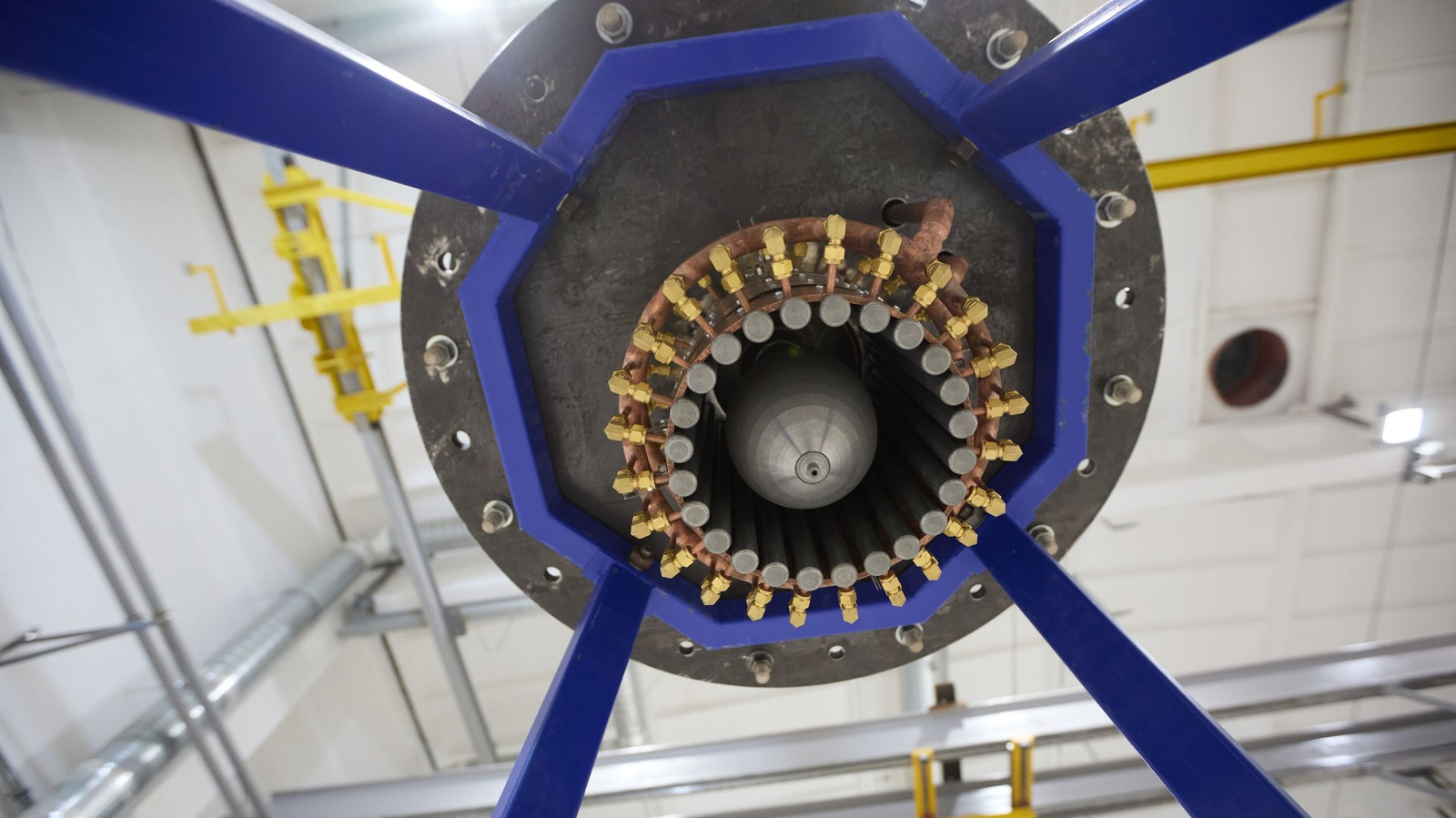
Researchers at the state nuclear corporation Rosatom in Troitsk, Russia, have unveiled a working prototype of a plasma propulsion engine that could potentially reduce travel time to Mars to approximately 30 to 60 days. This innovative engine utilizes electromagnetically accelerated plasma, which consists of ionized hydrogen atoms propelled at high speeds, offering a new approach to interplanetary travel.
The engine design generates a thrust of just 6 newtons, which is modest compared to traditional rocket engines. However, it is significantly more powerful than existing ion thrusters, such as NASA’s Dawn spacecraft, by a factor of around 60. Initial lab tests indicated that the charged particles can achieve speeds of approximately 100 kilometers per second (about 62 miles per second), which is around 25 times faster than conventional chemical rockets.
One of the most impressive features of this plasma engine is its efficiency. Instead of rapidly consuming large amounts of propellant, it continuously converts nuclear-powered electricity into thrust. The engine operates by using two charged electrodes to create a magnetic field. As hydrogen gas flows through this field, its electrons are removed, generating plasma that is then accelerated out of the engine.
While the thrust may not rival that of some of the most powerful rocket engines, the plasma drive’s ability to maintain a steady push over extended periods allows it to build momentum effectively in the vacuum of space. The prototype is powered at around 300 kilowatts, necessitating a nuclear energy source instead of solar arrays.
Advancements in Space Travel
Engineers are currently testing the prototype within a new 14-meter-long vacuum chamber to evaluate its magnetic confinement, prolonged operation, and heat management capabilities. Notably, because the plasma does not require extreme heating, the engine’s components experience less wear and tear compared to traditional combustion-based thrusters.
The engine has demonstrated a specific impulse—a measure of fuel efficiency—of nearly 10,000 seconds, surpassing the best electric thrusters currently available, which typically achieve between 4,000 to 5,000 seconds. If engineers successfully connect the engine to a small nuclear power source, future spacecraft could traverse the inner solar system without the need for significant fuel reserves or the constraints of narrow launch windows.
Shorter travel times in space are critical for mission success and astronaut safety. A journey lasting weeks, as opposed to a year, significantly reduces an astronaut’s exposure to cosmic radiation and the effects of microgravity. If Rosatom’s plasma engine performs as expected, it could make round-trip missions to Mars more feasible, requiring less shielding and minimizing health risks for astronauts.
Future Implications and Skepticism
The development of this plasma propulsion technology is part of a broader push for advanced space travel solutions. NASA is exploring nuclear-powered rockets, while private companies are investigating VASIMR plasma drives, and European researchers are testing water-based propulsion for small satellites.
What sets Rosatom’s engine apart is its potential scalability for deep-space missions, including cargo transport and crewed flights, by the year 2030. Despite the promising advancements, skepticism regarding the plasma engine’s capabilities remains until further tangible evidence is presented.
In summary, the innovative combination of plasma physics and nuclear energy showcased by Rosatom could be pivotal in transforming Mars travel from a multi-year endeavor into a matter of weeks, opening new avenues for exploration and human presence on other planets.

Voters Demand Resignation of Chancellor Rachel Reeves Over Tax Hikes

Shoppers Save 30% on Marks & Spencer’s Viral Velvet Dress

Health Campaigners Urge End to Smoking Exemption for Lounges

Charity Shop Surprise: Woman Finds Joggers Worth £2,000 for £8

Comet 3I/ATLAS Reveals Rare Metal Composition and Cryovolcanism

LaLiga Thrills: Key Highlights from Recent Fixtures Unveiled

Germany Intensifies Deportations of Afghan and Syrian Migrants

Shoppers Embrace Next’s £36 Knit as Trendy Christmas Alternative

Harbour Energy Announces 100 Job Cuts Amid Industry Challenges

Iconic 90s TV Show House Hits Market for £1.1 Million

Milk Bank Urges Mothers to Donate for Premature Babies’ Health

Alessia Russo Signs Long-Term Deal with Arsenal Ahead of WSL Season

Shoppers Flock to Discounted Neck Pillow on Amazon for Travel Comfort

Museums Body Critiques EHRC Proposals on Gender Facilities

Trump Visits Europe: Business, Politics, or Leisure?

Japanese Teen Sorato Shimizu Breaks U18 100m Record in 10 Seconds

Couple Shares Inspiring Love Story Defying Height Stereotypes

Anglian Water Raises Concerns Over Proposed AI Data Centre
-
 Entertainment2 months ago
Iconic 90s TV Show House Hits Market for £1.1 Million
-
 Lifestyle4 months ago
Milk Bank Urges Mothers to Donate for Premature Babies’ Health
-
 Sports3 months ago
Alessia Russo Signs Long-Term Deal with Arsenal Ahead of WSL Season
-
 Lifestyle4 months ago
Shoppers Flock to Discounted Neck Pillow on Amazon for Travel Comfort
-
 Politics4 months ago
Museums Body Critiques EHRC Proposals on Gender Facilities
-
 Business4 months ago
Trump Visits Europe: Business, Politics, or Leisure?
-
 Lifestyle4 months ago
Japanese Teen Sorato Shimizu Breaks U18 100m Record in 10 Seconds
-
 Politics4 months ago
Couple Shares Inspiring Love Story Defying Height Stereotypes
-
 World4 months ago
Anglian Water Raises Concerns Over Proposed AI Data Centre
-

 Sports4 months ago
Bournemouth Dominates Everton with 3-0 Victory in Premier League Summer Series
-

 World4 months ago
Wreckage of Missing Russian Passenger Plane Discovered in Flames
-

 Lifestyle4 months ago
Shoppers Rave About Roman’s £42 Midi Dress, Calling It ‘Elegant’