
Top Stories
Couple Appeals Planning Decision to Save Rare Goats’ Shelter

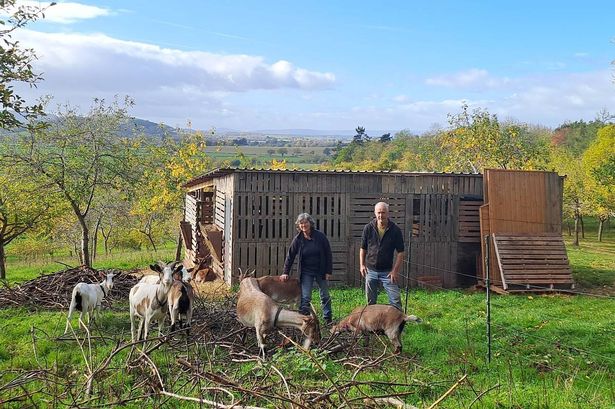
A couple in Herefordshire is fighting to preserve their goat shelter in a historic orchard after a recent planning application was rejected. Anna Lunt sought permission to build a goat shed and tractor shed at Museum Orchard, located near Lugwardine, but faced strong opposition from local residents and parish councillors. The county’s planners denied the application earlier this month, putting the couple’s rare goats at risk of homelessness.
The rejected application has left Anna and her husband, Simon Lunt, determined to appeal the decision to the Planning Inspectorate. Without the goat shed, the couple fears they may receive an enforcement notice mandating the demolition of the sheds, jeopardizing the welfare of their breeding herd, which consists of nine rare ‘English’ nannies and one billy goat. “We have to take their welfare into account,” stated Anna Lunt.
The couple emphasizes that the structures are built primarily from reclaimed materials and do not have footings in the sloping ground. The goat shed is designed to be dismantled in the future, allowing for a vegetable patch to occupy the area, which Anna hopes will alleviate some aesthetic concerns. “If they didn’t like the sheds’ appearance, we would be happy to paint or clad them,” she added, expressing frustration over not being able to present their side of the story during the planning process.
Simon Lunt highlighted their commitment to protecting the historic orchard, which boasts numerous heritage fruit tree varieties. He stated that no trees have been removed to accommodate the buildings. Instead, he believes the goats contribute positively to the orchard’s ecosystem by enriching the soil. “We would hardly choose to damage our trees,” Simon remarked, countering allegations of potential harm to the orchard’s flora.
In addition to the appeal, the couple has submitted a licensing application for the Blue Barn, located near the tractor shed, where they produce and stockpile Blue Barn Cider. The cider is made entirely from the orchard’s produce, utilizing wild yeast. Simon Lunt expressed a desire to sell the cider directly to the public, stating, “We just want to be able to sell it to the public without going through a middle man.” This venture, however, may face scrutiny from neighbors concerned about its impact.
As the Lunts navigate the planning landscape, their commitment to the welfare of their goats and the preservation of the historic orchard remains unwavering. The outcome of their appeal may ultimately determine the future of both their livestock and the cherished trees they aim to protect.

Liverpool Activates Backup Plan as Man City Targets Antoine Semenyo

British Father Drowns in Thailand After Being Swept Away by Waves

TorroFX Set to Transform Trading Landscape with Launch on December 1, 2025

BBC Breakfast’s Sally Nugent Apologizes for News Disruption

Recognize Bowel Cancer Signs During Festive Overindulgence

Marie Helvin Discusses Dating Challenges and Body Confidence at 73

Danny Morrison Reflects on United Ireland, Gerry Adams, and Stormont’s Future

Southampton University and Siemens Collaborate to Advance MEMS Technology

Barcelona’s Deco Highlights Rashford’s Burden at Manchester United

Iconic 90s TV Show House Hits Market for £1.1 Million

Milk Bank Urges Mothers to Donate for Premature Babies’ Health

Alessia Russo Signs Long-Term Deal with Arsenal Ahead of WSL Season

Shoppers Flock to Discounted Neck Pillow on Amazon for Travel Comfort

Museums Body Critiques EHRC Proposals on Gender Facilities

Trump Visits Europe: Business, Politics, or Leisure?

Japanese Teen Sorato Shimizu Breaks U18 100m Record in 10 Seconds

Couple Shares Inspiring Love Story Defying Height Stereotypes

Anglian Water Raises Concerns Over Proposed AI Data Centre
-
 Entertainment2 months ago
Iconic 90s TV Show House Hits Market for £1.1 Million
-
 Lifestyle4 months ago
Milk Bank Urges Mothers to Donate for Premature Babies’ Health
-
 Sports3 months ago
Alessia Russo Signs Long-Term Deal with Arsenal Ahead of WSL Season
-
 Lifestyle4 months ago
Shoppers Flock to Discounted Neck Pillow on Amazon for Travel Comfort
-
 Politics4 months ago
Museums Body Critiques EHRC Proposals on Gender Facilities
-
 Business4 months ago
Trump Visits Europe: Business, Politics, or Leisure?
-
 Lifestyle4 months ago
Japanese Teen Sorato Shimizu Breaks U18 100m Record in 10 Seconds
-
 Politics4 months ago
Couple Shares Inspiring Love Story Defying Height Stereotypes
-
 World4 months ago
Anglian Water Raises Concerns Over Proposed AI Data Centre
-

 Sports4 months ago
Bournemouth Dominates Everton with 3-0 Victory in Premier League Summer Series
-

 World4 months ago
Wreckage of Missing Russian Passenger Plane Discovered in Flames
-

 Lifestyle4 months ago
Shoppers Rave About Roman’s £42 Midi Dress, Calling It ‘Elegant’