
Top Stories
Legal Pressures on Media Highlighted by Nebojsa Vucinic

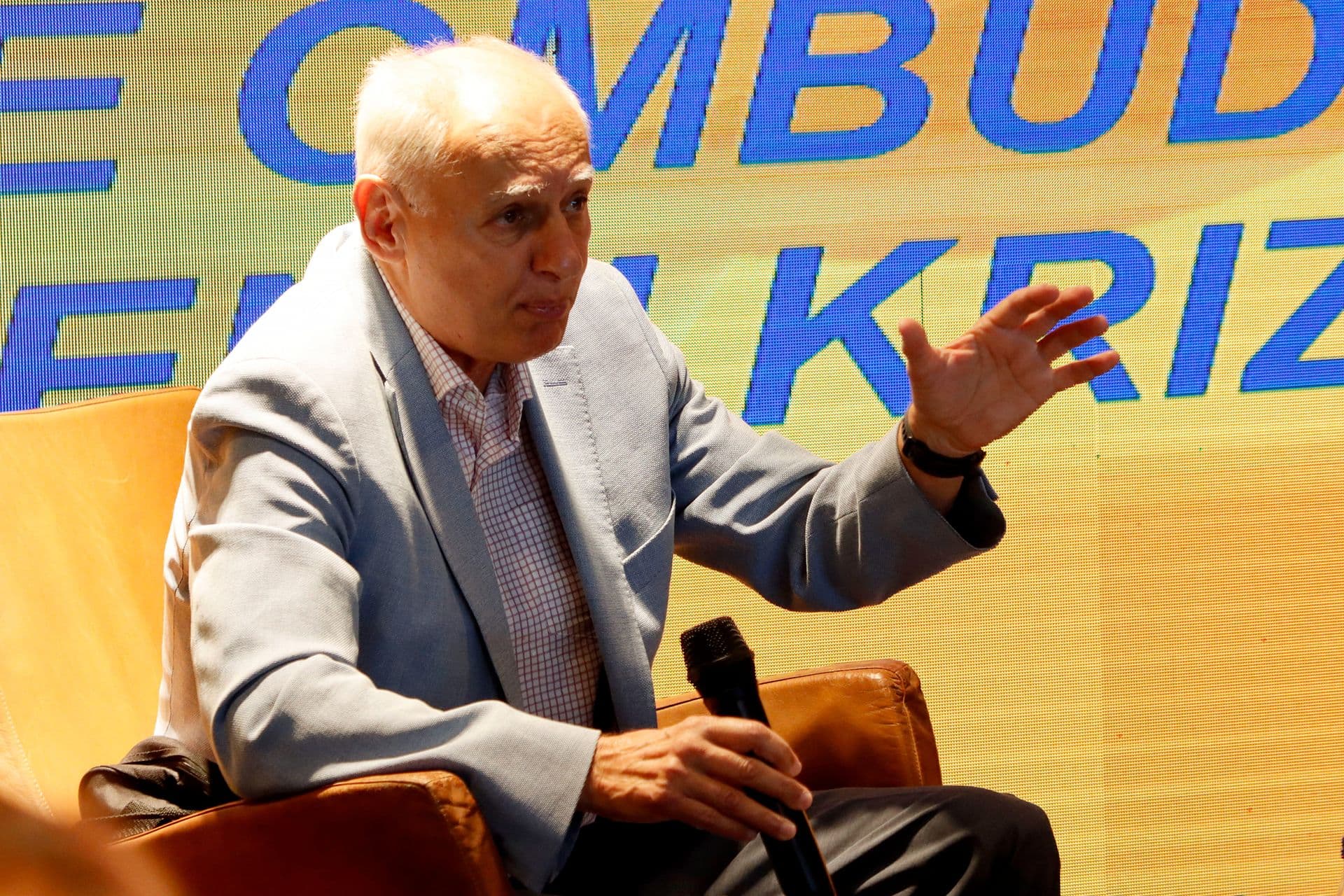
Montenegro is facing significant political and legal challenges, as highlighted by concerns from legal experts regarding potential pressures on media outlets and critical democratic thought. In a recent interview with Televizija E, Professor of Law and former judge of the European Court of Human Rights, Nebojsa Vucinic, pointed out serious legal indications that suggest interference with certain media and the public’s right to critique the government.
Vucinic emphasized that despite the complex political, legal, and moral landscape in Montenegro, the country’s courts and judges maintain the credibility necessary to clarify these issues. He stated, “The fundamental function of media in a democratic society is to critically challenge the authorities.” He expressed concern that the current state of affairs undermines the presumption of innocence, which has become absurd in Montenegro.
The professor noted that recent detentions appear designed to sway public opinion on matters that would otherwise be challenging to influence. He remarked, “In all situations where there is much noise and spectacle, there is little substance and content.” Vucinic raised alarms about the selective dissemination of information and the privileged status of certain media, indicating strong suspicions of political pressure aimed at silencing dissenting voices, whether they belong to individuals or media outlets.
Vucinic cautioned that Montenegro risks losing its aspirations to be a democratic society. He reminded listeners that every ruling from the European Court contains references to Article 10 regarding freedom of thought and expression, and the role of media. “The media’s purpose is to compel the government to act in accordance with the public’s interests,” he asserted.
He further elaborated on the increasing instances of journalists seeking protection from the European Court of Human Rights. Vucinic indicated that there is sufficient material in the current situation to warrant an appeal to Strasbourg. “You must go through the appropriate procedures of the Montenegrin judicial system, up to the Constitutional Court, before proceeding,” he explained.
While there have been various cases where authorities have institutionalized attacks on specific media outlets, Vucinic cited other countries such as Hungary, the Czech Republic, Slovakia, and Switzerland where media have sought legal recourse to maintain their independence. He affirmed, “The ultimate option for targeted media and journalists is to utilize the court in Strasbourg,” though he expressed hope that such measures would not be necessary.
Vucinic expressed confidence that independent and fair judicial processes would ultimately clarify these matters, determining guilt or innocence as appropriate. He referred to the Krstovic family case as a strong indication that the right to the presumption of innocence is not functioning correctly, a fundamental legal principle that has emerged from centuries of European revolutions.
“I have faith in the courts and hope they will bring these issues to resolution,” Vucinic concluded, stressing the importance of upholding democratic principles in Montenegro’s evolving political landscape.

Cattle Showcases Thrive at RUAS Winter Fair 2023

UK and US Strike Zero Tariff Agreement on Pharmaceuticals

Maya Jama Stuns in Strapless Ensemble at Qatar Grand Prix

Russia and Saudi Arabia Launch Visa-Free Travel Agreement

ISOLDE Facility Marks 10 Years of Advancements in Nuclear Research

Voters Demand Resignation of Chancellor Rachel Reeves Over Tax Hikes

Shoppers Save 30% on Marks & Spencer’s Viral Velvet Dress

Health Campaigners Urge End to Smoking Exemption for Lounges

Charity Shop Surprise: Woman Finds Joggers Worth £2,000 for £8

Iconic 90s TV Show House Hits Market for £1.1 Million

Milk Bank Urges Mothers to Donate for Premature Babies’ Health

Alessia Russo Signs Long-Term Deal with Arsenal Ahead of WSL Season

Shoppers Flock to Discounted Neck Pillow on Amazon for Travel Comfort

Museums Body Critiques EHRC Proposals on Gender Facilities

Trump Visits Europe: Business, Politics, or Leisure?

Japanese Teen Sorato Shimizu Breaks U18 100m Record in 10 Seconds

Couple Shares Inspiring Love Story Defying Height Stereotypes

Anglian Water Raises Concerns Over Proposed AI Data Centre
-
 Entertainment2 months ago
Iconic 90s TV Show House Hits Market for £1.1 Million
-
 Lifestyle4 months ago
Milk Bank Urges Mothers to Donate for Premature Babies’ Health
-
 Sports3 months ago
Alessia Russo Signs Long-Term Deal with Arsenal Ahead of WSL Season
-
 Lifestyle4 months ago
Shoppers Flock to Discounted Neck Pillow on Amazon for Travel Comfort
-
 Politics4 months ago
Museums Body Critiques EHRC Proposals on Gender Facilities
-
 Business4 months ago
Trump Visits Europe: Business, Politics, or Leisure?
-
 Lifestyle4 months ago
Japanese Teen Sorato Shimizu Breaks U18 100m Record in 10 Seconds
-
 Politics4 months ago
Couple Shares Inspiring Love Story Defying Height Stereotypes
-
 World4 months ago
Anglian Water Raises Concerns Over Proposed AI Data Centre
-

 Sports4 months ago
Bournemouth Dominates Everton with 3-0 Victory in Premier League Summer Series
-

 World4 months ago
Wreckage of Missing Russian Passenger Plane Discovered in Flames
-

 Lifestyle4 months ago
Shoppers Rave About Roman’s £42 Midi Dress, Calling It ‘Elegant’