
World
Experts Warn of Inevitable Conflict with Russia Over NATO Support

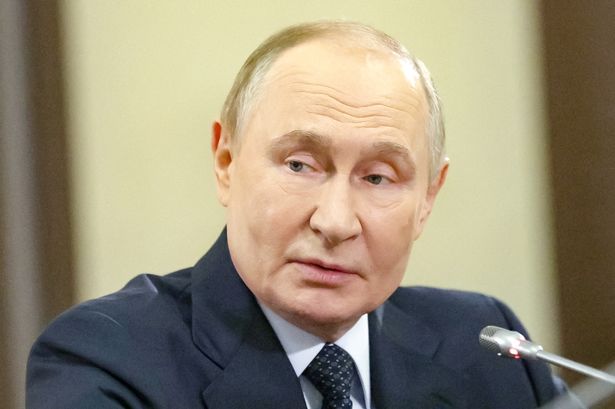
Tensions between Russia and NATO have reached a critical point, with experts asserting that a conflict is becoming increasingly unavoidable. According to Estonian Defence Minister Hanno Pevkur, recent Russian provocations, including hybrid attacks, are designed to compel NATO members to prioritize their own defenses over providing support to Ukraine. He indicated that without decisive actions to deter Vladimir Putin, the potential for war looms larger.
The warning comes as Keir Giles of Chatham House emphasizes the need for European nations to prepare collectively for a potential confrontation with Russia. “I fear a kinetic war with Russia is looking inevitable, because the measures to prevent such a war are still not being taken,” Giles stated, highlighting the lack of tangible progress in safeguarding European nations against Russian aggression.
Giles pointed out the vulnerability of countries like Poland, which faced drone attacks on a much smaller scale than those regularly experienced by Ukraine. He noted, “Despite all the rhetoric and promises, we see little concretely achieved.”
Former Estonian Deputy Defence Minister Lauri Almann echoed these sentiments, asserting that all-out conflict could only be averted by demonstrating resolve and strength to Moscow. “Russia respects strength, and that’s the only message that more or less has worked,” he said.
In a similar vein, Mark Galeotti, author of *Putin’s Wars*, warned that the unpredictable nature of Russian decision-making increases the likelihood of conflict. He remarked, “Russia does not actually want war, but the more aggressive and reckless they are, the greater the risks.” Galeotti stressed the importance of credible deterrence, noting that while Putin tends to operate cautiously, he can become emboldened without sufficient pushback.
The current situation has been exacerbated by a series of hybrid attacks from Russia, which have included drone incursions, airspace violations, cyberattacks, and attempts to influence elections in neighboring countries. Pevkur emphasized that these actions are strategically aimed at diverting the attention of NATO allies away from supporting Ukraine. “Russia is deliberately pushing all of us, the NATO allies, to deal with our own matters,” he stated.
Estonia, which shares a 210-mile border with Russia, has felt this pressure acutely. Recently, three MiG-31 fighter jets violated Estonian airspace, an event Pevkur described as unprecedented. He noted that the Estonian military had tracked the aircraft and attempted to establish communication, but the Russian jets reportedly ignored all attempts to contact them.
Pevkur articulated a broader concern about Russia’s intent, stating, “They are testing how far they can go to destabilize society.” He highlighted the need for a robust response to any potential aggression, asserting that Estonia would not allow Russia to undermine its sovereignty. In light of these threats, he added, “When there is an intention to start a war from Russia, then there will be a response—a very heavy response, a very quick response.”
This sentiment was echoed by Margus Tsahkna, Estonia’s Foreign Minister, who reiterated the necessity for a clear message regarding future violations of NATO airspace. He stated, “The message must be unequivocal: future violations will meet a response— including, if necessary, the interception and downing of intruding aircraft.”
To enhance NATO’s collective defense capabilities, Pevkur argued for lessons to be drawn from the ongoing conflict in Ukraine. He concluded that NATO must “increase our speed, and hit them from a much greater distance than they can hit us,” emphasizing the need for a proactive approach to deter Russian aggression.
As the situation continues to evolve, the international community watches closely, recognizing the potential ramifications of an escalating conflict in Eastern Europe. The urgency for a unified response to Russian provocations has never been greater, underscoring the complexities of modern geopolitical dynamics.

Cattle Showcases Thrive at RUAS Winter Fair 2023

UK and US Strike Zero Tariff Agreement on Pharmaceuticals

Maya Jama Stuns in Strapless Ensemble at Qatar Grand Prix

Russia and Saudi Arabia Launch Visa-Free Travel Agreement

ISOLDE Facility Marks 10 Years of Advancements in Nuclear Research

Voters Demand Resignation of Chancellor Rachel Reeves Over Tax Hikes

Shoppers Save 30% on Marks & Spencer’s Viral Velvet Dress

Health Campaigners Urge End to Smoking Exemption for Lounges

Charity Shop Surprise: Woman Finds Joggers Worth £2,000 for £8

Iconic 90s TV Show House Hits Market for £1.1 Million

Milk Bank Urges Mothers to Donate for Premature Babies’ Health

Alessia Russo Signs Long-Term Deal with Arsenal Ahead of WSL Season

Shoppers Flock to Discounted Neck Pillow on Amazon for Travel Comfort

Museums Body Critiques EHRC Proposals on Gender Facilities

Trump Visits Europe: Business, Politics, or Leisure?

Japanese Teen Sorato Shimizu Breaks U18 100m Record in 10 Seconds

Couple Shares Inspiring Love Story Defying Height Stereotypes

Anglian Water Raises Concerns Over Proposed AI Data Centre
-
 Entertainment2 months ago
Iconic 90s TV Show House Hits Market for £1.1 Million
-
 Lifestyle4 months ago
Milk Bank Urges Mothers to Donate for Premature Babies’ Health
-
 Sports3 months ago
Alessia Russo Signs Long-Term Deal with Arsenal Ahead of WSL Season
-
 Lifestyle4 months ago
Shoppers Flock to Discounted Neck Pillow on Amazon for Travel Comfort
-
 Politics4 months ago
Museums Body Critiques EHRC Proposals on Gender Facilities
-
 Business4 months ago
Trump Visits Europe: Business, Politics, or Leisure?
-
 Lifestyle4 months ago
Japanese Teen Sorato Shimizu Breaks U18 100m Record in 10 Seconds
-
 Politics4 months ago
Couple Shares Inspiring Love Story Defying Height Stereotypes
-
 World4 months ago
Anglian Water Raises Concerns Over Proposed AI Data Centre
-

 Sports4 months ago
Bournemouth Dominates Everton with 3-0 Victory in Premier League Summer Series
-

 World4 months ago
Wreckage of Missing Russian Passenger Plane Discovered in Flames
-

 Lifestyle4 months ago
Shoppers Rave About Roman’s £42 Midi Dress, Calling It ‘Elegant’