
World
UN Security Council Endorses Morocco’s Sovereignty Claim in Sahara

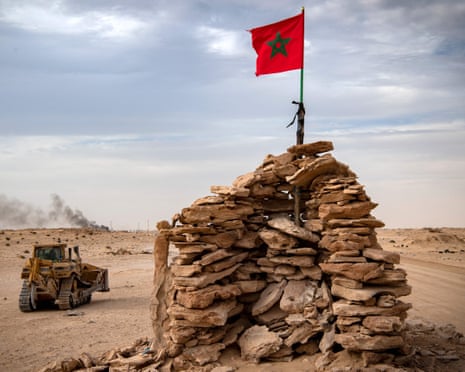
The UN Security Council has approved a resolution supporting Morocco’s claim to the contested territory of Western Sahara. The vote, held on October 27, 2023, was backed by the United States and represents the strongest endorsement yet for Morocco’s assertion of sovereignty over the region, despite significant opposition from Algeria.
The resolution acknowledges Morocco’s autonomy plan as a foundation for future negotiations. It notably refrains from mentioning a referendum on self-determination, a solution long advocated by the pro-independence Polisario Front, which claims to represent the indigenous Sahrawi people. Algeria, a primary supporter of the Polisario Front, elected not to vote on the resolution.
The UN resolution garnered support from 11 countries, while three—Russia, China, and Pakistan—abstained. Following the vote, Mike Waltz, the US ambassador to the UN, stated that the decision is “historic” and will help foster a long-awaited peace in Western Sahara. In contrast, Amar Bendjama, Algeria’s ambassador to the UN, criticized the resolution for not meeting the aspirations of the Sahrawi people, expressing that it falls short of what is necessary for lasting peace.
The resolution posits that “genuine autonomy under Moroccan sovereignty could constitute a most feasible solution.” Additionally, it extends the UN peacekeeping mission in Western Sahara for another year, a continuation of efforts that have persisted for over three decades. Previous extensions, however, have not included references to Morocco’s preferred outcomes.
In urging all parties to “seize this unprecedented opportunity for a lasting peace,” the resolution also tasks UN Secretary-General António Guterres with reviewing the peacekeeping mission’s mandate within six months, contingent on progress in negotiations. This shift has the potential to disrupt a protracted process that has remained unresolved despite the presence of a UN peacekeeping mission intended to be temporary.
Demonstrations erupted in Sahrawi refugee camps in Algeria following the vote, with participants vowing to continue their struggle for self-determination. Morocco currently controls nearly all of Western Sahara, with the exception of a narrow strip known as the “free zone,” which lies east of a Moroccan-built sand wall.
The conflict traces its roots back to 1975, when Spain relinquished control of the territory. A ceasefire in 1991 aimed to facilitate a referendum on self-determination, but disputes over voter eligibility have stalled progress. Over the years, Morocco has invested significantly in the region, developing infrastructure, including a deepwater port and a 656-mile (1,055-km) highway, while state subsidies have helped maintain low prices for food and energy.
Since Polisario withdrew from the ceasefire in 2020 due to clashes near a road being constructed by Morocco to Mauritania, reports of military activity have increased, although Morocco has largely denied any open conflict. The UN describes the situation as “low-level hostilities.” In response to the recent resolution, Polisario stated it would not participate in any efforts that could legitimize Morocco’s “illegal military occupation,” asserting that true peace cannot be achieved by endorsing expansionist actions.
Morocco’s Foreign Ministry did not provide comments prior to the vote. The ongoing conflict significantly influences diplomatic relations in North Africa, with Morocco viewing support for its autonomy plan as a measure of its allies’ commitment.
In a previous discussion, UN envoy Staffan de Mistura proposed the partitioning of Western Sahara, a suggestion that was rejected by both parties. He emphasized the need for Morocco to clarify the specifics of its autonomy proposal, warning that a lack of progress could raise questions about the UN’s relevance in the situation.
The recent vote occurs in the context of the United States reducing its funding for various UN programs, including peacekeeping initiatives. US officials are adopting a selective funding approach, determining which operations align with their national interests while arguing that the UN’s budget is excessive. They plan to halt new contributions until a comprehensive review of UN agencies and programs is completed.

Marie Helvin Discusses Dating Challenges and Body Confidence at 73

Danny Morrison Reflects on United Ireland, Gerry Adams, and Stormont’s Future

Southampton University and Siemens Collaborate to Advance MEMS Technology

Barcelona’s Deco Highlights Rashford’s Burden at Manchester United

Rolls-Royce Shares Surge 77% in 2025: What’s Next for Investors?

Welsh Ambulance Service Targets Frequent 999 Callers for Support

Welsh Ambulance Service Targets Frequent 999 Callers for Better Care

Bremen’s Marble Imaging Secures €5.3M for Revolutionary Satellites

WNBA and Players Association Secure 40-Day Extension on CBA Talks

Iconic 90s TV Show House Hits Market for £1.1 Million

Milk Bank Urges Mothers to Donate for Premature Babies’ Health

Alessia Russo Signs Long-Term Deal with Arsenal Ahead of WSL Season

Shoppers Flock to Discounted Neck Pillow on Amazon for Travel Comfort

Museums Body Critiques EHRC Proposals on Gender Facilities

Trump Visits Europe: Business, Politics, or Leisure?

Japanese Teen Sorato Shimizu Breaks U18 100m Record in 10 Seconds

Couple Shares Inspiring Love Story Defying Height Stereotypes

Anglian Water Raises Concerns Over Proposed AI Data Centre
-
 Entertainment2 months ago
Iconic 90s TV Show House Hits Market for £1.1 Million
-
 Lifestyle4 months ago
Milk Bank Urges Mothers to Donate for Premature Babies’ Health
-
 Sports3 months ago
Alessia Russo Signs Long-Term Deal with Arsenal Ahead of WSL Season
-
 Lifestyle4 months ago
Shoppers Flock to Discounted Neck Pillow on Amazon for Travel Comfort
-
 Politics4 months ago
Museums Body Critiques EHRC Proposals on Gender Facilities
-
 Business4 months ago
Trump Visits Europe: Business, Politics, or Leisure?
-
 Lifestyle4 months ago
Japanese Teen Sorato Shimizu Breaks U18 100m Record in 10 Seconds
-
 Politics4 months ago
Couple Shares Inspiring Love Story Defying Height Stereotypes
-
 World4 months ago
Anglian Water Raises Concerns Over Proposed AI Data Centre
-

 Sports4 months ago
Bournemouth Dominates Everton with 3-0 Victory in Premier League Summer Series
-

 World4 months ago
Wreckage of Missing Russian Passenger Plane Discovered in Flames
-

 Lifestyle4 months ago
Shoppers Rave About Roman’s £42 Midi Dress, Calling It ‘Elegant’