
Lifestyle
Couple Appeals Planning Decision to Save Rare Goats’ Shelter

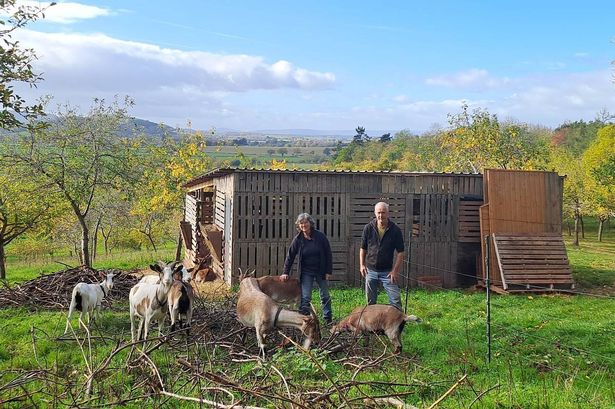
A couple in Herefordshire is fighting to overturn a planning decision that could leave their rare goats homeless. Anna and Simon Lunt submitted a retrospective planning application for a goat shed and tractor shed at Museum Orchard, located near Lugwardine, east of Hereford. The application faced strong opposition from local residents and was rejected by county planners earlier this month.
The Lunts plan to appeal the decision to the government’s Planning Inspectorate, fearing they may soon receive an enforcement notice requiring the demolition of the sheds. Anna Lunt emphasized the urgent need for the structures, stating that without them, they risk losing their breeding herd of nine rare ‘English’ nannies and one billy goat. “We have to take their welfare into account,” she said, highlighting the goats’ specific need for shelter from wet weather.
The couple asserts that both buildings are constructed without foundations and primarily from reclaimed materials that would have otherwise ended up in landfill. Anna Lunt mentioned that the goat shed is designed to be dismantled in the future, with plans to replace its footprint with a vegetable patch, promoting sustainability in their farming practices.
In response to concerns about the aesthetic impact of the sheds, she expressed willingness to make adjustments. “If they didn’t like the sheds’ appearance, we would be happy to paint or clad them,” she added. The Lunts feel they were not given an opportunity to present their side of the story during the planning process. Simon Lunt noted that some objections came from individuals they previously considered friends.
Despite fears that the structures could harm the historic orchard trees, the couple maintains that they have not removed any trees to accommodate the sheds. Simon Lunt explained that with proper protection, the goats actually enhance the soil quality, benefiting the trees rather than harming them. “We would hardly choose to damage our trees,” he stated.
In addition to the sheds, a public consultation recently closed regarding a licensing application for the Blue Barn, located near the tractor shed. The couple plans to produce and sell Blue Barn Cider, made entirely from the orchard’s produce, including wild yeast. Simon Lunt expressed his desire to sell the cider directly to the public, avoiding intermediaries, but he acknowledged that this venture could also face opposition from neighbors.
The outcome of the appeal to the Planning Inspectorate could significantly impact not only the Lunts’ farming operations but also the future of their rare goats. As they navigate these challenges, the couple remains committed to protecting their animals and their heritage at Museum Orchard.

Moyes Faces Referee Controversy Ahead of Everton vs Chelsea Clash

Man Hospitalised After Assault Outside Shop in Sandwell

Fred MacAulay and Ally McCoist Reunite for Special World Cup Show

NoOnes Targets $1 Trillion Gift Card Market to Enhance Crypto Access

Beloved Actor Matt Clark Passes Away at 89, Fans Mourn Loss

Discover How Milk Thistle Supplements Enhance Liver Health

Irish Community Care Celebrates 60 Years of Support in Liverpool

New Affordable Housing Development Planned for Crawley Site

Millions of Parking Tickets Issued Amid Calls for Reform

Claire Tomlinson Bids Farewell to Sky Sports After 27 Years

Iconic 90s TV Show House Hits Market for £1.1 Million

Tributes Flow for Kerry Gentle, Beloved RNLI Volunteer and Artist

Nathan Cleary’s Family Celebrates Engagement Amid Romance Rumors

Milk Bank Urges Mothers to Donate for Premature Babies’ Health

Shoppers Flock to Discounted Neck Pillow on Amazon for Travel Comfort

Alessia Russo Signs Long-Term Deal with Arsenal Ahead of WSL Season

Nuneaton Town FC Advances Plans for New Stadium in Stockingford

Museums Body Critiques EHRC Proposals on Gender Facilities
-
 Lifestyle7 months ago
Claire Tomlinson Bids Farewell to Sky Sports After 27 Years
-
 Entertainment10 months ago
Iconic 90s TV Show House Hits Market for £1.1 Million
-
 Lifestyle7 months ago
Tributes Flow for Kerry Gentle, Beloved RNLI Volunteer and Artist
-
 Sports11 months ago
Nathan Cleary’s Family Celebrates Engagement Amid Romance Rumors
-
 Lifestyle12 months ago
Milk Bank Urges Mothers to Donate for Premature Babies’ Health
-
 Lifestyle11 months ago
Shoppers Flock to Discounted Neck Pillow on Amazon for Travel Comfort
-
 Sports10 months ago
Alessia Russo Signs Long-Term Deal with Arsenal Ahead of WSL Season
-
 Sports8 months ago
Nuneaton Town FC Advances Plans for New Stadium in Stockingford
-
 Politics12 months ago
Museums Body Critiques EHRC Proposals on Gender Facilities
-

 Lifestyle11 months ago
Exploring England’s Cathedrals: A Journey Through History and Architecture
-

 Business12 months ago
Trump Visits Europe: Business, Politics, or Leisure?
-

 Lifestyle12 months ago
Japanese Teen Sorato Shimizu Breaks U18 100m Record in 10 Seconds