
Science
New Research Challenges Longheld Beliefs About Static Electricity

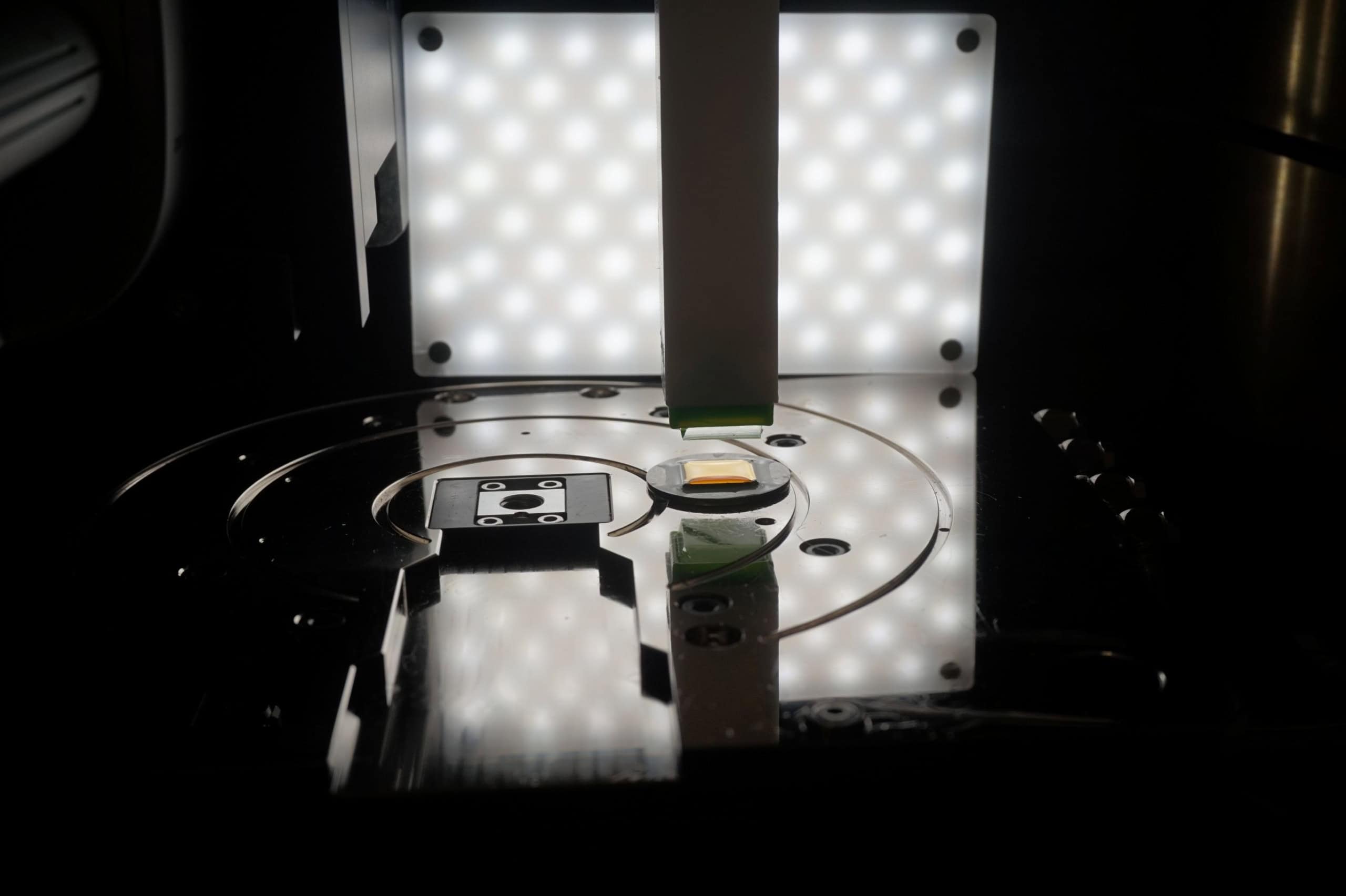
Researchers at the Institute of Science and Technology Austria (ISTA) have unveiled new findings on static electricity, challenging established interpretations in the field. By capturing detailed images of charge distributions during the transfer of charge between surfaces, the team’s work enhances our understanding of charge behavior on insulating materials, which has long puzzled scientists.
Static electricity, often referred to as contact electrification, occurs when charge is transferred through direct contact between objects. A common illustration of this phenomenon is rubbing a balloon on hair, causing strands to stand on end. However, static electricity also plays a role in various everyday activities, such as grinding coffee and transporting pollen, and may even influence planetary formation.
In their latest research, the ISTA team utilized advanced techniques to study contact electrification. They employed a method called scanning Kelvin probe microscopy (SKPM) for larger surfaces and Kelvin probe force microscopy (KPFM) for nanoscale observations. Traditionally, these methods have struggled to interpret the stationary charge patterns left post-contact electrification and their evolution over time.
Challenging the norm, the ISTA researchers posed a different question: when does the rapid dynamics of charge transfer outpace the ability to gather meaningful data from stationary charge patterns?
Innovative Experimental Design
PhD student Felix Pertl led the effort by designing an innovative setup capable of rapidly measuring surface charge with KPFM. This system allows for a swift transfer of the sample beneath a linear actuator to facilitate charge exchange with another material, then returns it for imaging. Pertl noted, “In a typical setup, moving the sample and recalibrating can take tens of minutes. Our system completes this in around 30 seconds.”
This increase in speed proved crucial, as the researchers discovered that the transferred charge dissipated faster than typical KPFM scan times. Their findings indicated that the charge was uniformly distributed across the surface, with its dissipation heavily influenced by the material’s electrical conductivity. Further mathematical modeling confirmed that more insulating materials retained charge longer.
Pertl’s results raised significant questions regarding earlier studies that suggested surface charge heterogeneity. The most influential paper in the field reported varying distributions of charge, but the ISTA team’s observations revealed an essentially homogeneous distribution instead. Pertl expressed the difficulty of reconciling this discrepancy with previous findings, stating, “Convincing both my principal investigator and myself that our data revealed a different physical mechanism required patience and trust in our experimental approach.”
A Historical Perspective
The study of contact electrification has a rich historical backdrop. Notably, William Gilbert, a 16th-century English scientist, was among the first to investigate these phenomena. He coined the term “electricity” and established foundational principles about how magnets and contact-charged insulators behave over time.
Philippe Molinié from France’s GeePs Laboratory commented on the ongoing complexities of contact electrification, noting that the surfaces of insulating materials are highly intricate and affect charge transfer at the molecular level. He stated, “The dynamics of charge neutralization… is much more complex than could be described by a simple resistance-capacitor model.”
The ISTA researchers hope their findings will lead to a more discerning interpretation of KPFM data in future studies, emphasizing the importance of considering sample grounding and bulk conductivity in analyzing charge patterns. Pertl added, “We plan to deliberately engineer surface charge heterogeneity into our samples to better control the spatial distribution of charge.”
Their research is documented in the journal Phys. Rev. Lett., and it sets the stage for further investigations into the nuanced behaviors of static electricity and its implications across multiple scientific domains.

Moyes Faces Referee Controversy Ahead of Everton vs Chelsea Clash

Man Hospitalised After Assault Outside Shop in Sandwell

Fred MacAulay and Ally McCoist Reunite for Special World Cup Show

NoOnes Targets $1 Trillion Gift Card Market to Enhance Crypto Access

Beloved Actor Matt Clark Passes Away at 89, Fans Mourn Loss

Discover How Milk Thistle Supplements Enhance Liver Health

Irish Community Care Celebrates 60 Years of Support in Liverpool

New Affordable Housing Development Planned for Crawley Site

Millions of Parking Tickets Issued Amid Calls for Reform

Claire Tomlinson Bids Farewell to Sky Sports After 27 Years

Iconic 90s TV Show House Hits Market for £1.1 Million

Nathan Cleary’s Family Celebrates Engagement Amid Romance Rumors

Tributes Flow for Kerry Gentle, Beloved RNLI Volunteer and Artist

Milk Bank Urges Mothers to Donate for Premature Babies’ Health

Shoppers Flock to Discounted Neck Pillow on Amazon for Travel Comfort

Alessia Russo Signs Long-Term Deal with Arsenal Ahead of WSL Season

Nuneaton Town FC Advances Plans for New Stadium in Stockingford

Exploring England’s Cathedrals: A Journey Through History and Architecture
-
 Lifestyle8 months ago
Claire Tomlinson Bids Farewell to Sky Sports After 27 Years
-
 Entertainment11 months ago
Iconic 90s TV Show House Hits Market for £1.1 Million
-
 Sports1 year ago
Nathan Cleary’s Family Celebrates Engagement Amid Romance Rumors
-
 Lifestyle8 months ago
Tributes Flow for Kerry Gentle, Beloved RNLI Volunteer and Artist
-
 Lifestyle1 year ago
Milk Bank Urges Mothers to Donate for Premature Babies’ Health
-
 Lifestyle1 year ago
Shoppers Flock to Discounted Neck Pillow on Amazon for Travel Comfort
-
 Sports12 months ago
Alessia Russo Signs Long-Term Deal with Arsenal Ahead of WSL Season
-
 Sports9 months ago
Nuneaton Town FC Advances Plans for New Stadium in Stockingford
-
 Lifestyle1 year ago
Exploring England’s Cathedrals: A Journey Through History and Architecture
-

 Politics1 year ago
Museums Body Critiques EHRC Proposals on Gender Facilities
-

 Business1 year ago
Trump Visits Europe: Business, Politics, or Leisure?
-

 Lifestyle1 year ago
Japanese Teen Sorato Shimizu Breaks U18 100m Record in 10 Seconds