
Science
Supermoon Graces Skies Tonight: Tips for an Unforgettable View

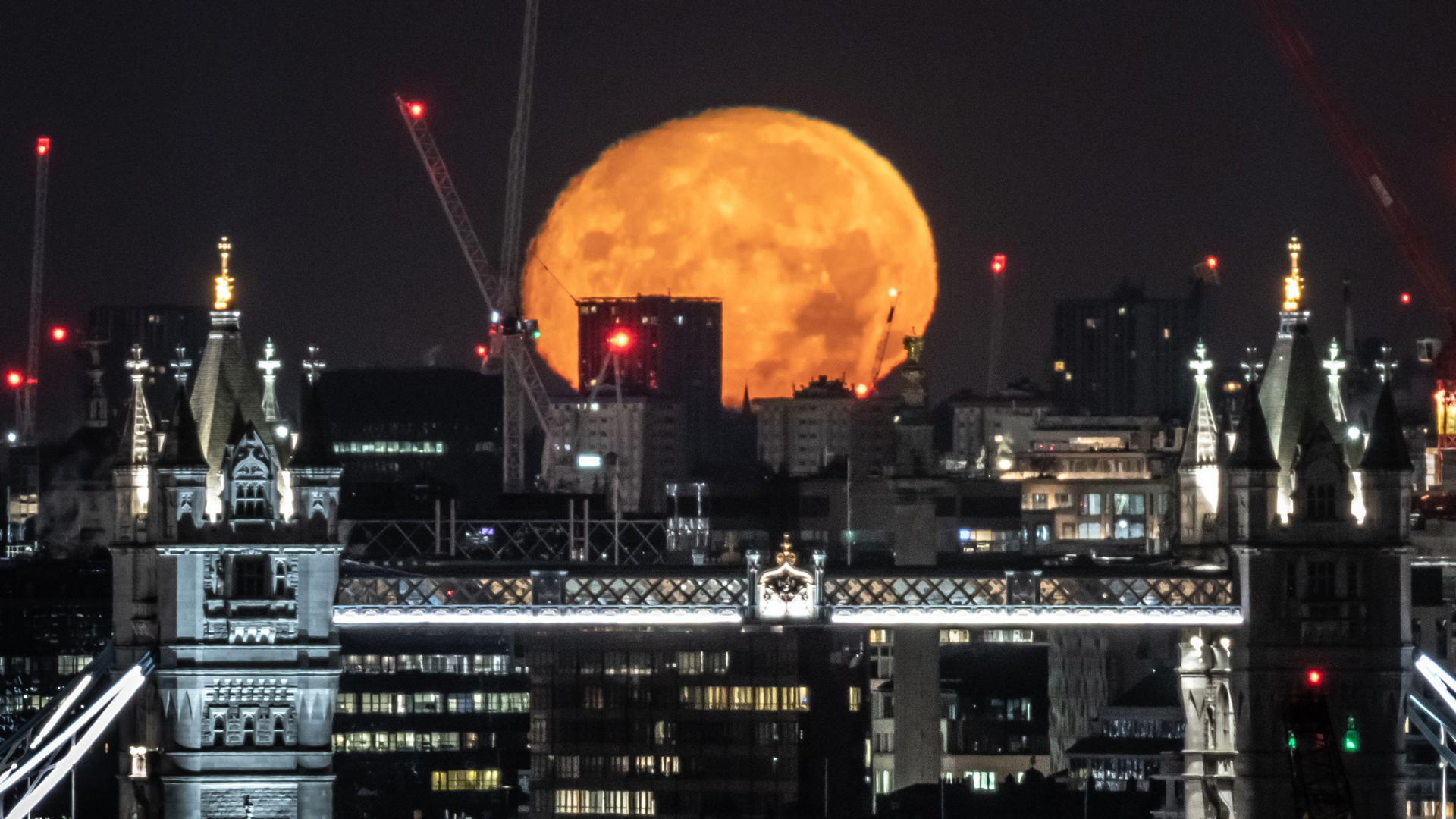
A stunning celestial display awaits stargazers tonight as the first supermoon of 2026 illuminates the night sky. This supermoon, which occurs when the Moon is at its closest point to Earth, will appear larger and brighter than usual, providing a magnificent opportunity for moon enthusiasts and photographers alike.
Understanding Supermoons
A supermoon is defined as a full Moon that occurs when the Moon is at or near its perigee, the point in its elliptical orbit where it is closest to Earth. According to the Royal Greenwich Observatory, the varying distance between the Earth and the Moon results in this impressive visual phenomenon. While the Moon itself does not increase in size, its proximity gives the illusion of a larger lunar presence in the sky. The average distance from the Earth to the Moon is approximately 238,000 miles, but during a supermoon, this distance can shrink to around 221,000 miles.
This year, three supermoons are scheduled: the first tonight on January 3, 2026, followed by another on November 24, 2026, and the last on December 24, 2026. The December supermoon promises to be particularly impressive due to its proximity to Earth.
What Does “Wolf Moon” Mean?
The January supermoon is also referred to as the “Wolf Moon.” This name, popularized by The Old Farmer’s Almanac, relates to the time of year when wolves are believed to howl hungrily during the long winter nights. While the name adds a layer of intrigue, it holds no scientific significance.
Here is the complete list of full Moon names for 2026:
– Wolf Moon – January 3
– Snow Moon – February 1
– Worm Moon – March 3
– Pink Moon – April 1
– Flower Moon – May 1
– Strawberry Moon – June 29
– Buck Moon – July 29
– Sturgeon Moon – August 27
– Corn Moon – September 26
– Hunter’s Moon – October 26
– Beaver Moon – November 24
– Cold Moon – December 24
Tips for Viewing and Photographing the Supermoon
To make the most of tonight’s supermoon, consider a few essential tips for optimal viewing and photography. The supermoon should be the most prominent object in the night sky, but certain conditions can enhance your experience.
First, check your local weather forecast for clear skies, as cloud cover can obstruct visibility. Finding a location with minimal light pollution is crucial. Ideally, seek higher ground, such as a hill, or a flat area away from city lights. Rural settings provide the clearest views of celestial events.
For those interested in capturing the supermoon on camera, using a tripod can significantly improve image quality. Smartphones, particularly models like the iPhone, have features that adapt to low-light conditions when mounted on a tripod. This setup allows for longer exposure times, resulting in clearer and more detailed photographs.
Additionally, viewing the Moon during moonrise or moonset can create a breathtaking optical illusion, making it appear larger against the horizon. This phenomenon occurs because our brains perceive objects near the horizon as larger than they are due to the way we interpret depth perception.
As temperatures drop during winter, remember to dress warmly before heading outdoors. With the right planning and conditions, tonight’s supermoon promises to be a memorable spectacle for all.

Moyes Faces Referee Controversy Ahead of Everton vs Chelsea Clash

Man Hospitalised After Assault Outside Shop in Sandwell

Fred MacAulay and Ally McCoist Reunite for Special World Cup Show

NoOnes Targets $1 Trillion Gift Card Market to Enhance Crypto Access

Beloved Actor Matt Clark Passes Away at 89, Fans Mourn Loss

Discover How Milk Thistle Supplements Enhance Liver Health

Irish Community Care Celebrates 60 Years of Support in Liverpool

New Affordable Housing Development Planned for Crawley Site

Millions of Parking Tickets Issued Amid Calls for Reform

Claire Tomlinson Bids Farewell to Sky Sports After 27 Years

Iconic 90s TV Show House Hits Market for £1.1 Million

Nathan Cleary’s Family Celebrates Engagement Amid Romance Rumors

Tributes Flow for Kerry Gentle, Beloved RNLI Volunteer and Artist

Milk Bank Urges Mothers to Donate for Premature Babies’ Health

Shoppers Flock to Discounted Neck Pillow on Amazon for Travel Comfort

Alessia Russo Signs Long-Term Deal with Arsenal Ahead of WSL Season

Nuneaton Town FC Advances Plans for New Stadium in Stockingford

Exploring England’s Cathedrals: A Journey Through History and Architecture
-
 Lifestyle8 months ago
Claire Tomlinson Bids Farewell to Sky Sports After 27 Years
-
 Entertainment11 months ago
Iconic 90s TV Show House Hits Market for £1.1 Million
-
 Sports1 year ago
Nathan Cleary’s Family Celebrates Engagement Amid Romance Rumors
-
 Lifestyle8 months ago
Tributes Flow for Kerry Gentle, Beloved RNLI Volunteer and Artist
-
 Lifestyle1 year ago
Milk Bank Urges Mothers to Donate for Premature Babies’ Health
-
 Lifestyle1 year ago
Shoppers Flock to Discounted Neck Pillow on Amazon for Travel Comfort
-
 Sports12 months ago
Alessia Russo Signs Long-Term Deal with Arsenal Ahead of WSL Season
-
 Sports9 months ago
Nuneaton Town FC Advances Plans for New Stadium in Stockingford
-
 Lifestyle1 year ago
Exploring England’s Cathedrals: A Journey Through History and Architecture
-

 Politics1 year ago
Museums Body Critiques EHRC Proposals on Gender Facilities
-

 Business1 year ago
Trump Visits Europe: Business, Politics, or Leisure?
-

 Lifestyle1 year ago
Japanese Teen Sorato Shimizu Breaks U18 100m Record in 10 Seconds