
Science
MIT Develops Innovative Origami-Style Mars Habitat for Future Missions

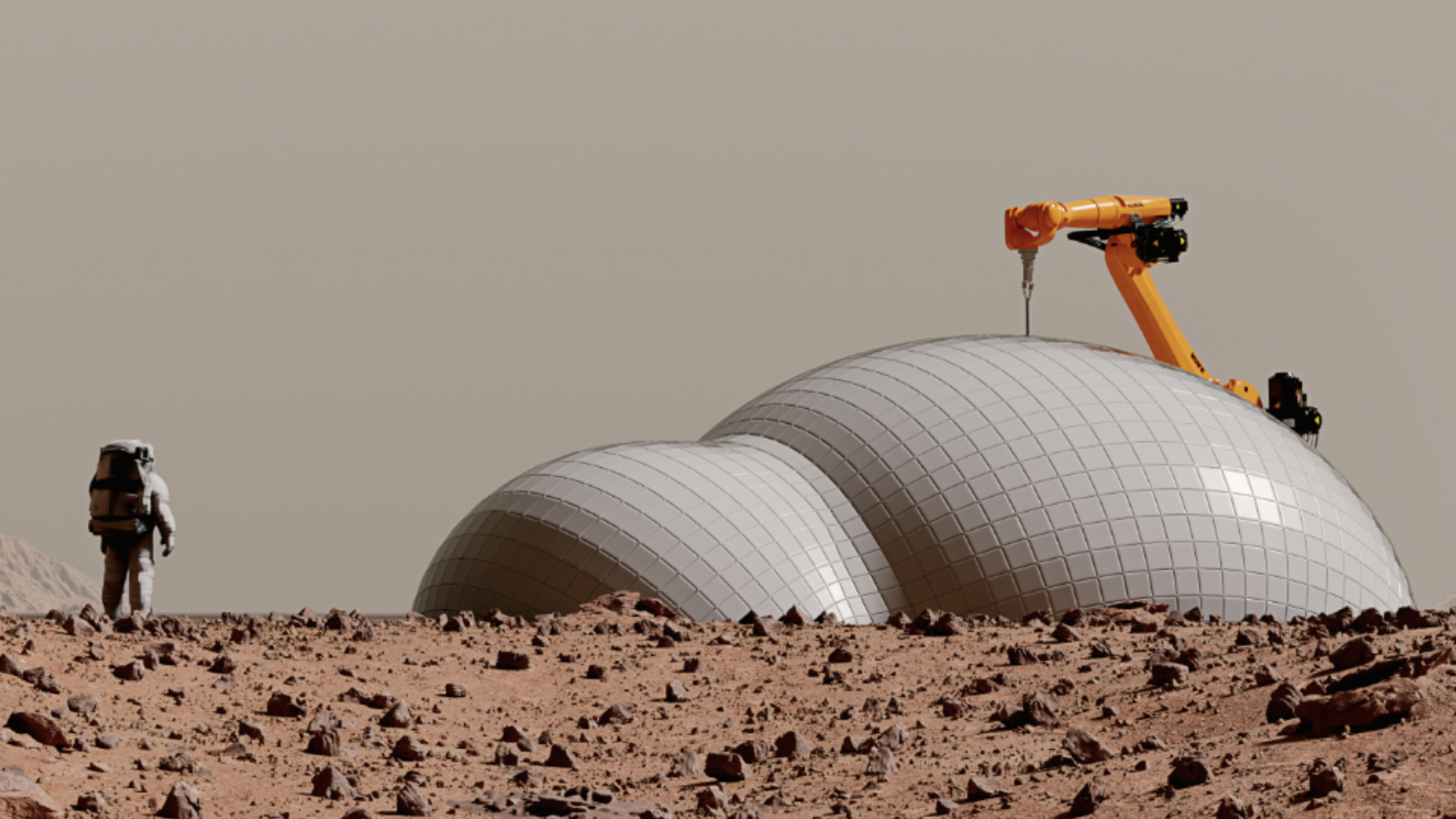
A groundbreaking design from the Massachusetts Institute of Technology (MIT) offers a new approach to creating habitats on Mars. This innovative origami-style base can be deployed with a simple pull of a string, requiring no tools, making it a promising solution for future human missions to the red planet.
The concept revolves around creating modular space habitats that can be easily assembled and disassembled. According to the researchers, these structures could be deployed by robots working on the Martian surface. Such technology not only holds potential for space exploration but could also be critical in rapidly responding to natural disasters on Earth, such as setting up temporary field hospitals after catastrophic events like tsunamis.
How the Design Works
The construction method takes inspiration from kirigami, a Japanese art form that involves cutting materials to create complex shapes. Unlike traditional origami, which involves folding without cutting, kirigami allows for more intricate designs. The researchers developed an algorithm that determines the optimal points necessary for the string to lift the structure into its three-dimensional form.
The lead author, Akib Zaman, emphasized the simplicity of the user experience. “All they have to do is input their design, and our algorithm automatically takes care of the rest,” Zaman stated. The algorithm calculates the shortest path for the string, enabling an efficient deployment process.
The flexibility of the design also extends to the material fabrication methods. Whether through molding or 3D printing, the structures need to adhere to the core design principles established by the researchers for effective operation. Zaman noted, “The simplicity of the whole actuation mechanism is a real benefit of our approach.”
Future Prospects and Space Exploration
Looking ahead, the researchers aim to develop a self-deploying mechanism that could activate without human or robot intervention. This advancement could revolutionize how habitats are established on Mars, allowing them to emerge autonomously from the ground.
While this innovative habitat design is exciting, current plans for human missions to Mars remain in the distant future. NASA is presently focused on the Artemis Program, which aims to return humans to the Moon. Following the success of the uncrewed Artemis I mission in 2022, the next phase is Artemis II, scheduled for crewed test flights between February and April 2026. The goal is to land humans on the Moon again by 2027 with the Artemis III mission, marking the first American crewed lunar landing since the Apollo 17 mission in 1972.
Realistically, crewed missions to Mars are not anticipated until the 2030s at the earliest. As research continues, the MIT-developed origami-style habitats may play a crucial role in the next era of human space exploration.

Moyes Faces Referee Controversy Ahead of Everton vs Chelsea Clash

Man Hospitalised After Assault Outside Shop in Sandwell

Fred MacAulay and Ally McCoist Reunite for Special World Cup Show

NoOnes Targets $1 Trillion Gift Card Market to Enhance Crypto Access

Beloved Actor Matt Clark Passes Away at 89, Fans Mourn Loss

Discover How Milk Thistle Supplements Enhance Liver Health

Irish Community Care Celebrates 60 Years of Support in Liverpool

New Affordable Housing Development Planned for Crawley Site

Millions of Parking Tickets Issued Amid Calls for Reform

Claire Tomlinson Bids Farewell to Sky Sports After 27 Years

Iconic 90s TV Show House Hits Market for £1.1 Million

Nathan Cleary’s Family Celebrates Engagement Amid Romance Rumors

Tributes Flow for Kerry Gentle, Beloved RNLI Volunteer and Artist

Milk Bank Urges Mothers to Donate for Premature Babies’ Health

Shoppers Flock to Discounted Neck Pillow on Amazon for Travel Comfort

Alessia Russo Signs Long-Term Deal with Arsenal Ahead of WSL Season

Nuneaton Town FC Advances Plans for New Stadium in Stockingford

Exploring England’s Cathedrals: A Journey Through History and Architecture
-
 Lifestyle8 months ago
Claire Tomlinson Bids Farewell to Sky Sports After 27 Years
-
 Entertainment11 months ago
Iconic 90s TV Show House Hits Market for £1.1 Million
-
 Sports1 year ago
Nathan Cleary’s Family Celebrates Engagement Amid Romance Rumors
-
 Lifestyle8 months ago
Tributes Flow for Kerry Gentle, Beloved RNLI Volunteer and Artist
-
 Lifestyle1 year ago
Milk Bank Urges Mothers to Donate for Premature Babies’ Health
-
 Lifestyle1 year ago
Shoppers Flock to Discounted Neck Pillow on Amazon for Travel Comfort
-
 Sports12 months ago
Alessia Russo Signs Long-Term Deal with Arsenal Ahead of WSL Season
-
 Sports9 months ago
Nuneaton Town FC Advances Plans for New Stadium in Stockingford
-
 Lifestyle1 year ago
Exploring England’s Cathedrals: A Journey Through History and Architecture
-

 Politics1 year ago
Museums Body Critiques EHRC Proposals on Gender Facilities
-

 Business1 year ago
Trump Visits Europe: Business, Politics, or Leisure?
-

 Lifestyle1 year ago
Japanese Teen Sorato Shimizu Breaks U18 100m Record in 10 Seconds