
Sports
Diplomatic Progress: Ibrahimovic Leads Talks with Croatia

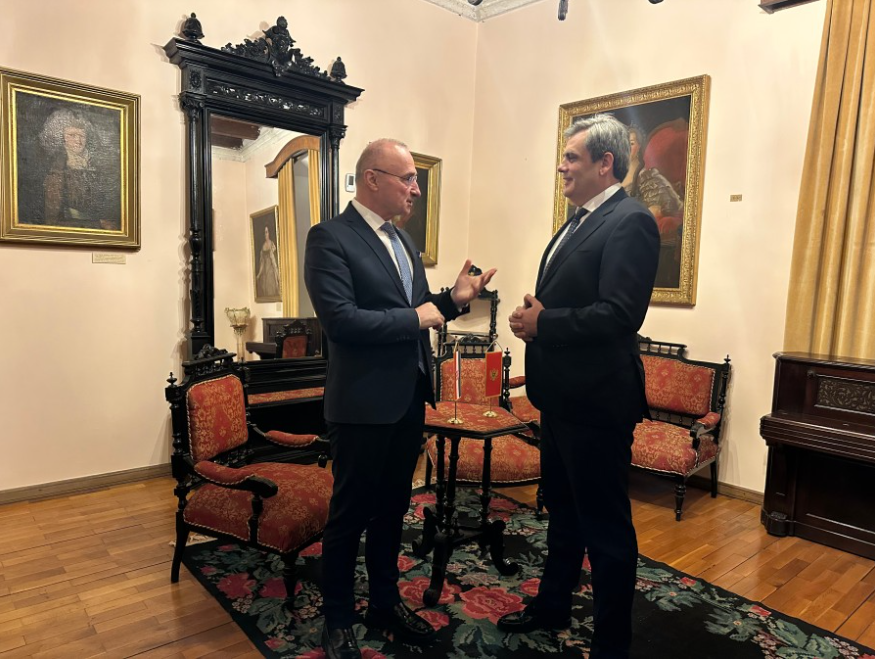
The Ministry of Foreign Affairs of Montenegro, led by Ervin Ibrahimovic, is taking charge of resolving outstanding issues with Croatia. This coordination involves ongoing discussions and the formation of specialized bodies, such as committees and mixed boards, to facilitate bilateral negotiations. This information was confirmed by the ministry in response to inquiries regarding the composition of these working bodies and their activities in the context of Montenegro’s relations with its neighboring European Union member.
Discussions intensified after Montenegro’s Minister of Defense, Dragan Krapovic, announced his leadership of a commission focused on negotiations with Croatia about the future of the vessel Jadran. The Ministry clarified that while diplomatic relations fall under its jurisdiction, several working bodies currently operate to address various issues.
In a recent update, the Ministry of Foreign Affairs provided details about the dynamics of resolving these matters with Croatia. The entire process is under the coordination of the Ministry, with Ibrahimovic spearheading the initiative. The ministry emphasized the importance of maintaining strong dialogue with Croatia, which is expected to contribute significantly to Montenegro’s progress in European integration, particularly in closing Chapter 31. Notably, the necessary benchmarks for this chapter have already been met.
Officials highlighted that both countries made considerable advancements over the past year in enhancing bilateral relations and addressing unresolved issues. This progress stems from ongoing constructive communication at high levels, founded on principles of equality, openness, and partnership.
The Ministry of Foreign Affairs pointed out that although challenges remain, the strides made are evident to both domestic audiences and European partners, who have praised Montenegro’s responsible approach to these matters, as noted in a European Commission report.
To manage the resolution of open issues, the primary mechanism involves bilateral political consultations between Montenegro’s Foreign Affairs Ministry and Croatia’s Ministry of Foreign and European Affairs. These consultations serve as a basis for agreeing on the timeline for addressing issues, ensuring that each is approached thoroughly and with due diligence, considering their complexity and sensitivity.
After a seven-year hiatus, the work of the Mixed Intergovernmental Committee, established to implement the Agreement on Protecting the Rights of the Croatian Minority in Montenegro and the Montenegrin Minority in Croatia, has resumed. This committee consists of representatives from both countries’ ministries and minority groups.
Further efforts include the Government’s Commission for Missing Persons, formed on December 13, 2024. This body will address issues related to individuals who went missing during conflicts in the former Socialist Federal Republic of Yugoslavia. The topic will be part of ongoing discussions with the Croatian side.
Looking ahead, a commission is expected to be formed to address the exchange of arguments regarding the Jadran training ship. This commission will be led by Minister Krapovic, with its composition to be agreed upon in consultation with Ibrahimovic.
Additionally, a new working group will define border issues, which were established under a bilateral agreement, specifically the Protocol on Temporary Border Regime signed in 2002. Given the legal mandates outlined in the Foreign Affairs Law, a commission is proposed to handle demarcation tasks and preparations for concluding international treaties regarding the state border, with a representative from the Ministry of Foreign Affairs expected to lead this initiative.
The Croatian government formed a commission in mid-December to discuss the return of the Jadran vessel and the succession of military assets, which they consider prerequisites for closing Chapter 31, a process that was put on hold since December 2024. The formation document indicates that the issue of military asset succession, particularly concerning the return of Jadran, aligns with the Agreement on Military Succession and is one of the open issues in bilateral dialogue.
Given Croatia’s firm stance on these matters, many view Krapovic’s appointment to lead the commission as potentially provocative. His previous actions, which have raised concerns, suggest that he may not be the best choice for fostering goodwill. Tensions escalated after Ibrahimovic and Croatia’s Foreign Minister, Gordan Grlić Radman, signed an agreement on June 21, 2023, facilitating the transfer of the “Josip Markovic” Cultural Center to the Croatian minority in Tivat.
Krapovic’s actions, including issuing special insignia featuring the silhouette of the Jadran vessel and attempts to recognize the ship as a Montenegrin cultural asset, have drawn criticism. He also threatened to remove a commemorative plaque at a former camp in Morinj.
Croatia’s readiness to respond diplomatically to such provocations has been evident since mid-2024, following the adoption of a resolution on genocide at Jasenovac by the Assembly of Montenegro. This led to Croatia designating several leaders of Montenegro’s ruling coalition as persona non grata.
In December, Croatia issued a non-paper urging Montenegro to ensure fair compensation for those detained in Montenegrin camps during the Homeland War. It also reiterated its claim over the Jadran vessel, demanding its return.
Key points of contention also include the treatment of the Croatian national minority in Montenegro, particularly regarding educational rights and the return of property. Croatia expects Montenegro to address issues impeding reconciliation and obstructing cooperation, especially considering the lack of accountability for war crimes.
Recent developments, such as the arrest of Milorad Kovacevic in Zeta, have been viewed as positive steps in this regard. Croatia seeks clarity on the fate of its 14 missing citizens and insists that the Morinj camp be properly marked. They also call for a reconsideration of the naming of a pool in Kotor after a former camp commander.
Lastly, defining maritime borders remains a crucial issue, given that the 2002 protocol is still in effect.

Moyes Faces Referee Controversy Ahead of Everton vs Chelsea Clash

Man Hospitalised After Assault Outside Shop in Sandwell

Fred MacAulay and Ally McCoist Reunite for Special World Cup Show

NoOnes Targets $1 Trillion Gift Card Market to Enhance Crypto Access

Beloved Actor Matt Clark Passes Away at 89, Fans Mourn Loss

Discover How Milk Thistle Supplements Enhance Liver Health

Irish Community Care Celebrates 60 Years of Support in Liverpool

New Affordable Housing Development Planned for Crawley Site

Millions of Parking Tickets Issued Amid Calls for Reform

Claire Tomlinson Bids Farewell to Sky Sports After 27 Years

Iconic 90s TV Show House Hits Market for £1.1 Million

Nathan Cleary’s Family Celebrates Engagement Amid Romance Rumors

Tributes Flow for Kerry Gentle, Beloved RNLI Volunteer and Artist

Milk Bank Urges Mothers to Donate for Premature Babies’ Health

Shoppers Flock to Discounted Neck Pillow on Amazon for Travel Comfort

Alessia Russo Signs Long-Term Deal with Arsenal Ahead of WSL Season

Nuneaton Town FC Advances Plans for New Stadium in Stockingford

Exploring England’s Cathedrals: A Journey Through History and Architecture
-
 Lifestyle8 months ago
Claire Tomlinson Bids Farewell to Sky Sports After 27 Years
-
 Entertainment11 months ago
Iconic 90s TV Show House Hits Market for £1.1 Million
-
 Sports1 year ago
Nathan Cleary’s Family Celebrates Engagement Amid Romance Rumors
-
 Lifestyle8 months ago
Tributes Flow for Kerry Gentle, Beloved RNLI Volunteer and Artist
-
 Lifestyle1 year ago
Milk Bank Urges Mothers to Donate for Premature Babies’ Health
-
 Lifestyle1 year ago
Shoppers Flock to Discounted Neck Pillow on Amazon for Travel Comfort
-
 Sports12 months ago
Alessia Russo Signs Long-Term Deal with Arsenal Ahead of WSL Season
-
 Sports9 months ago
Nuneaton Town FC Advances Plans for New Stadium in Stockingford
-
 Lifestyle1 year ago
Exploring England’s Cathedrals: A Journey Through History and Architecture
-

 Politics1 year ago
Museums Body Critiques EHRC Proposals on Gender Facilities
-

 Business1 year ago
Trump Visits Europe: Business, Politics, or Leisure?
-

 Lifestyle1 year ago
Japanese Teen Sorato Shimizu Breaks U18 100m Record in 10 Seconds