
World
Killer Whales Off Spain Develop Unique Language, Attack Boats

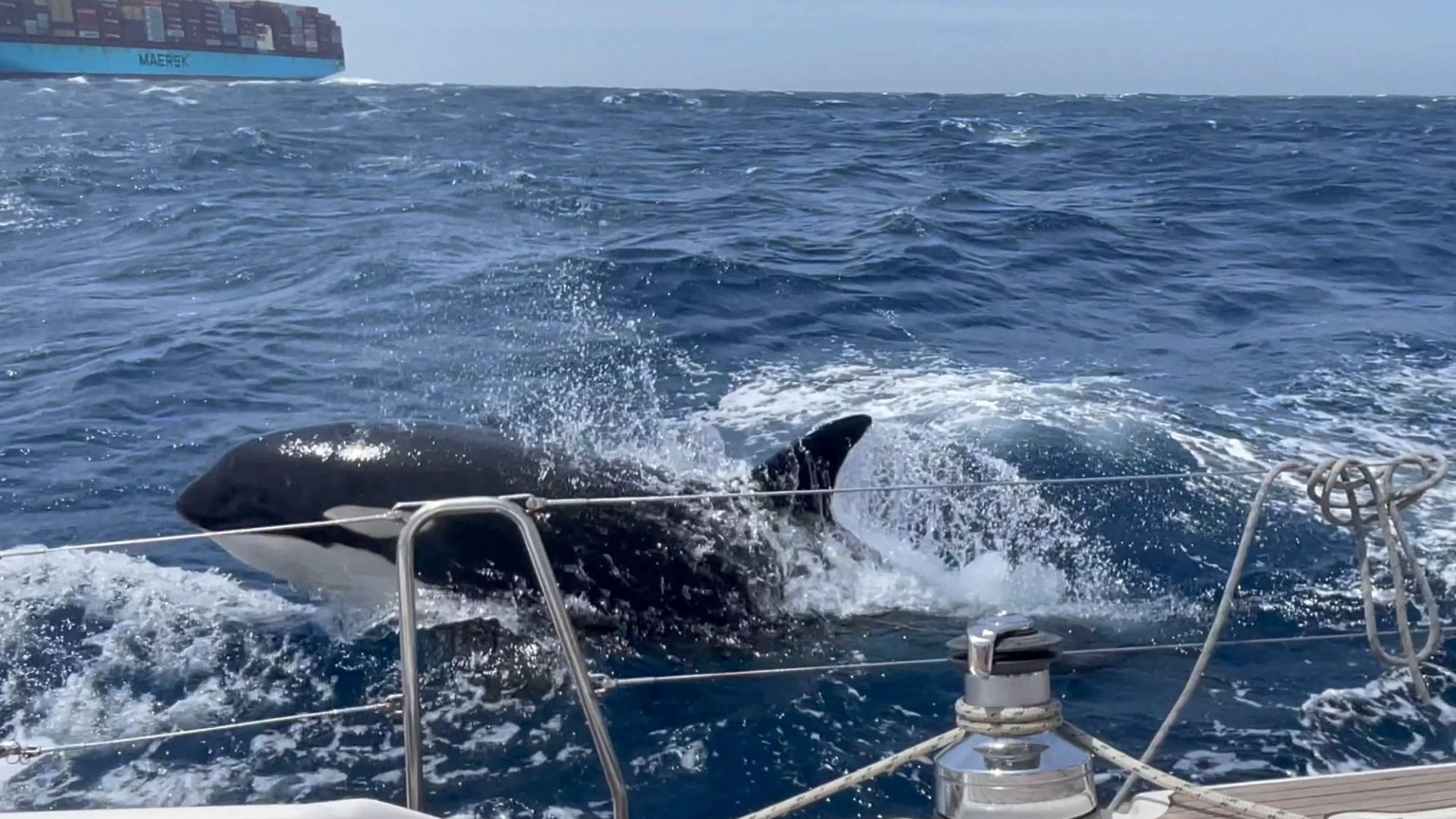
A group of killer whales, led by an individual known as White Gladis, has been involved in a series of aggressive encounters with boats off the coast of Spain. These incidents, which began in 2020, have resulted in damaged vessels and endangered sailors, prompting scientists to investigate the unusual behavior of this particular pod.
Researchers have identified that the orcas are not only attacking boats but are also communicating with one another in a distinct set of sounds that has never been documented before. The findings suggest that the pod has developed a unique language that includes a combination of four different vocalizations.
Dr. Renaud de Stephanis, the president of the Conservation, Information and Research on Cetaceans (CIRCE), has dedicated years to studying these animals. He remarked to The Times, “We’ve been studying these orcas for 30 years. Until now they were thought to be very silent. But now we’ve learnt that their calls are totally, totally different to any others.” This revelation is significant from a cultural conservation perspective, akin to discovering a new human language in Europe.
The orcas typically remain quiet while hunting to avoid alerting their prey. Yet, they are known for their vocalizations, which often include clicking and whistling sounds. Historically, scientists have classified various orca calls as accents rather than entirely new dialects, but White Gladis and her pod have demonstrated a level of complexity that sets them apart. Dr. de Stephanis likened their communication to the differences between Arabic and Latin, indicating a profound linguistic divergence.
The pod has reportedly been sighted over 700 times since the onset of their aggressive behavior, with at least 15 killer whales suspected of involvement in boat ramming incidents. Footage has surfaced showing at least three killer whales attacking a luxury sailboat near Fonte da Telha beach, causing the vessel to capsize. Fortunately, all five individuals aboard were rescued.
In a separate incident, a second boat was immobilized after being struck by the orcas, which resulted in a broken rudder. The crew was successfully evacuated back to shore. Just days later, another boat was targeted off the coast of Portugal, leading to a rescue operation for four individuals aboard a sailboat in Costa da Caparica. These incidents have raised concerns among local sailors and prompted calls for further research into the orcas’ behavior.
As scientists continue to study this remarkable pod, the development of their unique language may provide crucial insights into orca communication and behavior. The ongoing investigation highlights the need for a better understanding of these complex creatures and their interactions with human activities in their habitat.

Moyes Faces Referee Controversy Ahead of Everton vs Chelsea Clash

Man Hospitalised After Assault Outside Shop in Sandwell

Fred MacAulay and Ally McCoist Reunite for Special World Cup Show

NoOnes Targets $1 Trillion Gift Card Market to Enhance Crypto Access

Beloved Actor Matt Clark Passes Away at 89, Fans Mourn Loss

Discover How Milk Thistle Supplements Enhance Liver Health

Irish Community Care Celebrates 60 Years of Support in Liverpool

New Affordable Housing Development Planned for Crawley Site

Millions of Parking Tickets Issued Amid Calls for Reform

Claire Tomlinson Bids Farewell to Sky Sports After 27 Years

Iconic 90s TV Show House Hits Market for £1.1 Million

Tributes Flow for Kerry Gentle, Beloved RNLI Volunteer and Artist

Nathan Cleary’s Family Celebrates Engagement Amid Romance Rumors

Milk Bank Urges Mothers to Donate for Premature Babies’ Health

Shoppers Flock to Discounted Neck Pillow on Amazon for Travel Comfort

Alessia Russo Signs Long-Term Deal with Arsenal Ahead of WSL Season

Nuneaton Town FC Advances Plans for New Stadium in Stockingford

Museums Body Critiques EHRC Proposals on Gender Facilities
-
 Lifestyle6 months ago
Claire Tomlinson Bids Farewell to Sky Sports After 27 Years
-
 Entertainment9 months ago
Iconic 90s TV Show House Hits Market for £1.1 Million
-
 Lifestyle6 months ago
Tributes Flow for Kerry Gentle, Beloved RNLI Volunteer and Artist
-
 Sports11 months ago
Nathan Cleary’s Family Celebrates Engagement Amid Romance Rumors
-
 Lifestyle11 months ago
Milk Bank Urges Mothers to Donate for Premature Babies’ Health
-
 Lifestyle11 months ago
Shoppers Flock to Discounted Neck Pillow on Amazon for Travel Comfort
-
 Sports10 months ago
Alessia Russo Signs Long-Term Deal with Arsenal Ahead of WSL Season
-
 Sports8 months ago
Nuneaton Town FC Advances Plans for New Stadium in Stockingford
-
 Politics11 months ago
Museums Body Critiques EHRC Proposals on Gender Facilities
-

 Lifestyle11 months ago
Exploring England’s Cathedrals: A Journey Through History and Architecture
-

 Business11 months ago
Trump Visits Europe: Business, Politics, or Leisure?
-

 Lifestyle11 months ago
Japanese Teen Sorato Shimizu Breaks U18 100m Record in 10 Seconds