
Top Stories
UK Education Secretary Calls for Total Ban on Smartphones in Schools

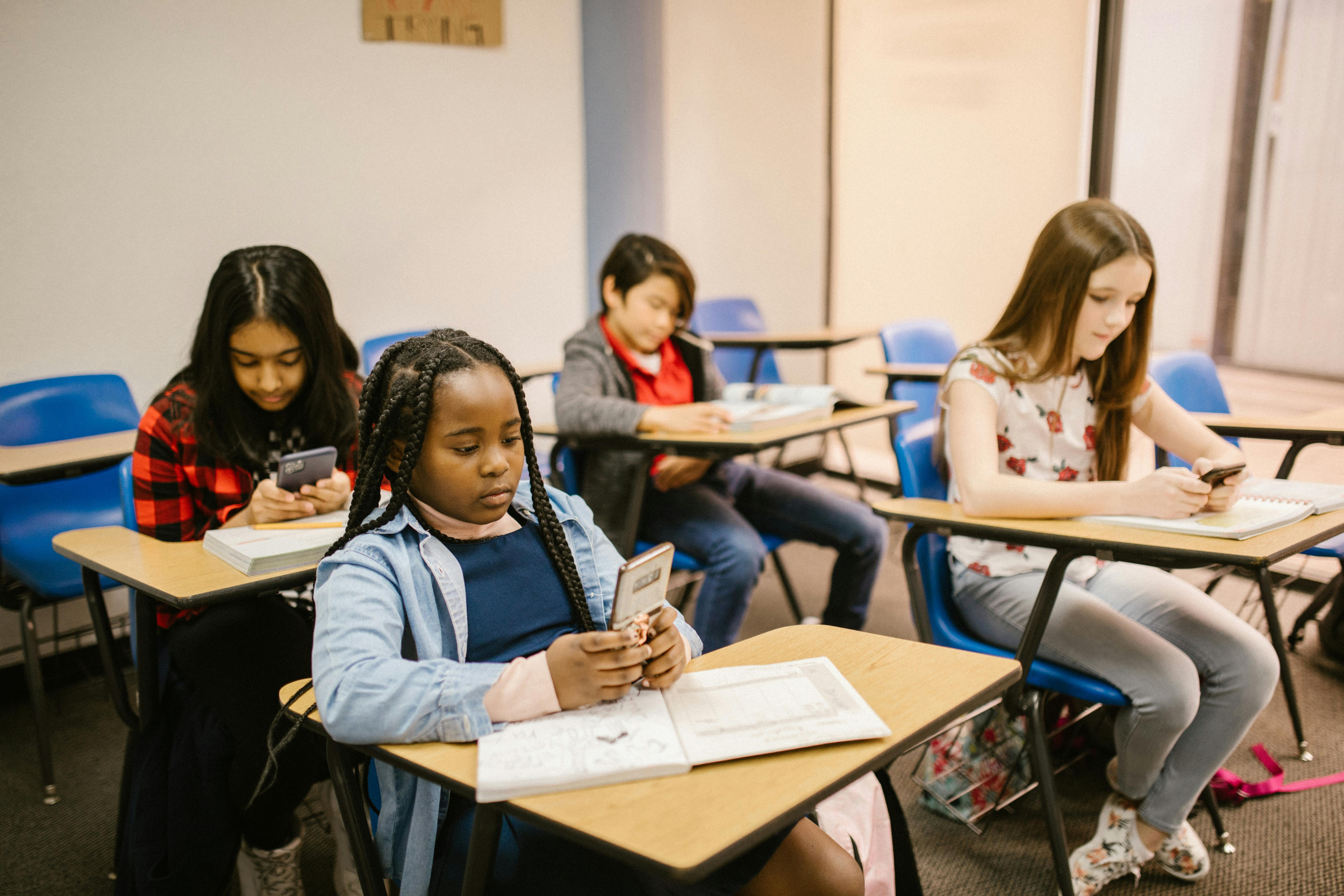
The UK government has taken a firm stance against smartphone use in schools, with Education Secretary Bridget Phillipson urging an outright ban during school hours. In a recent letter to school leaders and parents, Phillipson emphasized that the school day should be a sanctuary for learning, free from the distractions of notifications and social media. The directive extends beyond classroom time, prohibiting mobile phones during break times and lunch hours as well.
Phillipson’s message is clear: the use of personal devices for tasks such as calculations or research must come to an end. The government’s position is that the potential distraction outweighs any perceived convenience. This marks a shift towards a more proactive approach to technology in education, with an emphasis on safeguarding students’ mental health.
Despite the government’s bold rhetoric, the current enforcement of phone use policies in schools varies significantly. Data from the Department for Science, Innovation and Technology (DSIT) indicates that while nearly all primary schools and 90% of secondary schools have established policies, actual compliance is often lacking. Approximately 58% of secondary school students admit to using their phones without permission during lessons, a figure that rises to 65% among students in the high-pressure Key Stage 4 years.
Government’s Action Plan for Implementation
To address these inconsistencies, the government has enlisted Ofsted to closely monitor how effectively schools implement their mobile phone policies. Inspectors will now assess whether schools are applying these rules uniformly across all classes and times. Phillipson has called on schools to ensure that these policies are enforced consistently and has requested parental support to help curb any resistance to these new boundaries.
Teachers are also being encouraged to model appropriate behavior by refraining from checking their own devices in front of students. This comprehensive approach aims not only to regulate student behavior but also to reinforce a culture of focus and engagement in the classroom.
As part of this initiative, the UK government is embarking on a three-month national consultation to consider a potential ban on social media for individuals under the age of 16, similar to recent measures adopted in Australia. This could represent a significant change in the UK’s digital age of consent and may lead to alterations in app features that promote addictive behaviors, such as “streaks” and “infinite scrolling.”
Officials are preparing for a visit to Australia, which implemented its under-16 social media prohibition in December 2025, to gain insights on managing digital interactions without infringing on personal freedoms.
Responses and Future Directions
While the government’s momentum for change appears strong, some stakeholders, such as Paul Whiteman of the National Association of Head Teachers (NAHT), argue that school leaders require support rather than the threat of stringent inspections. As the consultation period progresses, the government plans to gather diverse perspectives from families across the nation before releasing its final decision this summer. This could lead to a notable transformation in how childhood is experienced in the digital age.
In summary, the UK government’s directive to ban smartphones in schools reflects a significant shift in educational policy, prioritizing student well-being and focused learning environments. As discussions continue, the future of technology in UK classrooms remains a topic of keen interest and debate.

Moyes Faces Referee Controversy Ahead of Everton vs Chelsea Clash

Man Hospitalised After Assault Outside Shop in Sandwell

Fred MacAulay and Ally McCoist Reunite for Special World Cup Show

NoOnes Targets $1 Trillion Gift Card Market to Enhance Crypto Access

Beloved Actor Matt Clark Passes Away at 89, Fans Mourn Loss

Discover How Milk Thistle Supplements Enhance Liver Health

Irish Community Care Celebrates 60 Years of Support in Liverpool

New Affordable Housing Development Planned for Crawley Site

Millions of Parking Tickets Issued Amid Calls for Reform

Claire Tomlinson Bids Farewell to Sky Sports After 27 Years

Iconic 90s TV Show House Hits Market for £1.1 Million

Tributes Flow for Kerry Gentle, Beloved RNLI Volunteer and Artist

Nathan Cleary’s Family Celebrates Engagement Amid Romance Rumors

Milk Bank Urges Mothers to Donate for Premature Babies’ Health

Shoppers Flock to Discounted Neck Pillow on Amazon for Travel Comfort

Alessia Russo Signs Long-Term Deal with Arsenal Ahead of WSL Season

Nuneaton Town FC Advances Plans for New Stadium in Stockingford

Museums Body Critiques EHRC Proposals on Gender Facilities
-
 Lifestyle6 months ago
Claire Tomlinson Bids Farewell to Sky Sports After 27 Years
-
 Entertainment9 months ago
Iconic 90s TV Show House Hits Market for £1.1 Million
-
 Lifestyle6 months ago
Tributes Flow for Kerry Gentle, Beloved RNLI Volunteer and Artist
-
 Sports11 months ago
Nathan Cleary’s Family Celebrates Engagement Amid Romance Rumors
-
 Lifestyle11 months ago
Milk Bank Urges Mothers to Donate for Premature Babies’ Health
-
 Lifestyle11 months ago
Shoppers Flock to Discounted Neck Pillow on Amazon for Travel Comfort
-
 Sports10 months ago
Alessia Russo Signs Long-Term Deal with Arsenal Ahead of WSL Season
-
 Sports8 months ago
Nuneaton Town FC Advances Plans for New Stadium in Stockingford
-
 Politics11 months ago
Museums Body Critiques EHRC Proposals on Gender Facilities
-

 Lifestyle11 months ago
Exploring England’s Cathedrals: A Journey Through History and Architecture
-

 Business11 months ago
Trump Visits Europe: Business, Politics, or Leisure?
-

 Lifestyle11 months ago
Japanese Teen Sorato Shimizu Breaks U18 100m Record in 10 Seconds