
Science
NHS Launches AI-Driven Pilot for Faster Lung Cancer Diagnosis

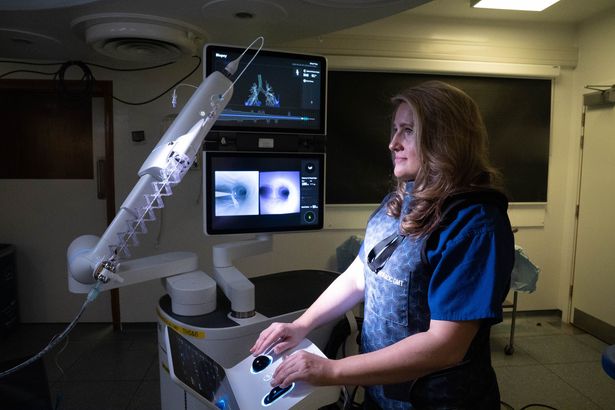
The National Health Service (NHS) has initiated a pioneering pilot project that leverages artificial intelligence (AI) and robotic technology to expedite the diagnosis of suspected lung cancer cases. This innovative approach aims to transform the way clinicians detect and treat lung cancer, offering a potential solution to improve patient outcomes.
Under the leadership of Guy’s and St Thomas’ NHS Foundation Trust, the pilot will utilize AI software to analyze lung scans and identify suspicious nodules. These nodules, which can be as small as 6mm and often hidden deep within the lungs, are critical to diagnose early. The project employs a robotic catheter, a slender tube inserted through the throat, to obtain biopsies from these difficult-to-reach areas.
Health Secretary Wes Streeting, who has personal experience with robotic surgery during his own treatment for kidney cancer, emphasized the significance of this pilot. He stated it could significantly reduce the time patients wait for invasive testing, replacing “weeks of invasive testing with a single targeted procedure.”
Innovative Technology to Address Lung Cancer Challenges
Lung cancer represents a significant health challenge in the UK, with over 49,000 new diagnoses and approximately 33,000 deaths annually. The current pilot follows a successful track record, with specialists already performing 300 robotic biopsy procedures, resulting in 215 patients receiving cancer treatment. The new initiative will further involve 250 participants.
Professor Peter Johnson, NHS England’s National Clinical Director for Cancer, highlighted the stress associated with waiting for cancer diagnoses. “Our lung cancer screening programme means that we are picking up more cancers at an early stage than ever,” he remarked. The integration of AI and robotics in this pilot is expected to enhance diagnostic accuracy and efficiency.
The NHS has also committed to expanding lung cancer screening efforts. By 2030, all eligible individuals are to be invited for their first screening. The initiative, which began in 2019, currently targets people aged 55 to 74 who have a history of smoking. Since its inception, more than 1.5 million individuals have undergone screening, and plans are in place to invite an additional 1.4 million people next year.
Patient Experiences and Future Implications
The implications of this pilot extend beyond technology; they resonate deeply with individual patients. One such patient, David Lindsay, from Streatham, shared his experience after being referred to Guy’s Hospital in September 2025 for a suspected blood clot. During the examination, a nodule was discovered in his lung, leading to a biopsy facilitated by the robotic system. He was subsequently diagnosed with stage one lung cancer and underwent successful surgery to remove the tumor.
Mr. Lindsay described the process as “quick and painless,” praising the medical team’s professionalism and support. His case exemplifies how the combination of AI and robotics can streamline the diagnostic process, offering hope to patients awaiting potentially life-saving interventions.
As the NHS continues to integrate cutting-edge technology into healthcare, officials project that screening initiatives could diagnose up to 50,000 lung cancers by 2035, with at least 23,000 cases identified at an earlier stage. This pilot represents a critical step toward realizing that vision, demonstrating the NHS’s commitment to advancing cancer care through innovation.
This initiative not only underscores the potential of AI and robotics in healthcare but also highlights the NHS’s ongoing efforts to lead in the safe integration of new technologies in frontline medical care.

Moyes Faces Referee Controversy Ahead of Everton vs Chelsea Clash

Man Hospitalised After Assault Outside Shop in Sandwell

Fred MacAulay and Ally McCoist Reunite for Special World Cup Show

NoOnes Targets $1 Trillion Gift Card Market to Enhance Crypto Access

Beloved Actor Matt Clark Passes Away at 89, Fans Mourn Loss

Discover How Milk Thistle Supplements Enhance Liver Health

Irish Community Care Celebrates 60 Years of Support in Liverpool

New Affordable Housing Development Planned for Crawley Site

Millions of Parking Tickets Issued Amid Calls for Reform

Claire Tomlinson Bids Farewell to Sky Sports After 27 Years

Iconic 90s TV Show House Hits Market for £1.1 Million

Nathan Cleary’s Family Celebrates Engagement Amid Romance Rumors

Tributes Flow for Kerry Gentle, Beloved RNLI Volunteer and Artist

Milk Bank Urges Mothers to Donate for Premature Babies’ Health

Shoppers Flock to Discounted Neck Pillow on Amazon for Travel Comfort

Alessia Russo Signs Long-Term Deal with Arsenal Ahead of WSL Season

Nuneaton Town FC Advances Plans for New Stadium in Stockingford

Exploring England’s Cathedrals: A Journey Through History and Architecture
-
 Lifestyle8 months ago
Claire Tomlinson Bids Farewell to Sky Sports After 27 Years
-
 Entertainment11 months ago
Iconic 90s TV Show House Hits Market for £1.1 Million
-
 Sports1 year ago
Nathan Cleary’s Family Celebrates Engagement Amid Romance Rumors
-
 Lifestyle8 months ago
Tributes Flow for Kerry Gentle, Beloved RNLI Volunteer and Artist
-
 Lifestyle1 year ago
Milk Bank Urges Mothers to Donate for Premature Babies’ Health
-
 Lifestyle1 year ago
Shoppers Flock to Discounted Neck Pillow on Amazon for Travel Comfort
-
 Sports12 months ago
Alessia Russo Signs Long-Term Deal with Arsenal Ahead of WSL Season
-
 Sports9 months ago
Nuneaton Town FC Advances Plans for New Stadium in Stockingford
-
 Lifestyle1 year ago
Exploring England’s Cathedrals: A Journey Through History and Architecture
-

 Politics1 year ago
Museums Body Critiques EHRC Proposals on Gender Facilities
-

 Business1 year ago
Trump Visits Europe: Business, Politics, or Leisure?
-

 Lifestyle1 year ago
Japanese Teen Sorato Shimizu Breaks U18 100m Record in 10 Seconds