
Science
Scientist Inflicts Brain Damage Testing Microwave Device to Disprove Havana Syndrome

A scientist in Norway has reportedly suffered brain damage after conducting a self-experiment with a machine designed to emit microwave energy pulses. The aim was to disprove the existence of Havana Syndrome, a mysterious illness that has affected US diplomats since 2016. The unidentified researcher reportedly undertook this secret test in 2024, believing that such devices were harmless.
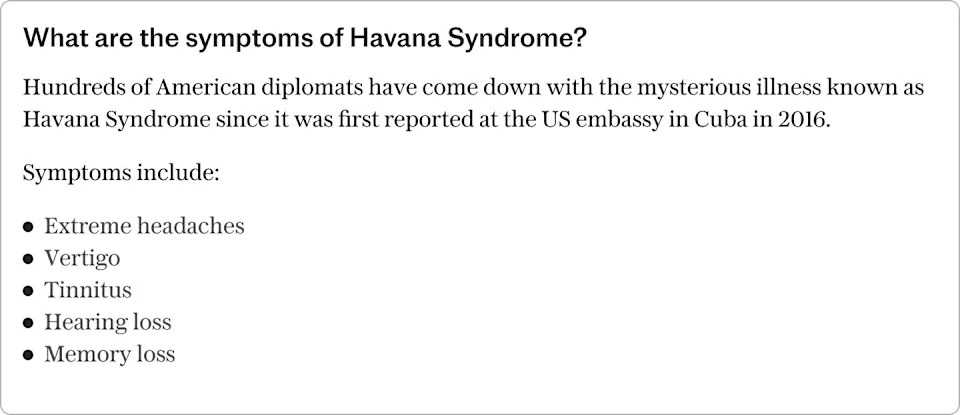
Following the test, he experienced symptoms similar to those associated with Havana Syndrome, which include severe headaches, vertigo, and memory loss. The Norwegian government informed the CIA about the incident and its implications, leading to visits from officials from the Pentagon and the White House.
Background of Havana Syndrome
The first instances of Havana Syndrome emerged in December 2016 when diplomats at the US embassy in Cuba reported cognitive issues. Since then, similar cases have surfaced among diplomats and government personnel in over 15 countries. The US government refers to these incidents as “anomalous health incidents.”
The bizarre circumstances surrounding the recent experiment lend credence to theories suggesting that the unexplained illness could stem from advanced “pulsed-energy” devices that emit concentrated electromagnetic energy. Speculation has intensified regarding the possible use of such technology by foreign powers, particularly after the capture of Venezuelan leader Nicolas Maduro on January 3, 2024. Reports from an anonymous source, allegedly a bodyguard of Maduro, described a disorienting wave of sound that caused physical harm to nearby security personnel.
Statements and Reactions
In a related statement, former US President Donald Trump hinted at the existence of a device nicknamed “The Discombobulator,” suggesting it may have been used during military operations. He mentioned to the New York Post, “They never got their rockets off… We came in, they pressed buttons and nothing worked. They were all set for us.”
Concerns have grown over the possibility that a foreign entity, potentially Russia, might be targeting US officials with microwave energy attacks. The Kremlin has denied these allegations, and as of now, no definitive evidence has surfaced to suggest its involvement in the reported cases of Havana Syndrome.
Opinions on the origin of the illness vary widely. Some experts speculate it could result from a sonic weapon attack, while others attribute it to environmental factors such as stress or chemical exposure. An interim assessment by the CIA in January 2022 concluded that it was likely not a foreign power behind the incidents. Following the 2024 presidential election, White House officials acknowledged uncertainty regarding the causes of the symptoms but indicated that “external factors” might be at play, as reported by The Washington Post.
As research continues, the implications of this incident raise important questions about the safety of experimental technologies and their potential effects on human health.

Moyes Faces Referee Controversy Ahead of Everton vs Chelsea Clash

Man Hospitalised After Assault Outside Shop in Sandwell

Fred MacAulay and Ally McCoist Reunite for Special World Cup Show

NoOnes Targets $1 Trillion Gift Card Market to Enhance Crypto Access

Beloved Actor Matt Clark Passes Away at 89, Fans Mourn Loss

Discover How Milk Thistle Supplements Enhance Liver Health

Irish Community Care Celebrates 60 Years of Support in Liverpool

New Affordable Housing Development Planned for Crawley Site

Millions of Parking Tickets Issued Amid Calls for Reform

Claire Tomlinson Bids Farewell to Sky Sports After 27 Years

Iconic 90s TV Show House Hits Market for £1.1 Million

Tributes Flow for Kerry Gentle, Beloved RNLI Volunteer and Artist

Nathan Cleary’s Family Celebrates Engagement Amid Romance Rumors

Milk Bank Urges Mothers to Donate for Premature Babies’ Health

Shoppers Flock to Discounted Neck Pillow on Amazon for Travel Comfort

Alessia Russo Signs Long-Term Deal with Arsenal Ahead of WSL Season

Nuneaton Town FC Advances Plans for New Stadium in Stockingford

Museums Body Critiques EHRC Proposals on Gender Facilities
-
 Lifestyle6 months ago
Claire Tomlinson Bids Farewell to Sky Sports After 27 Years
-
 Entertainment9 months ago
Iconic 90s TV Show House Hits Market for £1.1 Million
-
 Lifestyle6 months ago
Tributes Flow for Kerry Gentle, Beloved RNLI Volunteer and Artist
-
 Sports11 months ago
Nathan Cleary’s Family Celebrates Engagement Amid Romance Rumors
-
 Lifestyle11 months ago
Milk Bank Urges Mothers to Donate for Premature Babies’ Health
-
 Lifestyle11 months ago
Shoppers Flock to Discounted Neck Pillow on Amazon for Travel Comfort
-
 Sports10 months ago
Alessia Russo Signs Long-Term Deal with Arsenal Ahead of WSL Season
-
 Sports8 months ago
Nuneaton Town FC Advances Plans for New Stadium in Stockingford
-
 Politics11 months ago
Museums Body Critiques EHRC Proposals on Gender Facilities
-

 Lifestyle11 months ago
Exploring England’s Cathedrals: A Journey Through History and Architecture
-

 Business11 months ago
Trump Visits Europe: Business, Politics, or Leisure?
-

 Lifestyle11 months ago
Japanese Teen Sorato Shimizu Breaks U18 100m Record in 10 Seconds