
Science
Valkyrie the Robot Bids Farewell to Edinburgh After a Decade

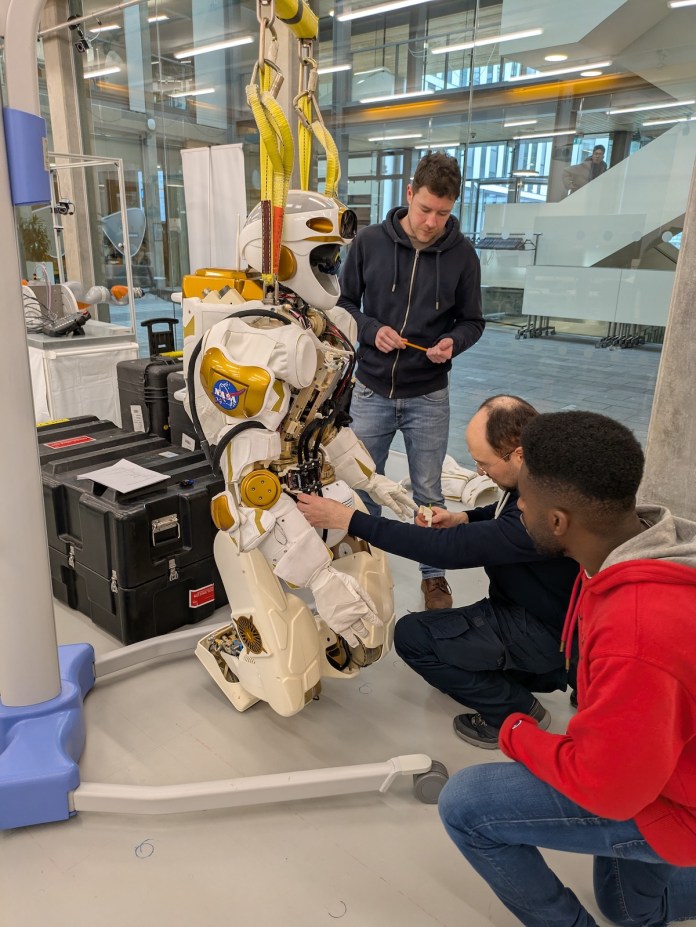
Valkyrie, a humanoid robot developed by NASA, is set to return to the United States after a decade-long stay at the University of Edinburgh. This advanced robot, measuring 1.8 metres and weighing approximately 125 kilograms, was one of only three prototypes created for potential Mars missions. On March 14, 2024, students and staff gathered to bid farewell to Valkyrie as it was prepared for its journey back to NASA’s Johnson Space Center in Texas.
Originally designed to support astronauts during reconnaissance missions to Mars, Valkyrie was engineered to perform tasks that may be too dangerous for humans. Its humanoid shape enables it to work alongside people or take over hazardous assignments. Equipped with a range of sensors and components, including Series Elastic Actuators, Valkyrie was one of the most sophisticated humanoid robots in existence when it arrived in Edinburgh.
Advancements in Robotics
During its time in Edinburgh, Valkyrie underwent significant enhancements, evolving from a basic walking robot to one with advanced artificial intelligence capabilities. Researchers at the Edinburgh Centre for Robotics, in collaboration with Heriot-Watt University, developed Valkyrie’s walking abilities, allowing it to better navigate its environment through onboard sensors.
Dr. Vladimir Ivan, a former PhD student at the University of Edinburgh and now Chief Technical Officer at the robotics start-up Touchlab, expressed gratitude for the opportunity to work with Valkyrie. He stated, “Hosting NASA Valkyrie at the University of Edinburgh was a rare privilege at a time when humanoid robots were not commercially available. It gave us a unique opportunity to advance fundamental research in mobility and stability, while inspiring a generation of outstanding roboticists.”
Professor Sethu Vijayakumar, Personal Chair in Robotics and Director of the Edinburgh Centre for Robotics, reflected on the risks associated with investing in humanoid research in the early 2010s. He noted, “In hindsight, this bold decision has contributed to the exciting wave of data-driven humanoid robot research that is now taken for granted. Valkyrie was indeed a trendsetter, benefitting from world-leading hardware from NASA.”
Impact on Robotics Community
The presence of Valkyrie at the University of Edinburgh has catalyzed the institution’s growth into a prominent robotics hub, recognized for its innovative research and development. The collaborative efforts involving dozens of PhD students have significantly impacted the field, paving the way for future advancements in humanoid robotics.
As Valkyrie prepares to leave, both students and faculty are left with a sense of accomplishment and nostalgia. Professor Vijayakumar added, “We will miss her, but it has been a privilege. Thank you for all the fun, Valkyrie!”
The farewell marks the end of an era for both the University of Edinburgh and the field of robotics, highlighting the importance of collaboration in advancing technology and research. As Valkyrie embarks on its journey back to NASA, its legacy will continue to inspire future innovations in robotics and space exploration.

Moyes Faces Referee Controversy Ahead of Everton vs Chelsea Clash

Man Hospitalised After Assault Outside Shop in Sandwell

Fred MacAulay and Ally McCoist Reunite for Special World Cup Show

NoOnes Targets $1 Trillion Gift Card Market to Enhance Crypto Access

Beloved Actor Matt Clark Passes Away at 89, Fans Mourn Loss

Discover How Milk Thistle Supplements Enhance Liver Health

Irish Community Care Celebrates 60 Years of Support in Liverpool

New Affordable Housing Development Planned for Crawley Site

Millions of Parking Tickets Issued Amid Calls for Reform

Claire Tomlinson Bids Farewell to Sky Sports After 27 Years

Iconic 90s TV Show House Hits Market for £1.1 Million

Tributes Flow for Kerry Gentle, Beloved RNLI Volunteer and Artist

Nathan Cleary’s Family Celebrates Engagement Amid Romance Rumors

Milk Bank Urges Mothers to Donate for Premature Babies’ Health

Shoppers Flock to Discounted Neck Pillow on Amazon for Travel Comfort

Alessia Russo Signs Long-Term Deal with Arsenal Ahead of WSL Season

Nuneaton Town FC Advances Plans for New Stadium in Stockingford

Museums Body Critiques EHRC Proposals on Gender Facilities
-
 Lifestyle6 months ago
Claire Tomlinson Bids Farewell to Sky Sports After 27 Years
-
 Entertainment9 months ago
Iconic 90s TV Show House Hits Market for £1.1 Million
-
 Lifestyle6 months ago
Tributes Flow for Kerry Gentle, Beloved RNLI Volunteer and Artist
-
 Sports11 months ago
Nathan Cleary’s Family Celebrates Engagement Amid Romance Rumors
-
 Lifestyle11 months ago
Milk Bank Urges Mothers to Donate for Premature Babies’ Health
-
 Lifestyle11 months ago
Shoppers Flock to Discounted Neck Pillow on Amazon for Travel Comfort
-
 Sports10 months ago
Alessia Russo Signs Long-Term Deal with Arsenal Ahead of WSL Season
-
 Sports8 months ago
Nuneaton Town FC Advances Plans for New Stadium in Stockingford
-
 Politics11 months ago
Museums Body Critiques EHRC Proposals on Gender Facilities
-

 Lifestyle11 months ago
Exploring England’s Cathedrals: A Journey Through History and Architecture
-

 Business11 months ago
Trump Visits Europe: Business, Politics, or Leisure?
-

 Lifestyle11 months ago
Japanese Teen Sorato Shimizu Breaks U18 100m Record in 10 Seconds