
Science
Fossil Footprints Unveil Multi-Species Herding Among Dinosaurs

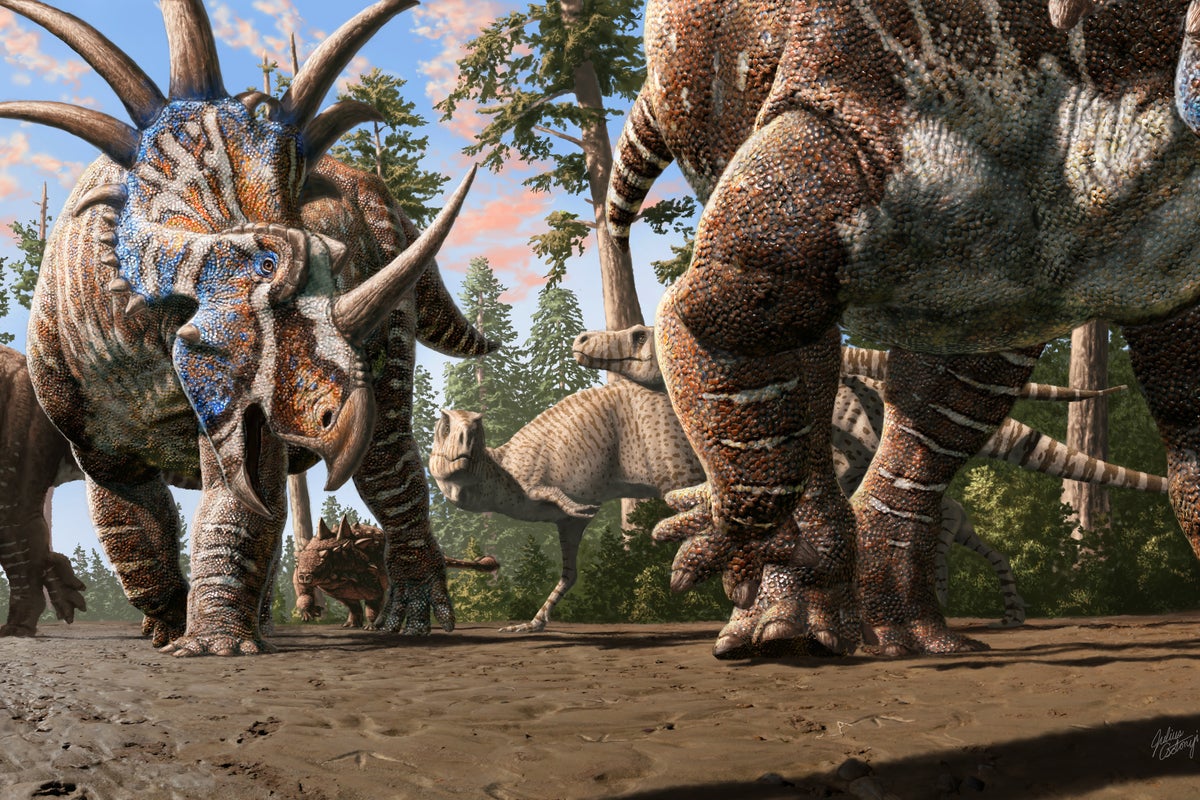
Fossil footprints unearthed in Dinosaur Provincial Park, located in Alberta, Canada, provide groundbreaking evidence that different species of dinosaurs sometimes herded together, offering new insights into their social interactions. This discovery, detailed in the journal PLOS One, marks the first time researchers have documented mixed-species herding behavior among dinosaurs, akin to the way modern groups such as wildebeest and zebra coexist on the African plains.
Significant Findings at the Fossil Site
The research team, which includes scientists from the University of Reading in the UK, was particularly surprised to discover fossil tracks of two tyrannosaurs walking side by side, positioned perpendicular to the larger herd of multiple species. This observation suggests that such herding behavior may have served as a defensive strategy against common apex predators, including Tyrannosaurus rex.
During the excavation, researchers identified 13 horned dinosaur tracks attributed to at least five individuals traversing an area of approximately 30 square meters. Additionally, tracks from an armored dinosaur, likely an ankylosaurus, were found within the herd. Notably, evidence of a small carnivorous dinosaur was also present, enhancing the complexity of the ecological environment at the site.
Expert Insights and Future Research
Phil Bell, one of the study’s authors from the University of New England, expressed his fascination with the footprints, stating, “I’ve collected dinosaur bones in Dinosaur Provincial Park for nearly 20 years, but I’d never given footprints much thought. This rim of rock had the look of mud that had been squelched out between your toes, and I was immediately intrigued.” He further noted the chilling implication of the tyrannosaur tracks, which suggest these predators may have been observing the herd.
Brian Pickles, another author from the University of Reading, described the excitement of discovering the tracks, stating, “It was incredibly exciting to be walking in the footsteps of dinosaurs 76 million years after they laid them down.” He emphasized the potential for future digs at the site to reveal more about how different dinosaur species interacted and behaved in their natural habitats.
Caleb Brown, also part of the research team, highlighted the significance of the findings, saying, “Dinosaur Park is one of the best-understood dinosaur assemblages globally, with more than a century of intense collection and study, but it’s only now that we are getting a sense for its full potential for dinosaur trackways.”
The ongoing study of these fossil tracks promises to enrich our understanding of dinosaur behavior and social structures, illustrating a more complex picture of life during the Late Cretaceous period.

Moyes Faces Referee Controversy Ahead of Everton vs Chelsea Clash

Man Hospitalised After Assault Outside Shop in Sandwell

Fred MacAulay and Ally McCoist Reunite for Special World Cup Show

NoOnes Targets $1 Trillion Gift Card Market to Enhance Crypto Access

Beloved Actor Matt Clark Passes Away at 89, Fans Mourn Loss

Discover How Milk Thistle Supplements Enhance Liver Health

Irish Community Care Celebrates 60 Years of Support in Liverpool

New Affordable Housing Development Planned for Crawley Site

Millions of Parking Tickets Issued Amid Calls for Reform

Claire Tomlinson Bids Farewell to Sky Sports After 27 Years

Iconic 90s TV Show House Hits Market for £1.1 Million

Nathan Cleary’s Family Celebrates Engagement Amid Romance Rumors

Tributes Flow for Kerry Gentle, Beloved RNLI Volunteer and Artist

Milk Bank Urges Mothers to Donate for Premature Babies’ Health

Shoppers Flock to Discounted Neck Pillow on Amazon for Travel Comfort

Alessia Russo Signs Long-Term Deal with Arsenal Ahead of WSL Season

Nuneaton Town FC Advances Plans for New Stadium in Stockingford

Exploring England’s Cathedrals: A Journey Through History and Architecture
-
 Lifestyle8 months ago
Claire Tomlinson Bids Farewell to Sky Sports After 27 Years
-
 Entertainment11 months ago
Iconic 90s TV Show House Hits Market for £1.1 Million
-
 Sports1 year ago
Nathan Cleary’s Family Celebrates Engagement Amid Romance Rumors
-
 Lifestyle8 months ago
Tributes Flow for Kerry Gentle, Beloved RNLI Volunteer and Artist
-
 Lifestyle1 year ago
Milk Bank Urges Mothers to Donate for Premature Babies’ Health
-
 Lifestyle1 year ago
Shoppers Flock to Discounted Neck Pillow on Amazon for Travel Comfort
-
 Sports12 months ago
Alessia Russo Signs Long-Term Deal with Arsenal Ahead of WSL Season
-
 Sports9 months ago
Nuneaton Town FC Advances Plans for New Stadium in Stockingford
-
 Lifestyle1 year ago
Exploring England’s Cathedrals: A Journey Through History and Architecture
-

 Politics1 year ago
Museums Body Critiques EHRC Proposals on Gender Facilities
-

 Business1 year ago
Trump Visits Europe: Business, Politics, or Leisure?
-

 Lifestyle1 year ago
Japanese Teen Sorato Shimizu Breaks U18 100m Record in 10 Seconds