
Business
FDA Veteran Richard Pazdur Sounds Alarm on Industry Response

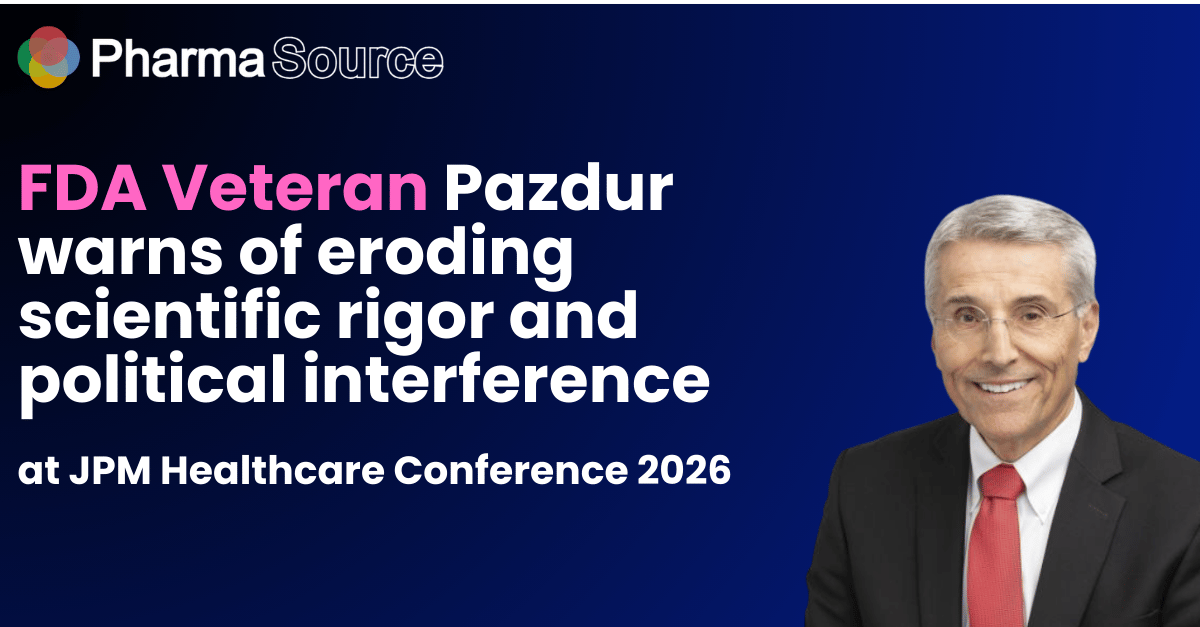
Richard Pazdur, MD, a former chief of the U.S. Food and Drug Administration’s (FDA) oncology division, raised concerns about the pharmaceutical industry’s lack of urgency regarding political interference in drug approvals. Speaking at the J.P. Morgan Healthcare Conference in San Francisco on January 8, 2026, Pazdur described the current state of the FDA as one of “chaos” and “trauma” following his departure in December 2025.
During a panel hosted by STAT, Pazdur emphasized the need for industry executives to grasp the gravity of the situation at the agency. When asked whether they understood the challenges facing the FDA, he responded plainly: “No.” His comments reflect a broader concern about the agency’s ability to function effectively amid significant staffing reductions and internal turmoil.
Agency in Distress
Pazdur, who dedicated 25 years to the FDA before his abrupt exit, characterized the agency as being in a state of distress. “We’re dealing with a staff that has gone through a lot of trauma in the past year, a staff that has been greatly reduced in number,” he said. He pointed out that many of the individuals who left were experienced professionals who had served the agency for years.
“The quality of many of the people that have left were really key people,” he added, underscoring the impact of their departures. Pazdur argued that simply replacing these experienced regulators with new hires fails to address the underlying issues. He stated, “It’s not a numbers game,” highlighting the necessity for seasoned staff capable of conducting sophisticated qualitative analyses, especially as the FDA increasingly adopts artificial intelligence tools.
Concerns Over Political Interference
Pazdur also expressed apprehension regarding what he described as political interference in the drug approval process. His departure from the FDA came shortly after he took on a new role, which he left due to unmet expectations and promises. “It’s terrible to see 25 years of work dismantled,” Pazdur remarked. “I did not leave because I wanted to leave.”
In a LinkedIn post following his appearance at the conference, Pazdur affirmed his commitment to advocating for FDA staff. “Now more than ever, the staff at the agency need our support,” he stated. He reiterated that “the FDA’s greatest asset are its people,” emphasizing the need for a stable and experienced workforce to ensure effective regulatory practices.
The U.S. Department of Health and Human Services has responded to Pazdur’s concerns by stating that “all decisions are grounded in evidence-based science and the agency continues to operate as a stable, science-based regulator.” This response aims to reassure stakeholders regarding the integrity and reliability of the FDA’s operations.
Pazdur’s comments bring attention to critical challenges facing the FDA and the pharmaceutical industry at large. As the landscape evolves, the need for robust regulatory oversight remains paramount in ensuring public health and safety. The future of drug approval processes may hinge on how well the industry and regulatory bodies address these pressing concerns.

Moyes Faces Referee Controversy Ahead of Everton vs Chelsea Clash

Man Hospitalised After Assault Outside Shop in Sandwell

Fred MacAulay and Ally McCoist Reunite for Special World Cup Show

NoOnes Targets $1 Trillion Gift Card Market to Enhance Crypto Access

Beloved Actor Matt Clark Passes Away at 89, Fans Mourn Loss

Discover How Milk Thistle Supplements Enhance Liver Health

Irish Community Care Celebrates 60 Years of Support in Liverpool

New Affordable Housing Development Planned for Crawley Site

Millions of Parking Tickets Issued Amid Calls for Reform

Claire Tomlinson Bids Farewell to Sky Sports After 27 Years

Iconic 90s TV Show House Hits Market for £1.1 Million

Tributes Flow for Kerry Gentle, Beloved RNLI Volunteer and Artist

Nathan Cleary’s Family Celebrates Engagement Amid Romance Rumors

Milk Bank Urges Mothers to Donate for Premature Babies’ Health

Shoppers Flock to Discounted Neck Pillow on Amazon for Travel Comfort

Alessia Russo Signs Long-Term Deal with Arsenal Ahead of WSL Season

Nuneaton Town FC Advances Plans for New Stadium in Stockingford

Museums Body Critiques EHRC Proposals on Gender Facilities
-
 Lifestyle6 months ago
Claire Tomlinson Bids Farewell to Sky Sports After 27 Years
-
 Entertainment9 months ago
Iconic 90s TV Show House Hits Market for £1.1 Million
-
 Lifestyle6 months ago
Tributes Flow for Kerry Gentle, Beloved RNLI Volunteer and Artist
-
 Sports11 months ago
Nathan Cleary’s Family Celebrates Engagement Amid Romance Rumors
-
 Lifestyle11 months ago
Milk Bank Urges Mothers to Donate for Premature Babies’ Health
-
 Lifestyle11 months ago
Shoppers Flock to Discounted Neck Pillow on Amazon for Travel Comfort
-
 Sports10 months ago
Alessia Russo Signs Long-Term Deal with Arsenal Ahead of WSL Season
-
 Sports8 months ago
Nuneaton Town FC Advances Plans for New Stadium in Stockingford
-
 Politics11 months ago
Museums Body Critiques EHRC Proposals on Gender Facilities
-

 Lifestyle11 months ago
Exploring England’s Cathedrals: A Journey Through History and Architecture
-

 Business11 months ago
Trump Visits Europe: Business, Politics, or Leisure?
-

 Lifestyle11 months ago
Japanese Teen Sorato Shimizu Breaks U18 100m Record in 10 Seconds