
Health
NHS Launches Pilot Using AI and Robotics to Detect Lung Cancer

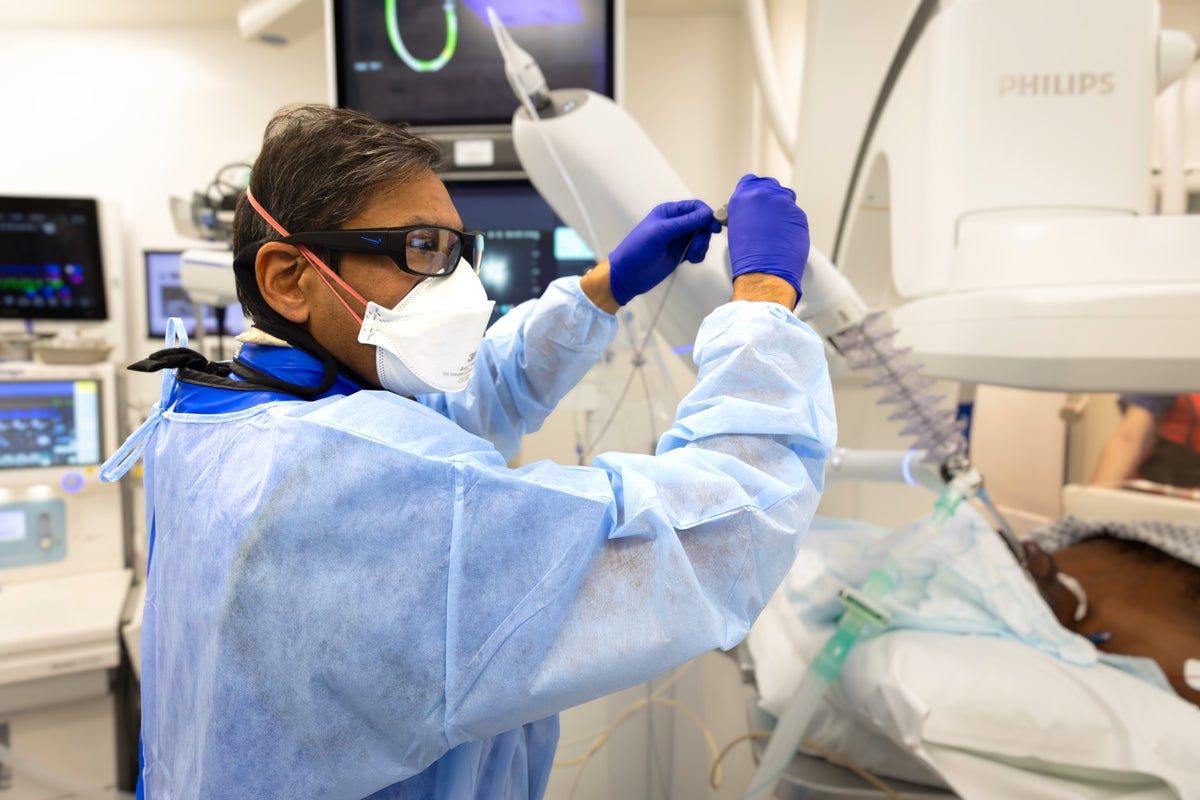
Artificial intelligence (AI) and robotic technology are set to revolutionize lung cancer diagnosis as the National Health Service (NHS) in the UK initiates a new pilot program. This initiative aims to expedite the identification of lung cancer in patients, with broader availability anticipated by 2030. The project is being conducted by the Guy’s and St Thomas’s NHS Foundation Trust and is part of a nationwide effort to enhance lung cancer screening.
The innovative approach employs AI to detect abnormal spots or nodules in lung scans, which are then targeted using robotic catheters for precise biopsies. So far, 300 patients have undergone this robotic biopsy procedure, with 215 of them subsequently receiving cancer treatment. The Health Secretary, Wes Streeting, who has personal experience with robotic surgery during his own kidney cancer treatment, emphasized the significance of this technology, stating, “When I was diagnosed with kidney cancer, the NHS saved my life using robotic technology.”
The pilot program aims to catch cancers at earlier stages and replace “weeks of invasive testing with a single targeted procedure,” Mr. Streeting noted. Following initial trials, the new phase will involve an additional 250 patients, with plans to extend the procedure to King’s College Hospital NHS Foundation Trust and Lewisham and Greenwich NHS Trust.
Advancements in Lung Cancer Screening
The procedure utilizes AI software to analyze lung scans and highlight potential nodules. Doctors can then employ robotic catheters to obtain accurate biopsies directly from these nodules, which are subsequently examined in a laboratory to confirm or rule out cancer. This technology is particularly vital as some nodules may not be detected during standard screenings and can be challenging for healthcare professionals to biopsy, leading to delays in diagnosis.
Mr. Streeting highlighted the urgency of addressing lung cancer, which is one of the leading causes of mortality in the UK. “Lung cancer is one of the biggest killers in the UK and this pilot will help to catch it earlier, replacing weeks of invasive testing with a single targeted procedure,” he stated. “For patients waiting anxiously for answers, this speed and precision can be life-changing.”
Lung cancer ranks as the third most common cancer in the UK, with more than 49,000 new diagnoses and approximately 33,000 deaths annually. The targeted lung cancer screening program began in 2019 and was rolled out nationwide in 2023. Since its inception, over 1.5 million people have undergone screenings, with plans to invite an additional 1.4 million people next year. Officials estimate that this expansion could diagnose up to 50,000 cancers by 2035, with at least 23,000 cases detected at earlier stages.
The Future of AI in Healthcare
This pilot project reflects the UK government’s commitment to advancing the use of AI in healthcare, aspiring to establish the NHS as the most AI-enabled health system globally. In a statement last September, Mr. Streeting remarked, “The AI revolution is here, and we are arming staff with the latest ground-breaking technology, so patients get faster and smarter care.” He further asserted that the government is dedicated to reinstating the UK’s position as a technology superpower, promoting investment and economic growth while modernizing the NHS for the 21st century.
Professor Peter Johnson, NHS England’s national clinical director for cancer, expressed optimism about the pilot. He stated, “Our lung cancer screening program means that we are picking up more cancers at an early stage than ever, and by bringing AI and robotics together in this trailblazing NHS pilot, we’re bringing in the very latest technology to give clinicians a clearer look inside the lungs and support faster, more accurate biopsies. This is a glimpse of the future of cancer detection.”
The integration of AI and robotic technology in this pilot program not only aims to enhance diagnostic efficiency but also holds the potential to save lives by enabling earlier detection and treatment of lung cancer.

Moyes Faces Referee Controversy Ahead of Everton vs Chelsea Clash

Man Hospitalised After Assault Outside Shop in Sandwell

Fred MacAulay and Ally McCoist Reunite for Special World Cup Show

NoOnes Targets $1 Trillion Gift Card Market to Enhance Crypto Access

Beloved Actor Matt Clark Passes Away at 89, Fans Mourn Loss

Discover How Milk Thistle Supplements Enhance Liver Health

Irish Community Care Celebrates 60 Years of Support in Liverpool

New Affordable Housing Development Planned for Crawley Site

Millions of Parking Tickets Issued Amid Calls for Reform

Claire Tomlinson Bids Farewell to Sky Sports After 27 Years

Iconic 90s TV Show House Hits Market for £1.1 Million

Nathan Cleary’s Family Celebrates Engagement Amid Romance Rumors

Tributes Flow for Kerry Gentle, Beloved RNLI Volunteer and Artist

Milk Bank Urges Mothers to Donate for Premature Babies’ Health

Shoppers Flock to Discounted Neck Pillow on Amazon for Travel Comfort

Alessia Russo Signs Long-Term Deal with Arsenal Ahead of WSL Season

Nuneaton Town FC Advances Plans for New Stadium in Stockingford

Exploring England’s Cathedrals: A Journey Through History and Architecture
-
 Lifestyle8 months ago
Claire Tomlinson Bids Farewell to Sky Sports After 27 Years
-
 Entertainment11 months ago
Iconic 90s TV Show House Hits Market for £1.1 Million
-
 Sports1 year ago
Nathan Cleary’s Family Celebrates Engagement Amid Romance Rumors
-
 Lifestyle8 months ago
Tributes Flow for Kerry Gentle, Beloved RNLI Volunteer and Artist
-
 Lifestyle1 year ago
Milk Bank Urges Mothers to Donate for Premature Babies’ Health
-
 Lifestyle1 year ago
Shoppers Flock to Discounted Neck Pillow on Amazon for Travel Comfort
-
 Sports12 months ago
Alessia Russo Signs Long-Term Deal with Arsenal Ahead of WSL Season
-
 Sports9 months ago
Nuneaton Town FC Advances Plans for New Stadium in Stockingford
-
 Lifestyle1 year ago
Exploring England’s Cathedrals: A Journey Through History and Architecture
-

 Politics1 year ago
Museums Body Critiques EHRC Proposals on Gender Facilities
-

 Business1 year ago
Trump Visits Europe: Business, Politics, or Leisure?
-

 Lifestyle1 year ago
Japanese Teen Sorato Shimizu Breaks U18 100m Record in 10 Seconds