
Health
Trump Struggles to Recall Endorsement, Experts Cite Cognitive Decline

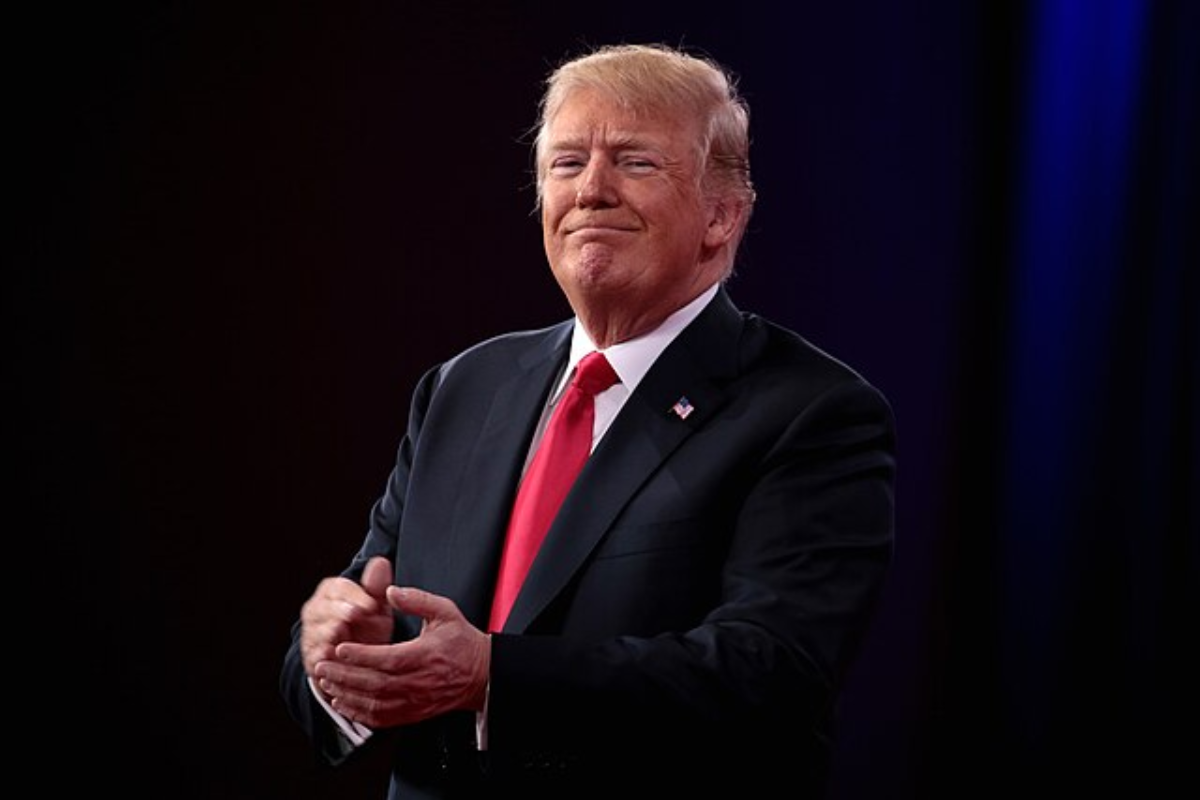
Former President Donald Trump appeared to forget his own endorsement of Texas Senate candidate Leigh Wambsganss less than 24 hours after urging voters to support her. This incident has raised fresh concerns regarding his mental fitness, as several experts have noted a marked decline in his cognitive abilities. On Sunday, when asked about the recent election defeat, Trump seemed confused about the race he had prominently promoted just a day earlier, stating, “I don’t know. I did not hear about it. Somebody ran it where?”
In the election held on March 2, 2024, Democrat Taylor Rehmet decisively defeated Republican Wambsganss by 14 percentage points in Texas Senate District 9. This district had been expected to favor Republicans, as Trump won it by 17 points in the previous election. Despite raising over $2.5 million, Wambsganss garnered only 43% of the vote, while Rehmet won with 57%, a significant achievement considering his campaign budget of approximately $380,000.
Following the loss, Trump distanced himself from the outcome, saying, “I’m not involved in that. That’s a local Texas race,” during an appearance at his estate in Mar-a-Lago, Florida. This remark came after he had posted multiple messages on Truth Social just hours earlier, including one that stated, “The Radical Left Democrats are spending a fortune to beat a true MAGA Warrior, Leigh Wambsganss. You can win this Election for Leigh, who has my Complete and Total Endorsement.”
The defeat in Texas serves as a significant setback for Republicans as they prepare for the upcoming midterm elections. Ken Martin, chair of the Democratic National Committee, remarked on the implications of the loss, noting that “in a Trump +17 district, Republicans had to go all out and still lost this race.” Dan Patrick, the Republican Lieutenant Governor of Texas, called it “a wake-up call for Republicans across Texas,” highlighting the challenges ahead for the party.
Rehmet’s victory adds to a trend of Democratic overperformance in special elections during Trump’s second term, including notable gubernatorial wins in Virginia and New Jersey. As Trump continues to speak publicly, his apparent memory lapses and confusion have led to increased scrutiny of his cognitive health.
Multiple medical professionals have expressed concern over Trump’s cognitive status. Ty Cobb, who served as White House special counsel during Trump’s first term, commented that “the dementia and the cognitive decline are palpable.” Dr. John Gartner, a psychologist and former professor at Johns Hopkins, believes Trump exhibits “clinical signs of dementia,” specifically suggesting frontotemporal dementia, which affects the frontal lobes and may lead to disinhibited behavior.
Adding to the concerns, Dr. Vin Gupta, a medical analyst for NBC News, highlighted instances of Trump’s recent confusion, such as mixing up Greenland and Iceland and struggling to complete sentences. Gupta noted, “There’s a lot of similarities in what we’re seeing more and more frequently,” suggesting a worrying parallel between Trump’s behavior and that of his father, who experienced age-related cognitive decline.
The Texas incident is not isolated; Trump has faced scrutiny over several similar episodes. In a recent interview, he required assistance from White House Press Secretary Karoline Leavitt to recall the term “Alzheimer’s” while discussing his father’s diagnosis. Additionally, late-night host Jimmy Kimmel pointed out Trump’s repeated mix-ups of Greenland and Iceland during a speech at the World Economic Forum in Davos.
Although Trump has claimed to have “aced” cognitive tests, stating he scored “100%” on the Montreal Cognitive Assessment, experts caution that frequent testing often indicates ongoing concerns about cognitive decline. Dr. Gupta remarked, “Those that tend to do Montreal tests with that level of frequency, usually we’re worried about the presence of early-stage dementia or cognitive impairment.”
The White House has not provided details regarding Trump’s cognitive assessments or medical evaluations. Leavitt previously mentioned that such information would be made available “at a later date,” leaving many questions about Trump’s mental state unanswered. As scrutiny continues, the implications of his cognitive health on his political future remain a topic of significant discussion.

Moyes Faces Referee Controversy Ahead of Everton vs Chelsea Clash

Man Hospitalised After Assault Outside Shop in Sandwell

Fred MacAulay and Ally McCoist Reunite for Special World Cup Show

NoOnes Targets $1 Trillion Gift Card Market to Enhance Crypto Access

Beloved Actor Matt Clark Passes Away at 89, Fans Mourn Loss

Discover How Milk Thistle Supplements Enhance Liver Health

Irish Community Care Celebrates 60 Years of Support in Liverpool

New Affordable Housing Development Planned for Crawley Site

Millions of Parking Tickets Issued Amid Calls for Reform

Claire Tomlinson Bids Farewell to Sky Sports After 27 Years

Iconic 90s TV Show House Hits Market for £1.1 Million

Nathan Cleary’s Family Celebrates Engagement Amid Romance Rumors

Tributes Flow for Kerry Gentle, Beloved RNLI Volunteer and Artist

Milk Bank Urges Mothers to Donate for Premature Babies’ Health

Shoppers Flock to Discounted Neck Pillow on Amazon for Travel Comfort

Alessia Russo Signs Long-Term Deal with Arsenal Ahead of WSL Season

Nuneaton Town FC Advances Plans for New Stadium in Stockingford

Exploring England’s Cathedrals: A Journey Through History and Architecture
-
 Lifestyle8 months ago
Claire Tomlinson Bids Farewell to Sky Sports After 27 Years
-
 Entertainment11 months ago
Iconic 90s TV Show House Hits Market for £1.1 Million
-
 Sports1 year ago
Nathan Cleary’s Family Celebrates Engagement Amid Romance Rumors
-
 Lifestyle8 months ago
Tributes Flow for Kerry Gentle, Beloved RNLI Volunteer and Artist
-
 Lifestyle1 year ago
Milk Bank Urges Mothers to Donate for Premature Babies’ Health
-
 Lifestyle1 year ago
Shoppers Flock to Discounted Neck Pillow on Amazon for Travel Comfort
-
 Sports12 months ago
Alessia Russo Signs Long-Term Deal with Arsenal Ahead of WSL Season
-
 Sports9 months ago
Nuneaton Town FC Advances Plans for New Stadium in Stockingford
-
 Lifestyle1 year ago
Exploring England’s Cathedrals: A Journey Through History and Architecture
-

 Politics1 year ago
Museums Body Critiques EHRC Proposals on Gender Facilities
-

 Business1 year ago
Trump Visits Europe: Business, Politics, or Leisure?
-

 Lifestyle1 year ago
Japanese Teen Sorato Shimizu Breaks U18 100m Record in 10 Seconds