
Lifestyle
Portable Ultrasound Aids Astronauts in Emergency Space Evacuation

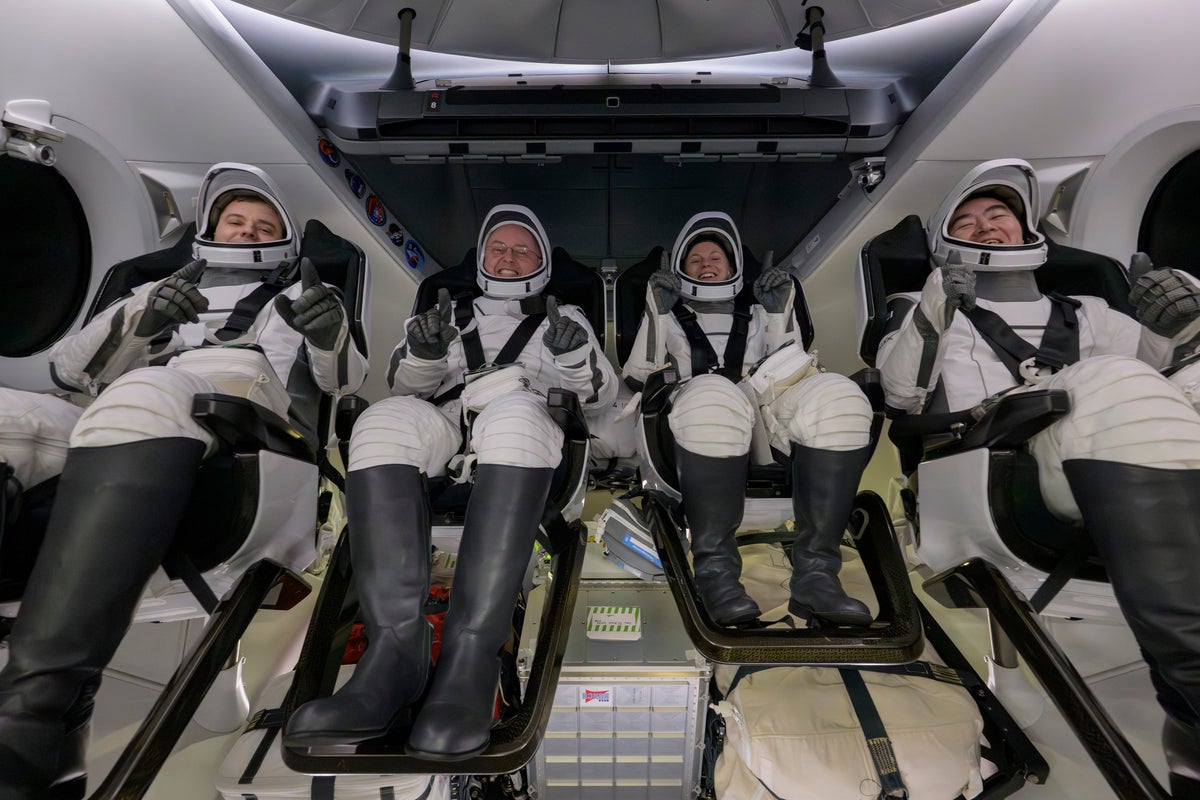
A portable ultrasound machine proved vital during a recent medical emergency at the International Space Station, resulting in the early evacuation of four astronauts. This incident marks NASA‘s first medical evacuation in 65 years of human spaceflight. The astronauts, who returned to Earth on January 7, 2024, refrained from disclosing specific details regarding the medical issue or which crew member required attention during their first public appearance post-evacuation.
The medical situation developed just a day before a scheduled spacewalk, which was subsequently canceled. Mike Fincke, a NASA astronaut, highlighted the crucial role of the onboard ultrasound machine in addressing the health concern. He noted that the crew had previously utilized the device for routine examinations, making it instrumental when the emergency arose. “It really helped,” Fincke remarked, emphasizing the need for a portable ultrasound on all future space missions. He acknowledged the limitations of available equipment in space compared to what is accessible on Earth.
Emergency Preparedness and Response
In response to the unfolding situation, Zena Cardman, who commanded the crew’s return with SpaceX, stated that NASA “made all the right decisions” by prioritizing the health and safety of the crew. She emphasized the importance of preparedness, noting that their training effectively equipped them to handle unexpected health concerns. “We can handle any kind of difficult situation,” said Kimiya Yui, a Japanese astronaut, reflecting on the effectiveness of their preflight training during the ordeal.
The mission, which lasted 5.5 months, was significantly shorter than the planned duration. The crew, which included Oleg Platonov from Russia, launched from Florida last August and splashed down in the Pacific Ocean off the coast of San Diego last week. Upon their return to Houston, they were greeted by their replacements, who are scheduled to launch in mid-February. In a light-hearted moment, Fincke remarked, “We were hoping to give them hugs in space, but we gave them hugs on Earth,” highlighting the camaraderie among astronauts.
This incident underscores the importance of having advanced medical equipment available in space as missions continue to evolve. The lessons learned from this experience will likely inform future preparations and enhance the safety protocols for astronauts venturing into the unknown.

Moyes Faces Referee Controversy Ahead of Everton vs Chelsea Clash

Man Hospitalised After Assault Outside Shop in Sandwell

Fred MacAulay and Ally McCoist Reunite for Special World Cup Show

NoOnes Targets $1 Trillion Gift Card Market to Enhance Crypto Access

Beloved Actor Matt Clark Passes Away at 89, Fans Mourn Loss

Discover How Milk Thistle Supplements Enhance Liver Health

Irish Community Care Celebrates 60 Years of Support in Liverpool

New Affordable Housing Development Planned for Crawley Site

Millions of Parking Tickets Issued Amid Calls for Reform

Claire Tomlinson Bids Farewell to Sky Sports After 27 Years

Iconic 90s TV Show House Hits Market for £1.1 Million

Nathan Cleary’s Family Celebrates Engagement Amid Romance Rumors

Tributes Flow for Kerry Gentle, Beloved RNLI Volunteer and Artist

Milk Bank Urges Mothers to Donate for Premature Babies’ Health

Shoppers Flock to Discounted Neck Pillow on Amazon for Travel Comfort

Alessia Russo Signs Long-Term Deal with Arsenal Ahead of WSL Season

Nuneaton Town FC Advances Plans for New Stadium in Stockingford

Exploring England’s Cathedrals: A Journey Through History and Architecture
-
 Lifestyle8 months ago
Claire Tomlinson Bids Farewell to Sky Sports After 27 Years
-
 Entertainment11 months ago
Iconic 90s TV Show House Hits Market for £1.1 Million
-
 Sports1 year ago
Nathan Cleary’s Family Celebrates Engagement Amid Romance Rumors
-
 Lifestyle8 months ago
Tributes Flow for Kerry Gentle, Beloved RNLI Volunteer and Artist
-
 Lifestyle1 year ago
Milk Bank Urges Mothers to Donate for Premature Babies’ Health
-
 Lifestyle1 year ago
Shoppers Flock to Discounted Neck Pillow on Amazon for Travel Comfort
-
 Sports12 months ago
Alessia Russo Signs Long-Term Deal with Arsenal Ahead of WSL Season
-
 Sports9 months ago
Nuneaton Town FC Advances Plans for New Stadium in Stockingford
-
 Lifestyle1 year ago
Exploring England’s Cathedrals: A Journey Through History and Architecture
-

 Politics1 year ago
Museums Body Critiques EHRC Proposals on Gender Facilities
-

 Business1 year ago
Trump Visits Europe: Business, Politics, or Leisure?
-

 Lifestyle1 year ago
Japanese Teen Sorato Shimizu Breaks U18 100m Record in 10 Seconds