
Lifestyle
“The Lost Bus”: Gripping Drama Recounts California Wildfire Tragedy

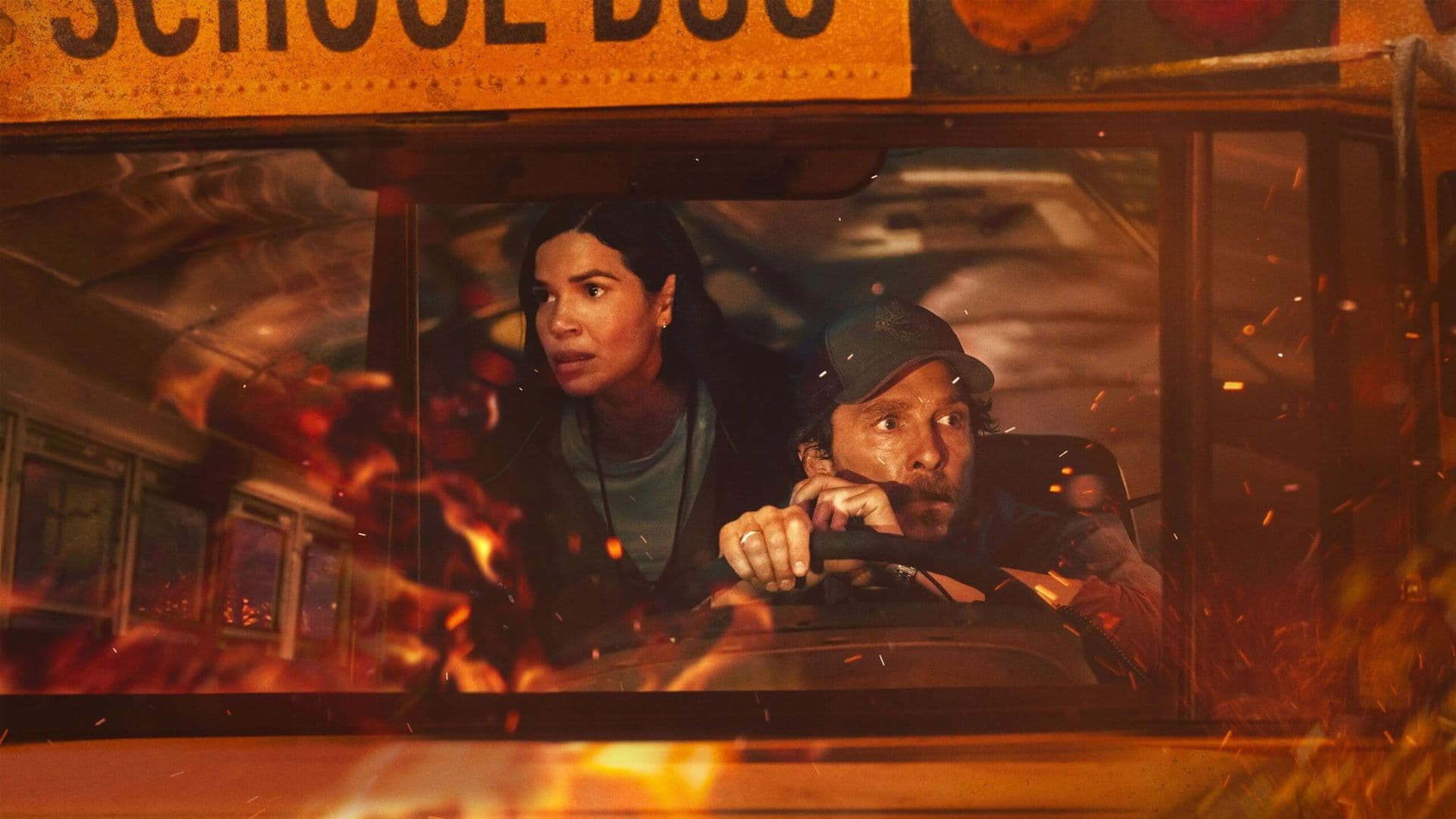
The latest film by director Paul Greengrass, titled The Lost Bus, explores a devastating wildfire that struck the town of Paradise, California, in November 2018. This tragic incident, caused by a downed power line from a poorly maintained utility pole, led to the loss of over 85 lives and significant destruction. The film highlights the heroism of a school bus driver, Kevin McKay, portrayed by Matthew McConaughey, who saved more than twenty children and their teacher from imminent danger.
Greengrass, known for his intense narratives centered on real-life tragedies, employs his characteristic filmmaking style, often described as “Grengrasian.” This technique features handheld camera work, quick cuts, and a sense of immediacy that immerses viewers in the chaotic environment of the unfolding disaster. He has previously tackled significant historical events, such as the 2006 terrorist attacks on September 11 and the 2013 Somali pirate takeover in *Captain Phillips*.
Kevin’s story is interwoven with the efforts of local firefighters led by Chief Martinez, played by Julia Vasquez, as they battle the flames and attempt to evacuate the town’s residents. The film opens with a brief prologue, filmed from a drone’s perspective, showing how the fire ignited and the initial failed attempts to extinguish it. This sets the stage for Kevin’s journey, who recently returned to Paradise to care for his ailing mother, Sherry, portrayed by Kate McConaughey, after a divorce.
The film’s narrative oscillates between Kevin’s personal struggles and the broader community’s response to the wildfire. Kevin faces challenges at home, including a strained relationship with his son, Sean, played by Levi McConaughey, who disapproves of his father’s choices. When the fire threatens their safety, Kevin must decide whether to answer a call to evacuate the children and their teacher, Mary Ludwig, portrayed by America Ferrera.
As the fire spreads rapidly, communication breaks down, complicating evacuation efforts and creating chaos on the ground. The film captures the harrowing moments as residents scramble to escape, providing a visceral experience of the tragedy. Although the narrative has drawn mixed reviews, with some critics pointing to its uneven pacing, the film effectively conveys the gravity of the situation.
Viewers who attended the film’s premiere at the Toronto International Film Festival noted that the second half, which focuses on the disaster, is more compelling than the earlier, more dramatic exposition. Critics have highlighted the challenge of achieving the same immersive quality in home viewing, as the intensity of the film may be diminished outside a cinema setting.
Greengrass’s choice to blend computer-generated imagery with real pyrotechnics underscores the reality of the wildfire’s destructive power. While the film does take moments to address broader themes, such as climate change and human negligence, it maintains a focused narrative on the individual stories of those affected by the disaster.
In sum, The Lost Bus offers a poignant portrayal of human resilience amid catastrophe, reminiscent of classic disaster films like *Dante’s Peak* and *Twister*, yet grounded in real events. The film has received a mixed reception, earning a rating of 3 out of 5 for its ambitious storytelling and emotional depth. As audiences reflect on the tragedy of Paradise, Greengrass’s film serves as a reminder of both the fragility of life and the courage of everyday heroes.

Moyes Faces Referee Controversy Ahead of Everton vs Chelsea Clash

Man Hospitalised After Assault Outside Shop in Sandwell

Fred MacAulay and Ally McCoist Reunite for Special World Cup Show

NoOnes Targets $1 Trillion Gift Card Market to Enhance Crypto Access

Beloved Actor Matt Clark Passes Away at 89, Fans Mourn Loss

Discover How Milk Thistle Supplements Enhance Liver Health

Irish Community Care Celebrates 60 Years of Support in Liverpool

New Affordable Housing Development Planned for Crawley Site

Millions of Parking Tickets Issued Amid Calls for Reform

Claire Tomlinson Bids Farewell to Sky Sports After 27 Years

Iconic 90s TV Show House Hits Market for £1.1 Million

Nathan Cleary’s Family Celebrates Engagement Amid Romance Rumors

Tributes Flow for Kerry Gentle, Beloved RNLI Volunteer and Artist

Milk Bank Urges Mothers to Donate for Premature Babies’ Health

Shoppers Flock to Discounted Neck Pillow on Amazon for Travel Comfort

Alessia Russo Signs Long-Term Deal with Arsenal Ahead of WSL Season

Nuneaton Town FC Advances Plans for New Stadium in Stockingford

Exploring England’s Cathedrals: A Journey Through History and Architecture
-
 Lifestyle8 months ago
Claire Tomlinson Bids Farewell to Sky Sports After 27 Years
-
 Entertainment11 months ago
Iconic 90s TV Show House Hits Market for £1.1 Million
-
 Sports1 year ago
Nathan Cleary’s Family Celebrates Engagement Amid Romance Rumors
-
 Lifestyle8 months ago
Tributes Flow for Kerry Gentle, Beloved RNLI Volunteer and Artist
-
 Lifestyle1 year ago
Milk Bank Urges Mothers to Donate for Premature Babies’ Health
-
 Lifestyle1 year ago
Shoppers Flock to Discounted Neck Pillow on Amazon for Travel Comfort
-
 Sports12 months ago
Alessia Russo Signs Long-Term Deal with Arsenal Ahead of WSL Season
-
 Sports9 months ago
Nuneaton Town FC Advances Plans for New Stadium in Stockingford
-
 Lifestyle1 year ago
Exploring England’s Cathedrals: A Journey Through History and Architecture
-

 Politics1 year ago
Museums Body Critiques EHRC Proposals on Gender Facilities
-

 Business1 year ago
Trump Visits Europe: Business, Politics, or Leisure?
-

 Lifestyle1 year ago
Japanese Teen Sorato Shimizu Breaks U18 100m Record in 10 Seconds