
Science
Astronomers Investigate Unusual Comet 3I/ATLAS Features

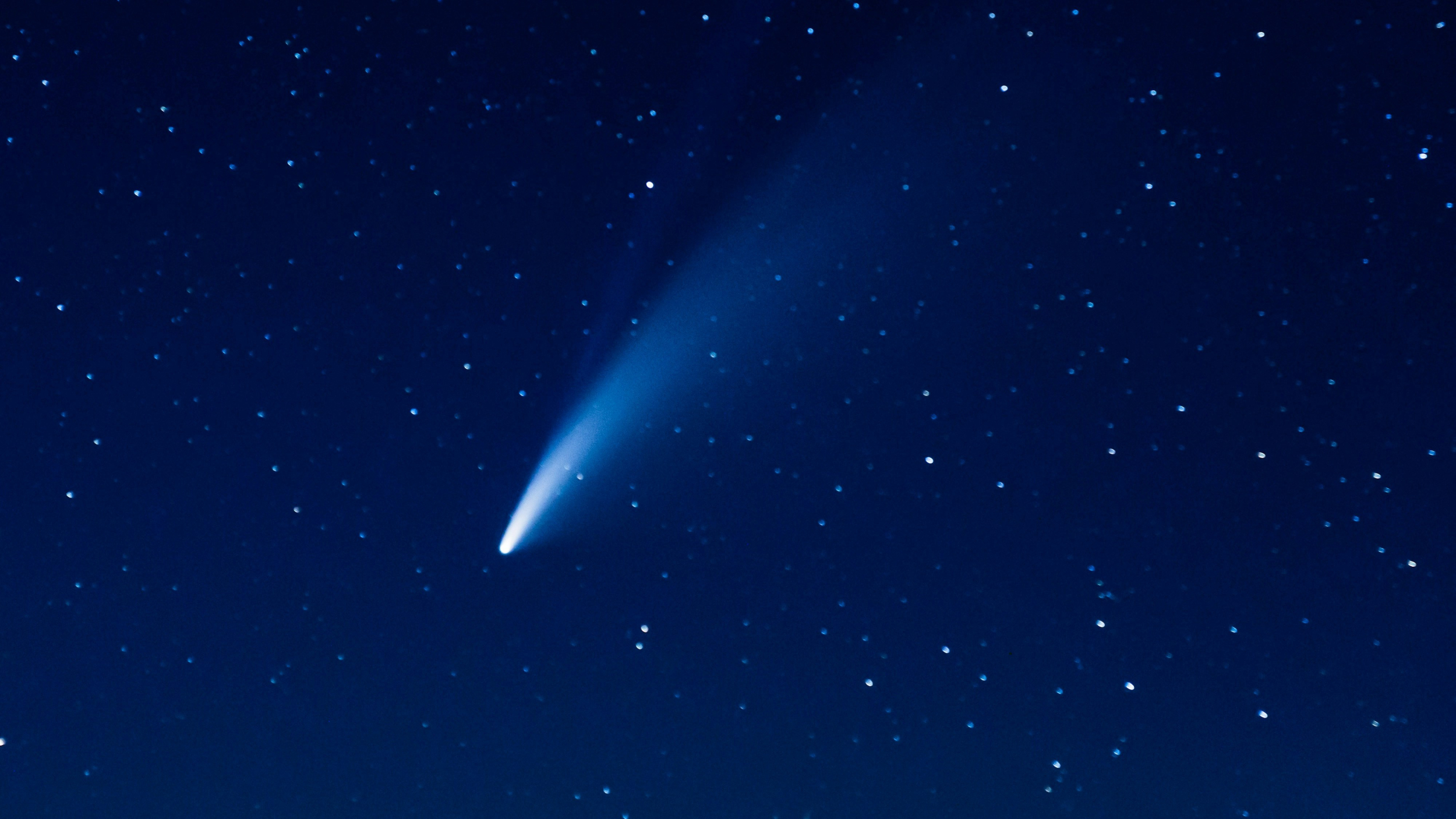
Comet 3I/ATLAS is captivating astronomers with its atypical behavior as it exits the inner solar system. A notable feature is its sunward-pointing dust stream, which has sparked discussions about the comet’s possible alien origins. This unusual characteristic, along with shifting jet-like structures, has made 3I/ATLAS a focal point for scientists studying interstellar objects.
As the comet approaches its exit from the solar system, astronomers observed a prominent ‘anti-tail’ extending approximately 1,000,000 kilometers towards the Sun. Typically, a comet’s tail forms as sunlight heats surface ice, releasing gas and dust, with the main tail pointing away from the Sun due to radiation pressure. The ‘anti-tail’ observed in 3I/ATLAS is rare, although it can occur when the viewing angle aligns with a thin dust sheet along the comet’s orbit. What distinguishes this case is the strength and structure of the anti-tail, which appears to be dynamic rather than a smooth streak.
Distinctive Features of Comet 3I/ATLAS
In addition to the anti-tail, astronomers have flagged intermittent jet-like features that exhibit a repeating motion. This suggests that the comet’s nucleus may be rotating, with active regions periodically venting material. A detailed observing campaign, utilizing the Two-metre Twin Telescope at Teide Observatory in Tenerife, tracked the comet over 37 nights. Researchers noted a precessional pattern with a period of 7 hours 45 minutes, which implies a nucleus rotation period of approximately 15 hours 30 minutes.
Comet 3I/ATLAS is only the third confirmed interstellar object to visit our solar system, following 1I/’Oumuamua in 2017 and 2I/Borisov in 2019. Each of these objects has expanded our understanding of small bodies formed outside our solar system. While Borisov appeared more conventional, ‘Oumuamua’s peculiar shape and non-gravitational acceleration sparked considerable debate among researchers. The unique features of 3I/ATLAS could provide valuable insights into the rotational and activity characteristics of interstellar visitors.
Importance of Observations
Following its closest approach to the Sun, Comet 3I/ATLAS made its nearest pass to Earth on 19 December 2023, at a distance of approximately 270,000,000 kilometers. As it follows a hyperbolic trajectory out of the solar system, the opportunity to gather detailed measurements is fleeting. Each interstellar object presents a rare chance to compare ‘foreign’ small-body physics—such as dust behavior, volatile release, nucleus rotation, and jet morphology—with the comets and asteroids that have been studied more extensively.
While the anti-tail may ultimately be a geometric illusion, the variability of the jets and inferred rotation provide essential data for developing models of surface activity in a body likely formed around another star. The investigation of Comet 3I/ATLAS may lead to significant advancements in our understanding of interstellar materials and their behavior in our solar system.

Moyes Faces Referee Controversy Ahead of Everton vs Chelsea Clash

Man Hospitalised After Assault Outside Shop in Sandwell

Fred MacAulay and Ally McCoist Reunite for Special World Cup Show

NoOnes Targets $1 Trillion Gift Card Market to Enhance Crypto Access

Beloved Actor Matt Clark Passes Away at 89, Fans Mourn Loss

Discover How Milk Thistle Supplements Enhance Liver Health

Irish Community Care Celebrates 60 Years of Support in Liverpool

New Affordable Housing Development Planned for Crawley Site

Millions of Parking Tickets Issued Amid Calls for Reform

Claire Tomlinson Bids Farewell to Sky Sports After 27 Years

Iconic 90s TV Show House Hits Market for £1.1 Million

Nathan Cleary’s Family Celebrates Engagement Amid Romance Rumors

Tributes Flow for Kerry Gentle, Beloved RNLI Volunteer and Artist

Milk Bank Urges Mothers to Donate for Premature Babies’ Health

Shoppers Flock to Discounted Neck Pillow on Amazon for Travel Comfort

Alessia Russo Signs Long-Term Deal with Arsenal Ahead of WSL Season

Nuneaton Town FC Advances Plans for New Stadium in Stockingford

Exploring England’s Cathedrals: A Journey Through History and Architecture
-
 Lifestyle8 months ago
Claire Tomlinson Bids Farewell to Sky Sports After 27 Years
-
 Entertainment11 months ago
Iconic 90s TV Show House Hits Market for £1.1 Million
-
 Sports1 year ago
Nathan Cleary’s Family Celebrates Engagement Amid Romance Rumors
-
 Lifestyle8 months ago
Tributes Flow for Kerry Gentle, Beloved RNLI Volunteer and Artist
-
 Lifestyle1 year ago
Milk Bank Urges Mothers to Donate for Premature Babies’ Health
-
 Lifestyle1 year ago
Shoppers Flock to Discounted Neck Pillow on Amazon for Travel Comfort
-
 Sports12 months ago
Alessia Russo Signs Long-Term Deal with Arsenal Ahead of WSL Season
-
 Sports9 months ago
Nuneaton Town FC Advances Plans for New Stadium in Stockingford
-
 Lifestyle1 year ago
Exploring England’s Cathedrals: A Journey Through History and Architecture
-

 Politics1 year ago
Museums Body Critiques EHRC Proposals on Gender Facilities
-

 Business1 year ago
Trump Visits Europe: Business, Politics, or Leisure?
-

 Lifestyle1 year ago
Japanese Teen Sorato Shimizu Breaks U18 100m Record in 10 Seconds