
Science
Celebrated Chimpanzee Ai, A Pioneer in Animal Cognition, Dies at 49

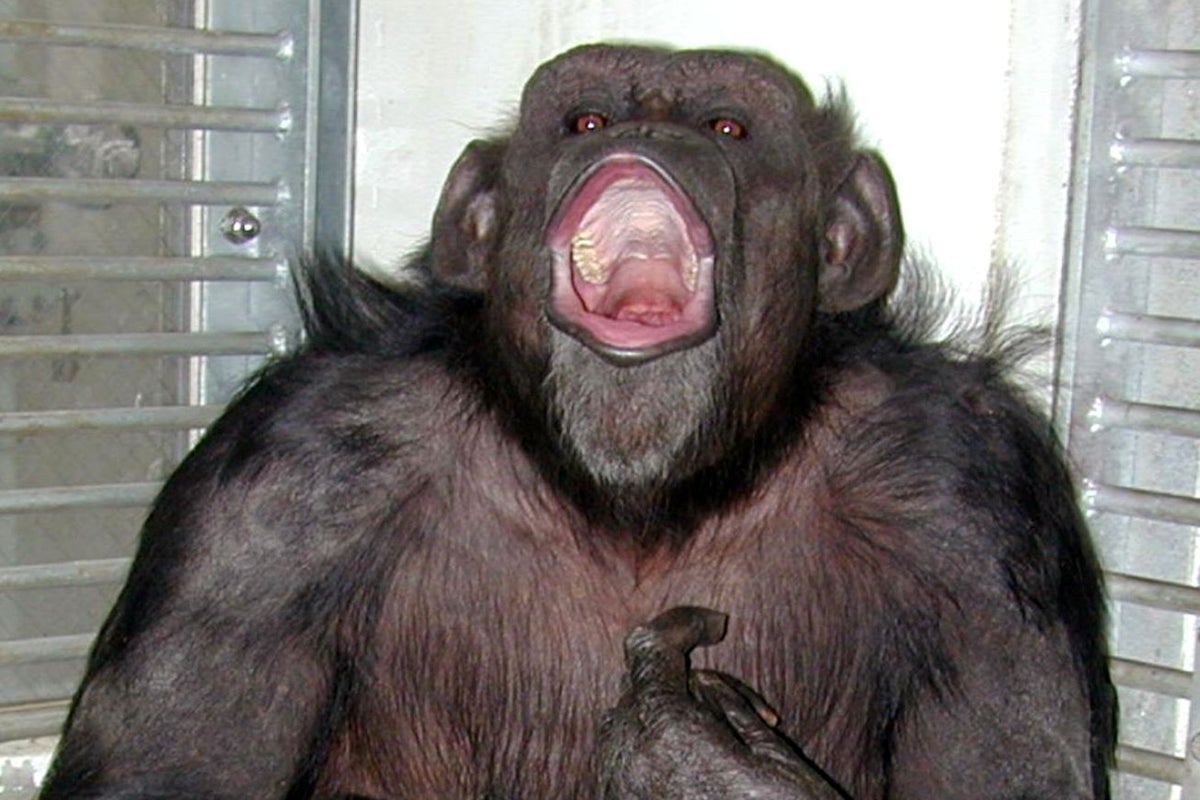
A remarkable chimpanzee named Ai passed away on 9 January 2023 at the age of 49 due to multiple organ failure associated with aging. Born in West Africa, Ai spent her life in Japan, where she became a key figure in groundbreaking research on primate cognition at Kyoto University. She was surrounded by the caregivers who had dedicated decades to her well-being.
Ai arrived in Japan in 1977, becoming the focus of what is now known as the Ai Project. This initiative aimed to explore how chimpanzees perceive and process information. Her journey into the world of scientific study began early; by the age of one, Ai was already participating in cognitive tests that examined her ability to recognize symbols and shapes. Researchers introduced her to a computer-linked keyboard at just 18 months old, enabling her to communicate choices during experiments.
Remarkable Achievements in Cognition
By the time Ai was five, her cognitive abilities had captured the attention of the scientific community. In a 1985 paper, Tetsuro Matsuzawa, the primatologist leading the Ai Project, noted that she had “mastered numerical naming from one to six” and could identify the number, color, and object from over 300 samples. Over the years, Ai demonstrated extraordinary skills, including recognizing Arabic numerals from zero to nine and over 100 Chinese characters, as well as the English alphabet.
In one notable experiment, Ai was shown a computer screen displaying the Chinese character for pink alongside a pink square and a purple square. She successfully identified the pink square. Additionally, when presented with an apple, Ai accurately selected shapes on the screen to create a “virtual apple.” Her contributions have made her a prominent figure in academic literature, with her findings published in leading journals such as Nature.
Ai’s participation in the Ai Project helped establish a framework for understanding chimpanzee cognition, shedding light on the evolutionary aspects of the human mind. According to the Kyoto University’s Center for the Evolutionary Origins of Human Behaviour, “Ai was highly curious and actively participated in these studies, revealing various aspects of the chimpanzee mind for the first time.”
A Life Beyond Research
Ai was not only an intelligent subject of study but also an artist. She frequently engaged in drawing and painting without prompts, often creating pieces that captivated attention. In 2000, she gave birth to a son, Ayumu, who also became known for his exceptional memory skills. Ai’s artistic talents were recognized publicly; in 2017, one of her paintings was transformed into a scarf and presented to renowned primatologist Dame Jane Goodall.
One of her most notable artworks, created in 2013 on Shikishi paper using red and black brushes, was gifted to Prof Kazuo Oike upon his appointment as Dean of Kyoto University of Art and Design. Ai’s creative expressions contributed to her fame beyond the scientific community, earning her the title of a “genius” in popular media.
The legacy of Ai extends far beyond her life. Her story illustrates the profound connections between humans and animals, as well as the depths of animal cognition. As Tetsuro Matsuzawa reflected on his first meeting with Ai, he noted the unique connection: “When I looked into this chimpanzee’s eyes, she looked back into mine. This amazed me.” Ai leaves behind a rich legacy that continues to inspire research and understanding in the world of primate cognition.

Moyes Faces Referee Controversy Ahead of Everton vs Chelsea Clash

Man Hospitalised After Assault Outside Shop in Sandwell

Fred MacAulay and Ally McCoist Reunite for Special World Cup Show

NoOnes Targets $1 Trillion Gift Card Market to Enhance Crypto Access

Beloved Actor Matt Clark Passes Away at 89, Fans Mourn Loss

Discover How Milk Thistle Supplements Enhance Liver Health

Irish Community Care Celebrates 60 Years of Support in Liverpool

New Affordable Housing Development Planned for Crawley Site

Millions of Parking Tickets Issued Amid Calls for Reform

Claire Tomlinson Bids Farewell to Sky Sports After 27 Years

Iconic 90s TV Show House Hits Market for £1.1 Million

Tributes Flow for Kerry Gentle, Beloved RNLI Volunteer and Artist

Nathan Cleary’s Family Celebrates Engagement Amid Romance Rumors

Milk Bank Urges Mothers to Donate for Premature Babies’ Health

Shoppers Flock to Discounted Neck Pillow on Amazon for Travel Comfort

Alessia Russo Signs Long-Term Deal with Arsenal Ahead of WSL Season

Nuneaton Town FC Advances Plans for New Stadium in Stockingford

Museums Body Critiques EHRC Proposals on Gender Facilities
-
 Lifestyle6 months ago
Claire Tomlinson Bids Farewell to Sky Sports After 27 Years
-
 Entertainment9 months ago
Iconic 90s TV Show House Hits Market for £1.1 Million
-
 Lifestyle7 months ago
Tributes Flow for Kerry Gentle, Beloved RNLI Volunteer and Artist
-
 Sports11 months ago
Nathan Cleary’s Family Celebrates Engagement Amid Romance Rumors
-
 Lifestyle12 months ago
Milk Bank Urges Mothers to Donate for Premature Babies’ Health
-
 Lifestyle11 months ago
Shoppers Flock to Discounted Neck Pillow on Amazon for Travel Comfort
-
 Sports10 months ago
Alessia Russo Signs Long-Term Deal with Arsenal Ahead of WSL Season
-
 Sports8 months ago
Nuneaton Town FC Advances Plans for New Stadium in Stockingford
-
 Politics11 months ago
Museums Body Critiques EHRC Proposals on Gender Facilities
-

 Lifestyle11 months ago
Exploring England’s Cathedrals: A Journey Through History and Architecture
-

 Business11 months ago
Trump Visits Europe: Business, Politics, or Leisure?
-

 Lifestyle11 months ago
Japanese Teen Sorato Shimizu Breaks U18 100m Record in 10 Seconds