
Science
Celebrating Women’s Contributions to Quantum Physics

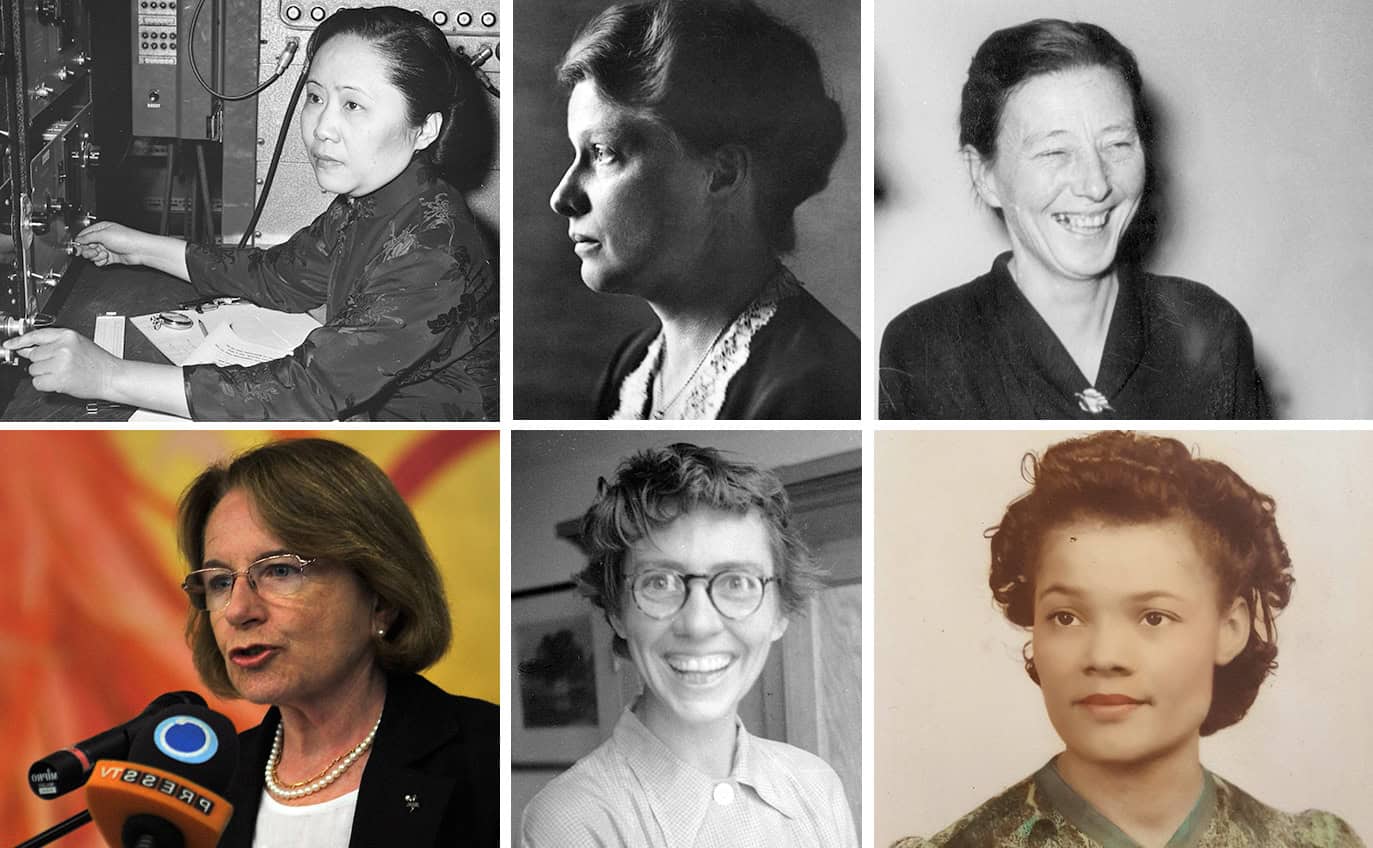
A new anthology titled Women in the History of Quantum Physics: Beyond Knabenphysik, edited by Patrick Charbonneau, Michelle Frank, Margriet van der Heijden, and Daniela Monaldi, explores the significant yet often overlooked contributions of women in the field of quantum physics. This collection aims to highlight the essential roles women have played, challenging the notion that quantum physics is solely a male-dominated domain.
The anthology presents a compelling argument that women have been integral to the development of quantum physics for decades. It elevates the stories of pioneering figures such as Chien-Shiung Wu, known for her foundational work on photon entanglement, and Grete Hermann, who critically engaged with the theories of prominent physicists like John von Neumann and Werner Heisenberg. These narratives not only showcase their scientific achievements but also serve as a reminder of the persistent gender biases that have historically limited women’s recognition in the scientific community.
Challenging Historical Exclusion
The anthology’s subtitle, Beyond Knabenphysik, which translates to “boys’ physics” in German, encapsulates a central theme: moving beyond the perception of quantum physics as an exclusively male pursuit. Originally coined to describe the youthful pioneers of quantum mechanics, Knabenphysik represents the exclusionary practices that sidelined women’s contributions.
The experiences of women such as Hendrika Johanna van Leeuwen and Laura Chalk illustrate this exclusion. Van Leeuwen, who co-developed a crucial theorem in classical magnetism, was sidelined from the recognition enjoyed by her male counterparts. Similarly, Chalk’s work on the Stark effect, a key validation of Erwin Schrödinger’s wave equation, was overshadowed by her male collaborator’s accolades.
The book adeptly intertwines biographical accounts with scientific history, chronicling the journeys of women like Hertha Sponer and Freda Friedman Salzman. It details their personal and professional challenges while highlighting their contributions to pivotal scientific advancements.
Expanding the Narrative
The chronological narrative of quantum physics presented in the anthology covers significant milestones, from early astronomical observations suggesting quantized elements to advancements in quantum electrodynamics. Women featured in the book include Maria McEachern, who revisited the spectral work of Williamina Fleming, and Sonja Ashauer, a Brazilian physicist whose contributions remain underrecognized.
The anthology provokes reflection on how systemic biases have hindered scientific progress. It raises important questions about the undiscovered potential of contributions that may have emerged more swiftly had women and other marginalized individuals not faced significant barriers. The lives of women like Carolyn Parker, the first African American woman to earn a postgraduate degree in physics, reflect the dual challenges of gender and racial discrimination. Parker’s work on the Manhattan Project went largely unrecognized during her lifetime, emphasizing the need for a more inclusive historical narrative.
The collection critiques the oversimplified notion of a “leaky pipeline” in science, arguing that it fails to capture the extensive contributions women have made both within and outside formal scientific roles. For instance, Ana María Cetto Kramis played a foundational role in stochastic electrodynamics while also advocating for science diplomacy.
The anthology concludes that recognizing women’s contributions requires a dual approach: inclusive histories that acknowledge all contributors, alongside specialized works that illuminate the unique experiences of women in science. By documenting the vital roles women have played in quantum physics, this anthology not only repairs historical oversight but also enriches our understanding of the field’s development.
The insights gained from Women in the History of Quantum Physics remind us that the contributions of women in science are not merely footnotes but essential components of a broader narrative. Understanding this complex history offers valuable lessons for the future, underscoring the importance of inclusivity and recognition in the scientific community.

Moyes Faces Referee Controversy Ahead of Everton vs Chelsea Clash

Man Hospitalised After Assault Outside Shop in Sandwell

Fred MacAulay and Ally McCoist Reunite for Special World Cup Show

NoOnes Targets $1 Trillion Gift Card Market to Enhance Crypto Access

Beloved Actor Matt Clark Passes Away at 89, Fans Mourn Loss

Discover How Milk Thistle Supplements Enhance Liver Health

Irish Community Care Celebrates 60 Years of Support in Liverpool

New Affordable Housing Development Planned for Crawley Site

Millions of Parking Tickets Issued Amid Calls for Reform

Claire Tomlinson Bids Farewell to Sky Sports After 27 Years

Iconic 90s TV Show House Hits Market for £1.1 Million

Nathan Cleary’s Family Celebrates Engagement Amid Romance Rumors

Tributes Flow for Kerry Gentle, Beloved RNLI Volunteer and Artist

Milk Bank Urges Mothers to Donate for Premature Babies’ Health

Shoppers Flock to Discounted Neck Pillow on Amazon for Travel Comfort

Alessia Russo Signs Long-Term Deal with Arsenal Ahead of WSL Season

Nuneaton Town FC Advances Plans for New Stadium in Stockingford

Exploring England’s Cathedrals: A Journey Through History and Architecture
-
 Lifestyle8 months ago
Claire Tomlinson Bids Farewell to Sky Sports After 27 Years
-
 Entertainment11 months ago
Iconic 90s TV Show House Hits Market for £1.1 Million
-
 Sports1 year ago
Nathan Cleary’s Family Celebrates Engagement Amid Romance Rumors
-
 Lifestyle8 months ago
Tributes Flow for Kerry Gentle, Beloved RNLI Volunteer and Artist
-
 Lifestyle1 year ago
Milk Bank Urges Mothers to Donate for Premature Babies’ Health
-
 Lifestyle1 year ago
Shoppers Flock to Discounted Neck Pillow on Amazon for Travel Comfort
-
 Sports12 months ago
Alessia Russo Signs Long-Term Deal with Arsenal Ahead of WSL Season
-
 Sports9 months ago
Nuneaton Town FC Advances Plans for New Stadium in Stockingford
-
 Lifestyle1 year ago
Exploring England’s Cathedrals: A Journey Through History and Architecture
-

 Politics1 year ago
Museums Body Critiques EHRC Proposals on Gender Facilities
-

 Business1 year ago
Trump Visits Europe: Business, Politics, or Leisure?
-

 Lifestyle1 year ago
Japanese Teen Sorato Shimizu Breaks U18 100m Record in 10 Seconds