
Science
Futuristic 3D-Printed Homes Designed for Mars Colonization

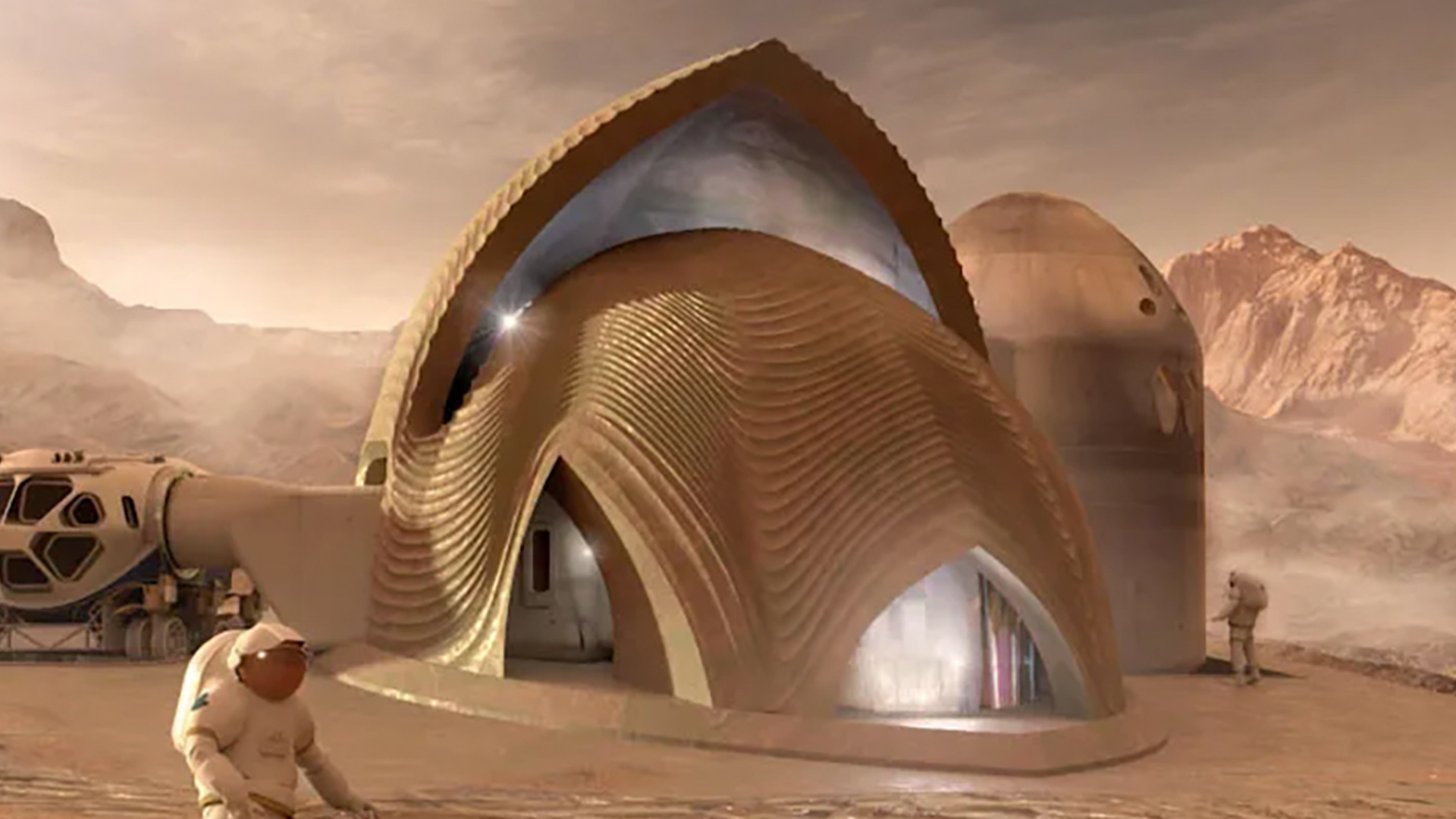
The vision of living on Mars is becoming more tangible as innovative designs for 3D-printed homes are unveiled. These concepts, developed as part of a NASA Centennial Challenge, aim to create sustainable habitats for potential future colonists on Mars and the Moon. The challenge, which spanned four years, invited designers to explore how construction could be accomplished with minimal human intervention and by utilizing local materials.
NASA emphasized the importance of efficient shelter for deep space exploration. According to Steve Jurczyk, a NASA administrator, “Shelter is an obvious necessity as we prepare to explore worlds beyond our home planet.” He noted the need to optimize space and weight in spacecraft, stating, “That’s why we are seeking the technology to reuse the materials we will already be carrying, and combine them with what is already available at our destination.” The objective is to recycle materials, just as we do on Earth.
Innovative Habitat Designs for Extraterrestrial Living
Among the standout concepts, the Hassell + EOC design features a fleet of wheeled mining robots that would collect regolith, which can be transformed into building materials. This approach allows for rapid fabrication of structures that blend seamlessly into the Martian landscape, ensuring that new homes match their surroundings.
Another notable design is from Kahn-Yates, utilizing dual polymer shells that encase a “sulphur concrete” layer. This structure would allow natural light to illuminate the interior and include panels that unfold to create additional living space, resembling a townhouse appropriate for Martian life.
The Mars Incubator concept organizes habitats in a hub-and-spoke layout. The central living space is constructed from panels made of polyethylene and basalt fiber, with robots assembling these components directly on Mars. Each module would be equipped with essential life support systems, creating a self-sufficient living environment.
The design team AI. SpaceFactory proposed a cylindrical tower made from bioplastic reinforced with basalt fiber. This structure maximizes usable living space while addressing temperature fluctuations on Mars through a double-shell design that expands and contracts as needed.
Modular Solutions for Martian Living
A unique design from Northwestern University involves rovers that establish a foundational base through 3D printing, followed by the deployment of an inflatable shell protected by an outer shell created on-site. This modular habitat would facilitate various functions, including living quarters, laboratories, and dining areas, interconnected via a network of tunnels.
The SEArch+/Apis Cor design specifically addresses radiation protection for inhabitants. Constructed from high-density polyethylene and regolith, the design includes overlapping shells that allow natural light without compromising safety from cosmic radiation.
Team Zopherus presented a moving 3D printer that retrieves local materials on the Moon or Mars. This innovation allows for continuous construction as the lander processes extracted materials like calcium oxide into building elements, enabling the creation of various structures for colonists.
Lastly, the X-Arc concept proposes using polyethylene manufactured from Martian resources mixed with ground basalt to create a three-level shell structure. Pre-fabricated components would be installed inside the habitat, ensuring a quick assembly process.
While these designs are still conceptual, they represent a significant step toward sustainable human habitation beyond Earth. As the technology matures, the dream of colonizing Mars may become a reality, reshaping our understanding of living in space.

Moyes Faces Referee Controversy Ahead of Everton vs Chelsea Clash

Man Hospitalised After Assault Outside Shop in Sandwell

Fred MacAulay and Ally McCoist Reunite for Special World Cup Show

NoOnes Targets $1 Trillion Gift Card Market to Enhance Crypto Access

Beloved Actor Matt Clark Passes Away at 89, Fans Mourn Loss

Discover How Milk Thistle Supplements Enhance Liver Health

Irish Community Care Celebrates 60 Years of Support in Liverpool

New Affordable Housing Development Planned for Crawley Site

Millions of Parking Tickets Issued Amid Calls for Reform

Claire Tomlinson Bids Farewell to Sky Sports After 27 Years

Iconic 90s TV Show House Hits Market for £1.1 Million

Nathan Cleary’s Family Celebrates Engagement Amid Romance Rumors

Tributes Flow for Kerry Gentle, Beloved RNLI Volunteer and Artist

Milk Bank Urges Mothers to Donate for Premature Babies’ Health

Shoppers Flock to Discounted Neck Pillow on Amazon for Travel Comfort

Alessia Russo Signs Long-Term Deal with Arsenal Ahead of WSL Season

Nuneaton Town FC Advances Plans for New Stadium in Stockingford

Exploring England’s Cathedrals: A Journey Through History and Architecture
-
 Lifestyle8 months ago
Claire Tomlinson Bids Farewell to Sky Sports After 27 Years
-
 Entertainment11 months ago
Iconic 90s TV Show House Hits Market for £1.1 Million
-
 Sports1 year ago
Nathan Cleary’s Family Celebrates Engagement Amid Romance Rumors
-
 Lifestyle8 months ago
Tributes Flow for Kerry Gentle, Beloved RNLI Volunteer and Artist
-
 Lifestyle1 year ago
Milk Bank Urges Mothers to Donate for Premature Babies’ Health
-
 Lifestyle1 year ago
Shoppers Flock to Discounted Neck Pillow on Amazon for Travel Comfort
-
 Sports12 months ago
Alessia Russo Signs Long-Term Deal with Arsenal Ahead of WSL Season
-
 Sports9 months ago
Nuneaton Town FC Advances Plans for New Stadium in Stockingford
-
 Lifestyle1 year ago
Exploring England’s Cathedrals: A Journey Through History and Architecture
-

 Politics1 year ago
Museums Body Critiques EHRC Proposals on Gender Facilities
-

 Business1 year ago
Trump Visits Europe: Business, Politics, or Leisure?
-

 Lifestyle1 year ago
Japanese Teen Sorato Shimizu Breaks U18 100m Record in 10 Seconds