
Science
Harvard Physicist Proposes Using Comet 3I/ATLAS to Send Messages to Aliens

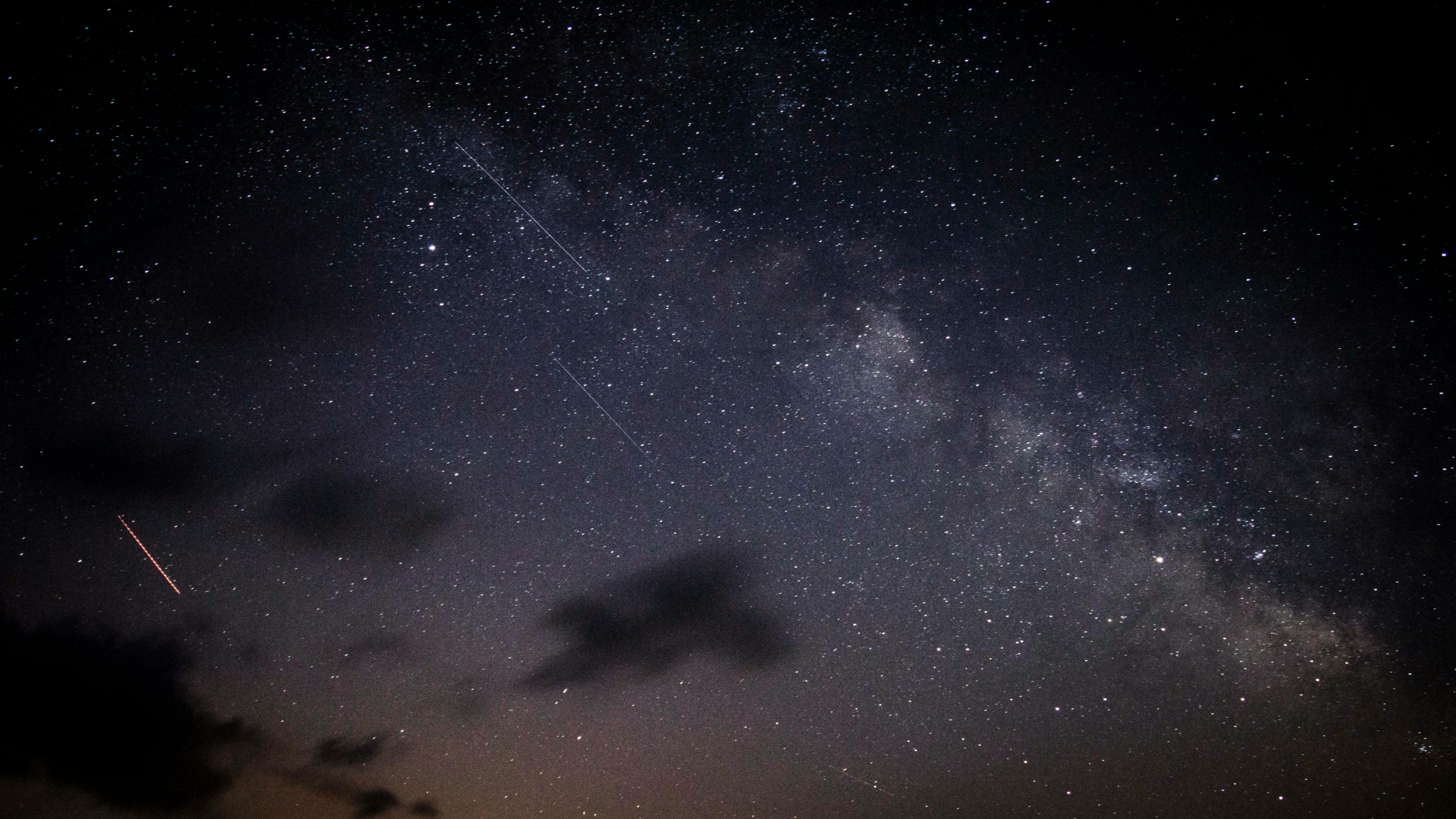
The interstellar comet 3I/ATLAS, discovered on July 1, 2025, has piqued public interest since its arrival in our solar system. In a groundbreaking proposal, physicist Avi Loeb from Harvard University suggests using these rare cosmic visitors to send messages or even ‘time capsules’ into the cosmos. His paper, published on December 21, 2025, outlines a novel approach to interstellar communication that relies on the natural trajectories of these fast-moving objects.
Loeb’s theory challenges the conventional focus on developing advanced spacecraft for contacting extraterrestrial life. Instead, he argues for a pragmatic method of outreach that leverages the existing high-speed paths of interstellar comets like 3I/ATLAS. By utilizing the comet’s natural speed, messages from Earth could reach distant civilizations far more quickly than traditional spacecraft can manage.
Currently, efforts to communicate with potential extraterrestrial life depend heavily on NASA’s Voyager 1 and Voyager 2 probes, which are equipped with the Voyager Golden Records. These records serve as time capsules of sounds, images, and messages from humanity, but Loeb describes this method as slow and cumbersome. He emphasizes the need for a faster alternative, noting, “If we are impatient in establishing physical contact with extraterrestrials, we can attempt to do better in reaching our cosmic neighbours with technological artefacts.”
The speed advantage of natural interstellar objects is striking. For context, Voyager 1 was launched on September 5, 1977, and travels at approximately 17 kilometers per second. At this rate, it will take about 28,000 years to exit the solar system. In contrast, 3I/ATLAS is moving at a remarkable 60 kilometers per second, allowing it to escape the solar system in a fraction of the time. Loeb estimates that a time capsule attached to such a comet could reach interstellar space within just 8,000 years, a significant reduction compared to the Voyager missions.
The implications of this approach are substantial. Loeb concludes that riding on 3I/ATLAS could potentially allow humanity to reach interstellar space by the year 10,000 CE, rather than the estimated 30,000 CE for current spacecraft. This dramatic difference illustrates the advantages of utilizing naturally occurring comets as messengers for our species.
In addition to sending traditional records, Loeb proposes innovative alternatives. One idea involves using high-power lasers to engrave messages onto the surfaces of these comets, creating a more permanent record of human existence in the cosmos. While he acknowledges the uncertainty surrounding whether extraterrestrial civilizations would ever notice these messages, the potential for discovery is profound. Should such life forms possess the technology to interpret these communications, Loeb envisions the emergence of a new field of study termed “Interstellar Archaeology.”
The proposal has sparked interest within the scientific community, raising discussions about the future of humanity’s quest for knowledge beyond our planet. As we stand on the brink of interstellar exploration, the creative ideas presented by Loeb may redefine how we think about communication in the vastness of space.

Moyes Faces Referee Controversy Ahead of Everton vs Chelsea Clash

Man Hospitalised After Assault Outside Shop in Sandwell

Fred MacAulay and Ally McCoist Reunite for Special World Cup Show

NoOnes Targets $1 Trillion Gift Card Market to Enhance Crypto Access

Beloved Actor Matt Clark Passes Away at 89, Fans Mourn Loss

Discover How Milk Thistle Supplements Enhance Liver Health

Irish Community Care Celebrates 60 Years of Support in Liverpool

New Affordable Housing Development Planned for Crawley Site

Millions of Parking Tickets Issued Amid Calls for Reform

Claire Tomlinson Bids Farewell to Sky Sports After 27 Years

Iconic 90s TV Show House Hits Market for £1.1 Million

Nathan Cleary’s Family Celebrates Engagement Amid Romance Rumors

Tributes Flow for Kerry Gentle, Beloved RNLI Volunteer and Artist

Milk Bank Urges Mothers to Donate for Premature Babies’ Health

Shoppers Flock to Discounted Neck Pillow on Amazon for Travel Comfort

Alessia Russo Signs Long-Term Deal with Arsenal Ahead of WSL Season

Nuneaton Town FC Advances Plans for New Stadium in Stockingford

Exploring England’s Cathedrals: A Journey Through History and Architecture
-
 Lifestyle8 months ago
Claire Tomlinson Bids Farewell to Sky Sports After 27 Years
-
 Entertainment11 months ago
Iconic 90s TV Show House Hits Market for £1.1 Million
-
 Sports1 year ago
Nathan Cleary’s Family Celebrates Engagement Amid Romance Rumors
-
 Lifestyle8 months ago
Tributes Flow for Kerry Gentle, Beloved RNLI Volunteer and Artist
-
 Lifestyle1 year ago
Milk Bank Urges Mothers to Donate for Premature Babies’ Health
-
 Lifestyle1 year ago
Shoppers Flock to Discounted Neck Pillow on Amazon for Travel Comfort
-
 Sports12 months ago
Alessia Russo Signs Long-Term Deal with Arsenal Ahead of WSL Season
-
 Sports9 months ago
Nuneaton Town FC Advances Plans for New Stadium in Stockingford
-
 Lifestyle1 year ago
Exploring England’s Cathedrals: A Journey Through History and Architecture
-

 Politics1 year ago
Museums Body Critiques EHRC Proposals on Gender Facilities
-

 Business1 year ago
Trump Visits Europe: Business, Politics, or Leisure?
-

 Lifestyle1 year ago
Japanese Teen Sorato Shimizu Breaks U18 100m Record in 10 Seconds