
Science
Harvard Scientist Sparks Debate Over Interstellar Comet 3I/ATLAS

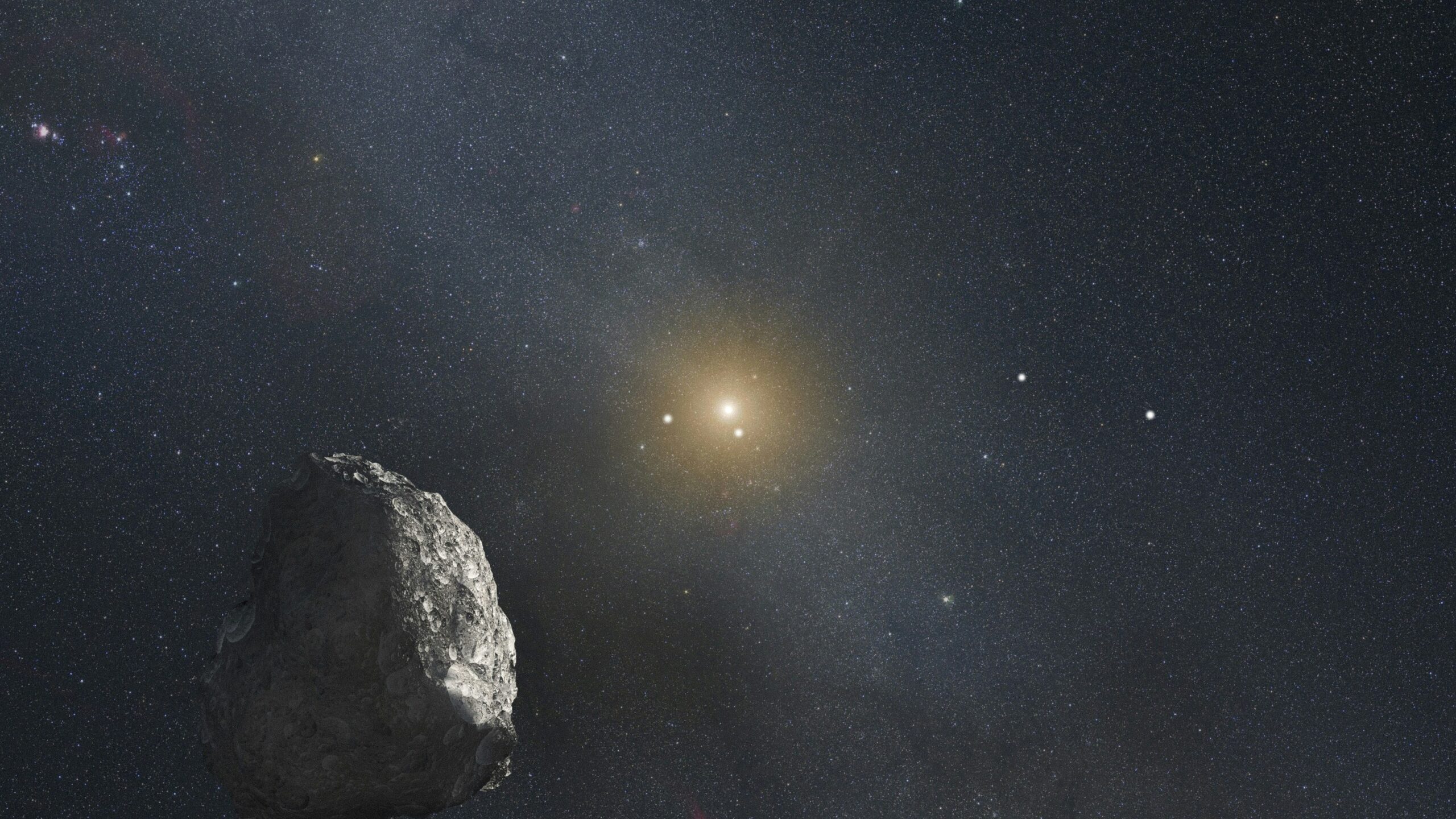
Recent observations of the interstellar comet 3I/ATLAS have prompted a fierce debate among astronomers regarding its origins. On December 19, 2025, the comet made its closest pass to Earth, coming within approximately 270 million kilometres (or 168 million miles) of our planet. Despite this distance, the object’s remarkable speed—estimated at 153,000 mph—has led some scientists to propose that its characteristics hint at a potentially artificial origin.
Leading this controversial discussion is Avi Loeb, a physicist from Harvard University. Loeb has raised concerns about the chemical signatures detected on 3I/ATLAS, particularly the presence of nickel and iron atoms in its coma, the cloud of gas and dust surrounding the comet’s nucleus. He argues that the temperature at which comets are typically observed is too low to vaporize these heavy elements. In his own words, Loeb stated, “At the distances at which comets are observed, the temperature is far too low to vaporize silicate, sulphide, and metallic grains that contain nickel and iron atoms.”
Loeb’s dramatic analogy likened the encounter with such cosmic visitors to a “blind date of interstellar proportions.” He expressed that one can never be certain whether an object like 3I/ATLAS is a “friendly visitor” or a “serial killer.”
Despite these assertions, NASA has firmly countered Loeb’s claims. Agency scientists maintain that the evidence overwhelmingly supports the conclusion that 3I/ATLAS is a natural comet. Tom Statler, a lead scientist at NASA, stated, “It looks like a comet. It does comet things. It very strongly resembles, in just about every way, the comets that we know.” Statler acknowledged some differences between 3I/ATLAS and typical solar system comets but emphasized that these do not necessitate an artificial explanation.
The debate over the nature of 3I/ATLAS exemplifies a broader conflict between mainstream astronomy and the search for extraterrestrial intelligence. While Loeb’s views attract attention, the scientific community remains largely skeptical of claims suggesting artificial origins for celestial objects.
After its flyby of Earth, 3I/ATLAS is now on a trajectory toward the outer reaches of the solar system. Current models indicate it is set to pass Jupiter in early 2026. Following this passage, the comet will continue on its hyperbolic escape path, eventually leaving the detection range of current astronomical instruments as it recedes into the interstellar medium.
As the scientific community continues to analyze 3I/ATLAS, its journey serves as a reminder of the dynamic nature of our solar system. Whether it is a unique natural phenomenon or a harbinger of extraterrestrial intelligence, the interstellar comet will prompt further research and discussion in the years to come. The ongoing analysis of its composition and behavior will be critical for understanding both the origins of such objects and the potential for life beyond our planet.

Moyes Faces Referee Controversy Ahead of Everton vs Chelsea Clash

Man Hospitalised After Assault Outside Shop in Sandwell

Fred MacAulay and Ally McCoist Reunite for Special World Cup Show

NoOnes Targets $1 Trillion Gift Card Market to Enhance Crypto Access

Beloved Actor Matt Clark Passes Away at 89, Fans Mourn Loss

Discover How Milk Thistle Supplements Enhance Liver Health

Irish Community Care Celebrates 60 Years of Support in Liverpool

New Affordable Housing Development Planned for Crawley Site

Millions of Parking Tickets Issued Amid Calls for Reform

Claire Tomlinson Bids Farewell to Sky Sports After 27 Years

Iconic 90s TV Show House Hits Market for £1.1 Million

Tributes Flow for Kerry Gentle, Beloved RNLI Volunteer and Artist

Nathan Cleary’s Family Celebrates Engagement Amid Romance Rumors

Milk Bank Urges Mothers to Donate for Premature Babies’ Health

Shoppers Flock to Discounted Neck Pillow on Amazon for Travel Comfort

Alessia Russo Signs Long-Term Deal with Arsenal Ahead of WSL Season

Nuneaton Town FC Advances Plans for New Stadium in Stockingford

Museums Body Critiques EHRC Proposals on Gender Facilities
-
 Lifestyle6 months ago
Claire Tomlinson Bids Farewell to Sky Sports After 27 Years
-
 Entertainment9 months ago
Iconic 90s TV Show House Hits Market for £1.1 Million
-
 Lifestyle6 months ago
Tributes Flow for Kerry Gentle, Beloved RNLI Volunteer and Artist
-
 Sports11 months ago
Nathan Cleary’s Family Celebrates Engagement Amid Romance Rumors
-
 Lifestyle11 months ago
Milk Bank Urges Mothers to Donate for Premature Babies’ Health
-
 Lifestyle11 months ago
Shoppers Flock to Discounted Neck Pillow on Amazon for Travel Comfort
-
 Sports10 months ago
Alessia Russo Signs Long-Term Deal with Arsenal Ahead of WSL Season
-
 Sports8 months ago
Nuneaton Town FC Advances Plans for New Stadium in Stockingford
-
 Politics11 months ago
Museums Body Critiques EHRC Proposals on Gender Facilities
-

 Lifestyle11 months ago
Exploring England’s Cathedrals: A Journey Through History and Architecture
-

 Business11 months ago
Trump Visits Europe: Business, Politics, or Leisure?
-

 Lifestyle11 months ago
Japanese Teen Sorato Shimizu Breaks U18 100m Record in 10 Seconds