
Science
Irish Scientists Advance ‘Mini Brains’ Research to Combat Disease

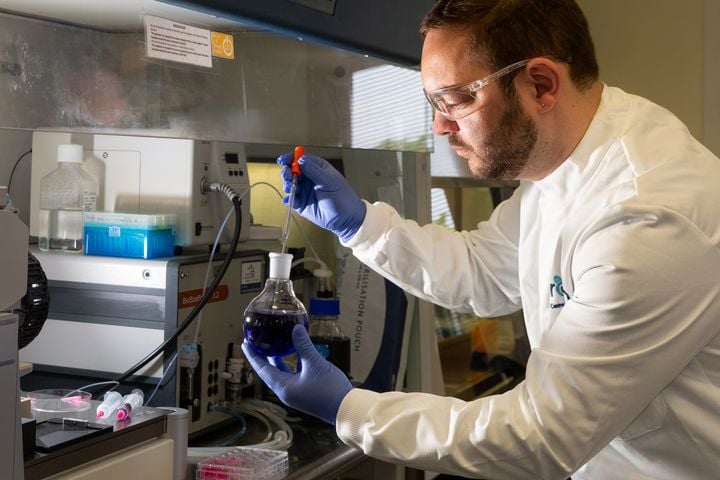
Scientists at the University of Galway have made significant strides in the development of “mini brains,” or cerebral organoids, which could enhance research into neurodegenerative diseases such as strokes, Alzheimer’s, and Parkinson’s. The team, led by Dr. Mihai Lomora, focused on improving the growth of these tiny brain-like structures to address a key challenge: the survival of cells in the deeper regions that often die due to inadequate oxygen supply.
The research employs a soft, biologically compatible material known as hydrogel to cultivate these organoids. By introducing cells capable of forming blood vessels, the researchers observed enhanced growth and a notable decrease in cell death within the organoids. This advancement suggests that the structures are becoming more physiologically relevant, potentially allowing for better modeling of brain function and pathology.
Innovative Techniques Yield Promising Results
Dr. Lomora, who serves as a biomaterial chemistry lecturer and heads the CerebroMachines Lab at the university, highlighted that traditional methods resulted in superficial blood vessels that did not adequately nourish the deeper cells. He stated, “When we started the project, we could see in the scientific literature that cerebral organoids growing in the lab tended to have a vasculature or blood vessels that were superficial only.” This limitation often led to cell starvation and subsequent death.
In their latest work, the team adapted existing techniques to optimize the growth environment and timing for blood vessel development. This enhanced method resulted in a remarkable threefold reduction in cell death, marking a significant improvement in the viability of the organoids. Dr. Lomora expressed excitement about the findings, noting, “We were fascinated to see that the vasculature really was able to protrude towards the interior of the organoids, which actually was quite a big advancement.”
The collaborative research, part of CURAM—Ireland’s Research Centre for Medical Devices—has been published in the Advanced Science journal. The project also involved a multi-disciplinary team from institutions including RCSI University of Medicine and Health Sciences, Trinity College Dublin, and the University of Edinburgh.
Implications for Future Research
The advancements in growing cerebral organoids could provide valuable insights into brain diseases that have long perplexed scientists. By mimicking certain aspects of brain architecture and function, these mini brains could serve as crucial models for studying disease mechanisms and testing potential treatments.
Dr. Lomora emphasized the importance of making the organoids as physiologically relevant as possible. “We believe that by increasing the vasculature, we have taken steps to making the organoids more physiologically relevant,” he stated. This ongoing research represents a significant leap forward in the field of neurobiology and offers hope for future breakthroughs in understanding and treating debilitating brain conditions.
As scientists continue to refine these techniques, the potential applications for cerebral organoids in medical research are expanding, paving the way for innovations that could significantly impact patient care.

Moyes Faces Referee Controversy Ahead of Everton vs Chelsea Clash

Man Hospitalised After Assault Outside Shop in Sandwell

Fred MacAulay and Ally McCoist Reunite for Special World Cup Show

NoOnes Targets $1 Trillion Gift Card Market to Enhance Crypto Access

Beloved Actor Matt Clark Passes Away at 89, Fans Mourn Loss

Discover How Milk Thistle Supplements Enhance Liver Health

Irish Community Care Celebrates 60 Years of Support in Liverpool

New Affordable Housing Development Planned for Crawley Site

Millions of Parking Tickets Issued Amid Calls for Reform

Claire Tomlinson Bids Farewell to Sky Sports After 27 Years

Iconic 90s TV Show House Hits Market for £1.1 Million

Nathan Cleary’s Family Celebrates Engagement Amid Romance Rumors

Tributes Flow for Kerry Gentle, Beloved RNLI Volunteer and Artist

Milk Bank Urges Mothers to Donate for Premature Babies’ Health

Shoppers Flock to Discounted Neck Pillow on Amazon for Travel Comfort

Alessia Russo Signs Long-Term Deal with Arsenal Ahead of WSL Season

Nuneaton Town FC Advances Plans for New Stadium in Stockingford

Exploring England’s Cathedrals: A Journey Through History and Architecture
-
 Lifestyle8 months ago
Claire Tomlinson Bids Farewell to Sky Sports After 27 Years
-
 Entertainment11 months ago
Iconic 90s TV Show House Hits Market for £1.1 Million
-
 Sports1 year ago
Nathan Cleary’s Family Celebrates Engagement Amid Romance Rumors
-
 Lifestyle8 months ago
Tributes Flow for Kerry Gentle, Beloved RNLI Volunteer and Artist
-
 Lifestyle1 year ago
Milk Bank Urges Mothers to Donate for Premature Babies’ Health
-
 Lifestyle1 year ago
Shoppers Flock to Discounted Neck Pillow on Amazon for Travel Comfort
-
 Sports12 months ago
Alessia Russo Signs Long-Term Deal with Arsenal Ahead of WSL Season
-
 Sports9 months ago
Nuneaton Town FC Advances Plans for New Stadium in Stockingford
-
 Lifestyle1 year ago
Exploring England’s Cathedrals: A Journey Through History and Architecture
-

 Politics1 year ago
Museums Body Critiques EHRC Proposals on Gender Facilities
-

 Business1 year ago
Trump Visits Europe: Business, Politics, or Leisure?
-

 Lifestyle1 year ago
Japanese Teen Sorato Shimizu Breaks U18 100m Record in 10 Seconds