
Science
NASA’s Curiosity Rover Launches Rare Experiment on Mars

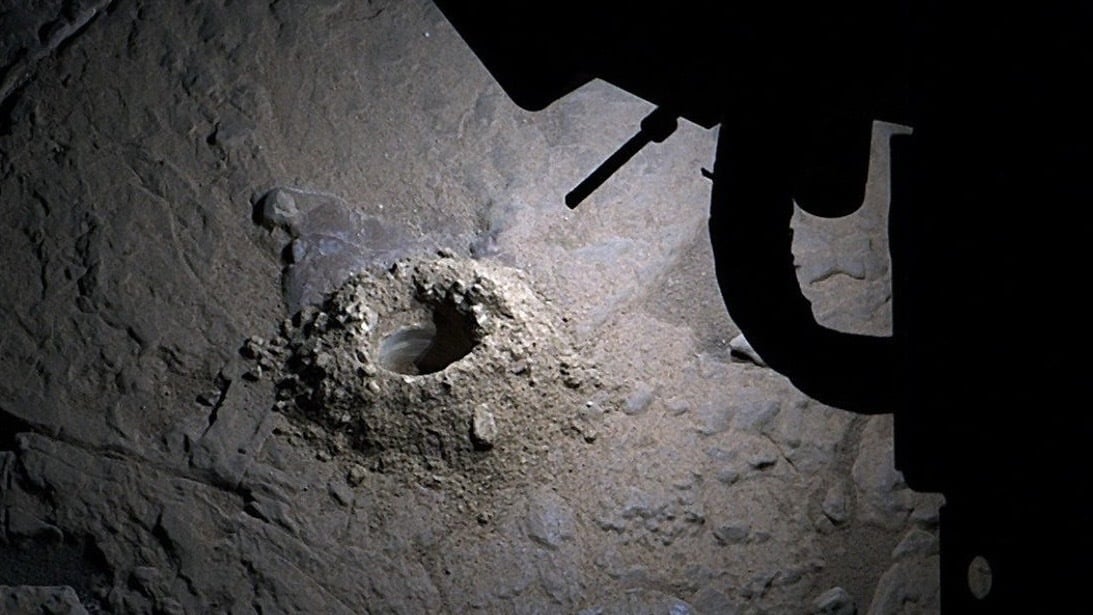
NASA’s Curiosity rover has initiated a unique experiment on Mars, utilizing its final drop of a specialized chemical to analyze a sample that may contain organic compounds. This experiment, conducted after a communication hiatus due to Mars being positioned behind the sun, marks only the second time Curiosity has employed this method in its 13-year mission.
The chemical in question is tetramethylammonium hydroxide, commonly referred to as TMAH, which is dissolved in methanol. This solvent is combined with powdered rock to facilitate the detection of carbon-based compounds, molecules associated with life as we know it on Earth. Curiosity has carried only two small containers of TMAH throughout its journey, with one already used nearly six years ago.
Alex Innanen, an atmospheric scientist from York University in Toronto, noted in a mission log, “We want to be very certain that everything will go well.” The team rehearsed the procedure to ensure a smooth transfer of the rock sample into the rover’s chemistry lab prior to beginning the experiment on February 2, 2024.
Exploring Martian Organics
This advanced testing technique allows scientists to search for signs of life that standard tests might overlook. The discovery of organic molecules is crucial for understanding whether Mars once had conditions suitable for life and how similar chemistry might develop on other planets. While previous missions have identified organics on Mars, the interpretation of these findings remains complex.
In September 2023, NASA revealed that a sample collected by the Perseverance rover contained fossilized material potentially linked to ancient microorganisms. According to Nicky Fox, NASA’s associate administrator, “This finding by our incredible Perseverance rover is the closest we’ve actually come to discovering ancient life on Mars.” Nonetheless, officials continue to caution that other non-biological explanations for these findings cannot be dismissed.
Curiosity is currently investigating boxwork ridges on Mars, formations that resemble spiderwebs from orbit. The rover gathered its latest sample from a site known as Nevado Sajama, which features fine-grained sedimentary rock believed to have formed in watery conditions, making it a prime candidate for the search for fossilized organic material.
Methodical Approach to Martian Chemistry
To minimize errors, the team meticulously practiced the procedure for transferring the rock sample into Curiosity’s lab. The last time TMAH was used, results took seven months to analyze, revealing a greater diversity of organic molecules than simpler heating methods could uncover. This previous study, conducted at the Mary Anning site, enhanced understanding of the complex chemistry within Gale Crater.
Following that initial test in 2020, scientists redesigned the experiment to improve how the solvent interacted with Martian sediment. The new method involves a three-stage process that allows the solvent to engage with the sediment at varying temperatures. This redesign took several years to finalize, partly due to delays caused by the COVID-19 pandemic.
Once the new procedure was confirmed, the rover team awaited the right opportunity. Upon discovering clay minerals in the boxwork area, scientists determined it was time to execute the final TMAH experiment. Clay minerals are known to preserve organic material, adding to the site’s potential for significant discoveries.
Since its launch in 2011, Curiosity has traveled over 352 million miles, including approximately 22.5 miles across the Martian landscape. For the past year, Curiosity has focused on exploring the boxwork region, which may have formed from the last remnants of groundwater before evaporating and leaving behind minerals.
Although Curiosity has depleted its supply of TMAH, it still has access to another solvent, MTBSTFA, which is used in subsequent experiments. As of now, two of the three phases of the latest experiment have been completed. Ashwin Vasavada, Curiosity’s project scientist, expressed enthusiasm about the upcoming results, stating, “These are quite complex analyses to interpret and understand, so it will take a few months for the team to be confident in knowing what they’ve found.”
The findings from this experiment could provide critical insights into the potential for past life on Mars and the broader implications for astrobiology across the solar system.

Moyes Faces Referee Controversy Ahead of Everton vs Chelsea Clash

Man Hospitalised After Assault Outside Shop in Sandwell

Fred MacAulay and Ally McCoist Reunite for Special World Cup Show

NoOnes Targets $1 Trillion Gift Card Market to Enhance Crypto Access

Beloved Actor Matt Clark Passes Away at 89, Fans Mourn Loss

Discover How Milk Thistle Supplements Enhance Liver Health

Irish Community Care Celebrates 60 Years of Support in Liverpool

New Affordable Housing Development Planned for Crawley Site

Millions of Parking Tickets Issued Amid Calls for Reform

Claire Tomlinson Bids Farewell to Sky Sports After 27 Years

Iconic 90s TV Show House Hits Market for £1.1 Million

Nathan Cleary’s Family Celebrates Engagement Amid Romance Rumors

Tributes Flow for Kerry Gentle, Beloved RNLI Volunteer and Artist

Milk Bank Urges Mothers to Donate for Premature Babies’ Health

Shoppers Flock to Discounted Neck Pillow on Amazon for Travel Comfort

Alessia Russo Signs Long-Term Deal with Arsenal Ahead of WSL Season

Nuneaton Town FC Advances Plans for New Stadium in Stockingford

Exploring England’s Cathedrals: A Journey Through History and Architecture
-
 Lifestyle8 months ago
Claire Tomlinson Bids Farewell to Sky Sports After 27 Years
-
 Entertainment11 months ago
Iconic 90s TV Show House Hits Market for £1.1 Million
-
 Sports1 year ago
Nathan Cleary’s Family Celebrates Engagement Amid Romance Rumors
-
 Lifestyle8 months ago
Tributes Flow for Kerry Gentle, Beloved RNLI Volunteer and Artist
-
 Lifestyle1 year ago
Milk Bank Urges Mothers to Donate for Premature Babies’ Health
-
 Lifestyle1 year ago
Shoppers Flock to Discounted Neck Pillow on Amazon for Travel Comfort
-
 Sports12 months ago
Alessia Russo Signs Long-Term Deal with Arsenal Ahead of WSL Season
-
 Sports9 months ago
Nuneaton Town FC Advances Plans for New Stadium in Stockingford
-
 Lifestyle1 year ago
Exploring England’s Cathedrals: A Journey Through History and Architecture
-

 Politics1 year ago
Museums Body Critiques EHRC Proposals on Gender Facilities
-

 Business1 year ago
Trump Visits Europe: Business, Politics, or Leisure?
-

 Lifestyle1 year ago
Japanese Teen Sorato Shimizu Breaks U18 100m Record in 10 Seconds