
Science
New Study Confirms Humans Transported Stonehenge’s Bluestones

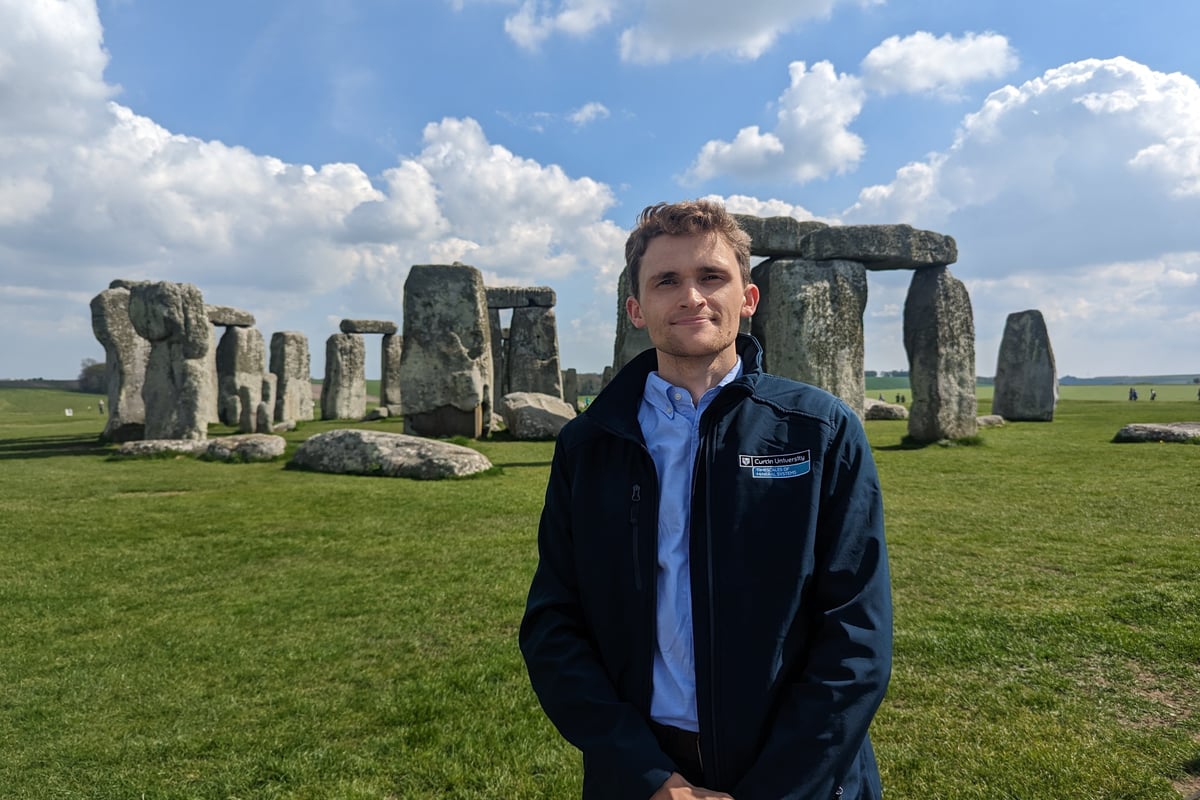
New research from Curtin University provides compelling evidence that humans, rather than glaciers, were responsible for transporting the iconic bluestones to Stonehenge. This groundbreaking study challenges long-held beliefs about the origins of the Altar Stone and other rocks at the site, reinforcing the theory of deliberate human transport over vast distances.
Utilizing advanced mineral “fingerprinting” techniques, scientists from Curtin examined microscopic grains preserved in rivers near the historic monument situated on Salisbury Plain, southern England. These mineral grains serve as geological time capsules, offering insights into how sediments have moved across Britain over millions of years. The research team analyzed over 500 zircon crystals, one of the Earth’s most durable minerals, using state-of-the-art equipment at Curtin’s John de Laeter Centre.
Research Findings Challenge Previous Theories
The findings follow another significant discovery made by the Curtin team in 2024, which identified a Scottish origin for the six-tonne Altar Stone at the heart of Stonehenge. This reinforces the view that Neolithic builders were intentional in sourcing and transporting these monumental stones.
Lead author Dr. Anthony Clarke, part of the Timescales of Mineral Systems Group within Curtin’s School of Earth and Planetary Sciences, noted that the results indicate no evidence of glacial activity reaching the Stonehenge site. “If glaciers had carried rocks from Scotland or Wales to Stonehenge, they would have left a clear mineral signature on the Salisbury Plain,” Dr. Clarke explained. He further elaborated, “We examined river sands near Stonehenge for grains that glaciers might have transported, and we found none. This makes the theory of human transport much more credible.”
Despite the compelling evidence supporting human involvement, the precise methods used to move the stones remain uncertain. Dr. Clarke mentioned various theories, including the possibility that the stones were either sailed down from Scotland or Wales or transported overland using rolling logs. “We may never know the exact method,” he acknowledged, “but we can confidently say that ice almost certainly did not move the stones.”
Modern Techniques Shed Light on Historical Mysteries
Co-author Professor Chris Kirkland, also from the Timescales of Mineral Systems Group, emphasized the importance of modern geochemical tools in resolving long-standing historical questions. “Stonehenge continues to surprise us,” he said. “By analyzing minerals smaller than a grain of sand, we have been able to test theories that have persisted for over a century.”
The study opens the door to numerous questions about the iconic monument, including its original purpose. Professor Kirkland speculated, “It was probably used for various functions, such as a calendar, an ancient temple, or a feasting site.” Addressing these questions requires diverse data sets, and this research contributes significantly to understanding the broader historical context.
The paper, titled “Detrital zircon–apatite fingerprinting challenges glacial transport of Stonehenge’s megaliths,” was published in the journal Communications Earth and Environment. As research continues, the findings from Curtin University not only reshape our understanding of Stonehenge but also illustrate the evolving capabilities of modern science to uncover the mysteries of ancient civilizations.

Moyes Faces Referee Controversy Ahead of Everton vs Chelsea Clash

Man Hospitalised After Assault Outside Shop in Sandwell

Fred MacAulay and Ally McCoist Reunite for Special World Cup Show

NoOnes Targets $1 Trillion Gift Card Market to Enhance Crypto Access

Beloved Actor Matt Clark Passes Away at 89, Fans Mourn Loss

Discover How Milk Thistle Supplements Enhance Liver Health

Irish Community Care Celebrates 60 Years of Support in Liverpool

New Affordable Housing Development Planned for Crawley Site

Millions of Parking Tickets Issued Amid Calls for Reform

Claire Tomlinson Bids Farewell to Sky Sports After 27 Years

Iconic 90s TV Show House Hits Market for £1.1 Million

Nathan Cleary’s Family Celebrates Engagement Amid Romance Rumors

Tributes Flow for Kerry Gentle, Beloved RNLI Volunteer and Artist

Milk Bank Urges Mothers to Donate for Premature Babies’ Health

Shoppers Flock to Discounted Neck Pillow on Amazon for Travel Comfort

Alessia Russo Signs Long-Term Deal with Arsenal Ahead of WSL Season

Nuneaton Town FC Advances Plans for New Stadium in Stockingford

Exploring England’s Cathedrals: A Journey Through History and Architecture
-
 Lifestyle8 months ago
Claire Tomlinson Bids Farewell to Sky Sports After 27 Years
-
 Entertainment11 months ago
Iconic 90s TV Show House Hits Market for £1.1 Million
-
 Sports1 year ago
Nathan Cleary’s Family Celebrates Engagement Amid Romance Rumors
-
 Lifestyle8 months ago
Tributes Flow for Kerry Gentle, Beloved RNLI Volunteer and Artist
-
 Lifestyle1 year ago
Milk Bank Urges Mothers to Donate for Premature Babies’ Health
-
 Lifestyle1 year ago
Shoppers Flock to Discounted Neck Pillow on Amazon for Travel Comfort
-
 Sports12 months ago
Alessia Russo Signs Long-Term Deal with Arsenal Ahead of WSL Season
-
 Sports9 months ago
Nuneaton Town FC Advances Plans for New Stadium in Stockingford
-
 Lifestyle1 year ago
Exploring England’s Cathedrals: A Journey Through History and Architecture
-

 Politics1 year ago
Museums Body Critiques EHRC Proposals on Gender Facilities
-

 Business1 year ago
Trump Visits Europe: Business, Politics, or Leisure?
-

 Lifestyle1 year ago
Japanese Teen Sorato Shimizu Breaks U18 100m Record in 10 Seconds