
Science
Researchers Harness Cosmic Rays to Forecast Solar Storms

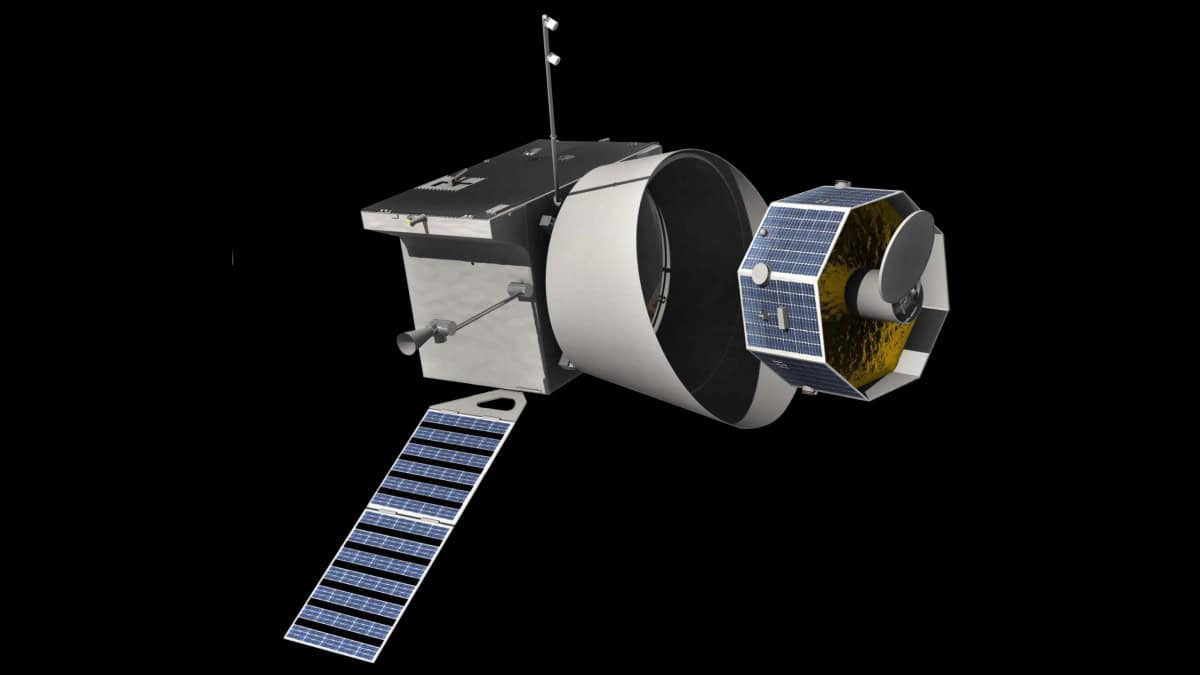
An international research team has made significant strides in forecasting solar storms by utilizing data collected from the BepiColombo mission. Led by Gaku Kinoshita from the University of Tokyo, the team has conducted the first detailed measurements of how coronal mass ejections (CMEs) impact cosmic-ray intensity at various distances from the Sun. This innovative approach aims to enhance the accuracy of space weather predictions following CMEs, which can have far-reaching consequences on Earth.
CMEs are explosive releases of plasma from the Sun’s outer atmosphere. During intense events, this plasma can traverse interplanetary space and interact with Earth’s magnetic field, leading to powerful geomagnetic storms. These storms are not only responsible for the stunning auroras seen in polar regions but can also disrupt satellite electronics and electrical grids on Earth. To mitigate such risks, scientists work to accurately predict the path and intensity of CME plasma, allowing for timely shutdowns of vulnerable systems.
Kinoshita’s team identified an underutilized source of information: cosmic rays. These high-energy charged particles, originating from beyond the solar system, maintain a relatively constant flux throughout the solar system. When an interplanetary CME (ICME) passes, it temporarily reduces the intensity of cosmic rays, a phenomenon known as the Forbush decrease effect. Kinoshita states, “This can be detected even with relatively simple particle detectors and reflects the properties and structure of the passing ICME.”
Despite the potential of cosmic-ray observations, the Forbush decrease effect had not been previously observed simultaneously at multiple distances from the Sun. This gap left scientists uncertain about how the distance from the Sun influences the severity of cosmic-ray intensity reductions.
Exploring Cosmic Ray Interactions with ICMEs
The research team utilized the BepiColombo mission, a collaborative project between the European Space Agency and the Japan Aerospace Exploration Agency, which is set to begin orbiting Mercury in November 2026. While the mission’s primary focus is on Mercury’s surface and magnetosphere, it is equipped with instruments capable of monitoring cosmic rays and solar plasma in its environment.
Kinoshita explains, “Such radiation monitoring instruments are commonly installed on many spacecraft for engineering purposes. We developed a method to observe Forbush decreases using a non-scientific radiation monitor onboard BepiColombo.” The team integrated these measurements with data from specialized missions, including the ESA’s Solar Orbiter, which is currently studying the inner heliosphere.
This collaborative effort allowed the researchers to construct a detailed profile of a week-long ICME that occurred in March 2022. The findings confirmed a clear relationship between the Forbush decrease effect and distance from the Sun. Kinoshita notes, “As the ICME evolved, the depth and gradient of its associated cosmic-ray decrease changed accordingly.”
Advancing Space Weather Prediction
With this methodology established, the team aspires to apply it to non-scientific radiation monitors on other missions throughout the solar system. This could provide a more comprehensive understanding of how ICMEs affect cosmic rays at different distances. Kinoshita emphasizes that “an improved understanding of ICME propagation processes could contribute to better forecasting of disturbances such as geomagnetic storms, leading to further advances in space weather prediction.”
This innovative research holds promise for enhancing the modeling of solar plasma paths and intensities immediately following a CME eruption. Such advancements could significantly improve preparedness for events that may pose threats to technological infrastructure on Earth.
The findings are detailed in the Astrophysical Journal, marking a noteworthy contribution to the field of space weather forecasting. By leveraging cosmic-ray data, scientists hope to navigate the complexities of solar phenomena more effectively, ultimately safeguarding crucial systems on Earth and in space.

Moyes Faces Referee Controversy Ahead of Everton vs Chelsea Clash

Man Hospitalised After Assault Outside Shop in Sandwell

Fred MacAulay and Ally McCoist Reunite for Special World Cup Show

NoOnes Targets $1 Trillion Gift Card Market to Enhance Crypto Access

Beloved Actor Matt Clark Passes Away at 89, Fans Mourn Loss

Discover How Milk Thistle Supplements Enhance Liver Health

Irish Community Care Celebrates 60 Years of Support in Liverpool

New Affordable Housing Development Planned for Crawley Site

Millions of Parking Tickets Issued Amid Calls for Reform

Claire Tomlinson Bids Farewell to Sky Sports After 27 Years

Iconic 90s TV Show House Hits Market for £1.1 Million

Nathan Cleary’s Family Celebrates Engagement Amid Romance Rumors

Tributes Flow for Kerry Gentle, Beloved RNLI Volunteer and Artist

Milk Bank Urges Mothers to Donate for Premature Babies’ Health

Shoppers Flock to Discounted Neck Pillow on Amazon for Travel Comfort

Alessia Russo Signs Long-Term Deal with Arsenal Ahead of WSL Season

Nuneaton Town FC Advances Plans for New Stadium in Stockingford

Exploring England’s Cathedrals: A Journey Through History and Architecture
-
 Lifestyle8 months ago
Claire Tomlinson Bids Farewell to Sky Sports After 27 Years
-
 Entertainment11 months ago
Iconic 90s TV Show House Hits Market for £1.1 Million
-
 Sports1 year ago
Nathan Cleary’s Family Celebrates Engagement Amid Romance Rumors
-
 Lifestyle8 months ago
Tributes Flow for Kerry Gentle, Beloved RNLI Volunteer and Artist
-
 Lifestyle1 year ago
Milk Bank Urges Mothers to Donate for Premature Babies’ Health
-
 Lifestyle1 year ago
Shoppers Flock to Discounted Neck Pillow on Amazon for Travel Comfort
-
 Sports12 months ago
Alessia Russo Signs Long-Term Deal with Arsenal Ahead of WSL Season
-
 Sports9 months ago
Nuneaton Town FC Advances Plans for New Stadium in Stockingford
-
 Lifestyle1 year ago
Exploring England’s Cathedrals: A Journey Through History and Architecture
-

 Politics1 year ago
Museums Body Critiques EHRC Proposals on Gender Facilities
-

 Business1 year ago
Trump Visits Europe: Business, Politics, or Leisure?
-

 Lifestyle1 year ago
Japanese Teen Sorato Shimizu Breaks U18 100m Record in 10 Seconds