
Science
Scientist Declares 3I/ATLAS an Artificial Object from Space

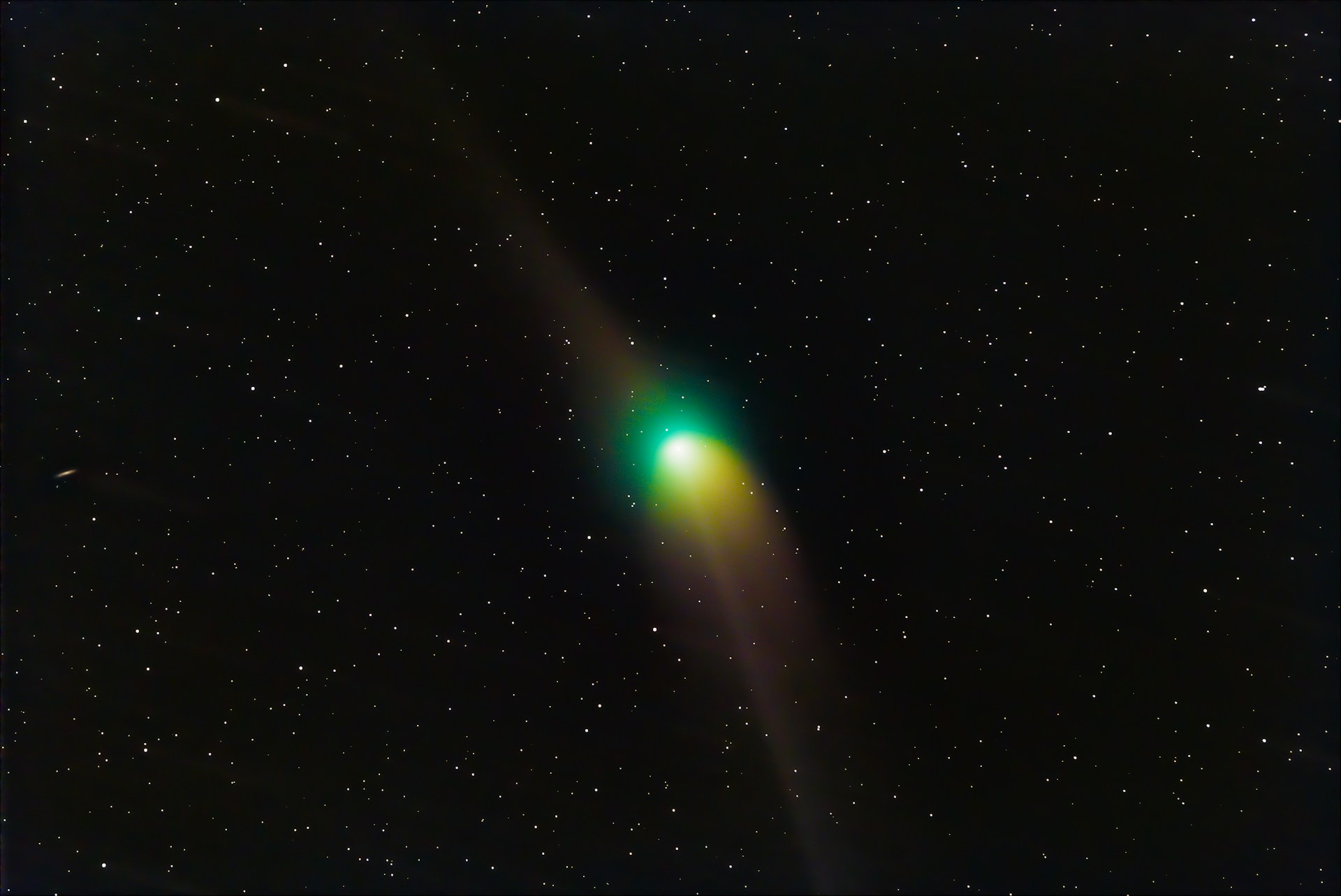
A startling revelation has emerged regarding the interstellar object known as 3I/ATLAS, which was detected on July 1, 2025. Dr. Aris Thorne, a materials scientist consulting for the Department of Homeland Security, claims that this object is not a natural phenomenon but rather constructed from an artificial composite material. This assertion has ignited a heated debate about the nature of the universe and humanity’s place within it.
Found by the ATLAS telescope in Hawaii, 3I/ATLAS is the third interstellar object confirmed to have entered our solar system, following 1I/ʻOumuamua in 2017 and 2I/Borisov in 2019. Its unique trajectory and speed immediately distinguished it from typical comets and asteroids. Measuring approximately 5.6 kilometres in diameter, this mysterious body has captured the attention of scientists and the public alike.
The controversy surrounding 3I/ATLAS has intensified with the input of notable figures, including Harvard astrophysicist Avi Loeb. He posits that the object may not be of natural origin, highlighting recent analyses that revealed its gas plume is venting nickel without any trace of iron. Loeb points out that this chemical signature is unprecedented in natural celestial bodies. Specifically, the presence of nickel tetracarbonyl suggests industrial manufacturing processes, commonly associated with advanced technology.
Unusual Characteristics Raise Questions
3I/ATLAS exhibits several peculiar traits that have further fueled speculation. Observations noted an ‘anti-tail’—a jet of material directed towards the Sun—which has since transitioned to a more conventional tail. This shift raises the possibility of a controlled maneuver, indicating that the object may not be a mere rock or ice but something engineered by an advanced civilization.
Adding to the intrigue, the object’s orbit appears finely tuned, aligning within five degrees of the ecliptic plane of the planets—a statistical improbability estimated at one in 500. Such anomalies contribute to the growing narrative that 3I/ATLAS could be humanity’s first encounter with an extraterrestrial artifact.
Despite this compelling evidence, skepticism remains widespread. Concerns have been raised regarding the lack of high-resolution images of 3I/ATLAS from the Mars Reconnaissance Orbiter, which has not released detailed visuals. Furthermore, unverified reports from an alleged insider at the European Space Agency (ESA) claim that the object is emitting a constant ‘engine-like sound,’ intensifying the debate over its true nature.
Impending Solar Encounter
As 3I/ATLAS continues its journey through the solar system, it is set to make its closest approach to the Sun on October 29, 2025. This event could provide critical data to either support or refute the claims about its artificial composition. The scientific community and the public alike await this encounter with bated breath, as it may lead to definitive answers regarding humanity’s place in the cosmos.
In the wake of these developments, society stands at a pivotal moment. Is 3I/ATLAS merely a natural anomaly, or is it evidence of a sophisticated civilization beyond Earth? As excitement builds, the implications of these findings could reshape our understanding of life beyond our planet.

Moyes Faces Referee Controversy Ahead of Everton vs Chelsea Clash

Man Hospitalised After Assault Outside Shop in Sandwell

Fred MacAulay and Ally McCoist Reunite for Special World Cup Show

NoOnes Targets $1 Trillion Gift Card Market to Enhance Crypto Access

Beloved Actor Matt Clark Passes Away at 89, Fans Mourn Loss

Discover How Milk Thistle Supplements Enhance Liver Health

Irish Community Care Celebrates 60 Years of Support in Liverpool

New Affordable Housing Development Planned for Crawley Site

Millions of Parking Tickets Issued Amid Calls for Reform

Claire Tomlinson Bids Farewell to Sky Sports After 27 Years

Iconic 90s TV Show House Hits Market for £1.1 Million

Nathan Cleary’s Family Celebrates Engagement Amid Romance Rumors

Tributes Flow for Kerry Gentle, Beloved RNLI Volunteer and Artist

Milk Bank Urges Mothers to Donate for Premature Babies’ Health

Shoppers Flock to Discounted Neck Pillow on Amazon for Travel Comfort

Alessia Russo Signs Long-Term Deal with Arsenal Ahead of WSL Season

Nuneaton Town FC Advances Plans for New Stadium in Stockingford

Exploring England’s Cathedrals: A Journey Through History and Architecture
-
 Lifestyle8 months ago
Claire Tomlinson Bids Farewell to Sky Sports After 27 Years
-
 Entertainment11 months ago
Iconic 90s TV Show House Hits Market for £1.1 Million
-
 Sports1 year ago
Nathan Cleary’s Family Celebrates Engagement Amid Romance Rumors
-
 Lifestyle8 months ago
Tributes Flow for Kerry Gentle, Beloved RNLI Volunteer and Artist
-
 Lifestyle1 year ago
Milk Bank Urges Mothers to Donate for Premature Babies’ Health
-
 Lifestyle1 year ago
Shoppers Flock to Discounted Neck Pillow on Amazon for Travel Comfort
-
 Sports12 months ago
Alessia Russo Signs Long-Term Deal with Arsenal Ahead of WSL Season
-
 Sports9 months ago
Nuneaton Town FC Advances Plans for New Stadium in Stockingford
-
 Lifestyle1 year ago
Exploring England’s Cathedrals: A Journey Through History and Architecture
-

 Politics1 year ago
Museums Body Critiques EHRC Proposals on Gender Facilities
-

 Business1 year ago
Trump Visits Europe: Business, Politics, or Leisure?
-

 Lifestyle1 year ago
Japanese Teen Sorato Shimizu Breaks U18 100m Record in 10 Seconds