
Science
Scientists Discover Prehistoric Predator’s Freshwater Habits

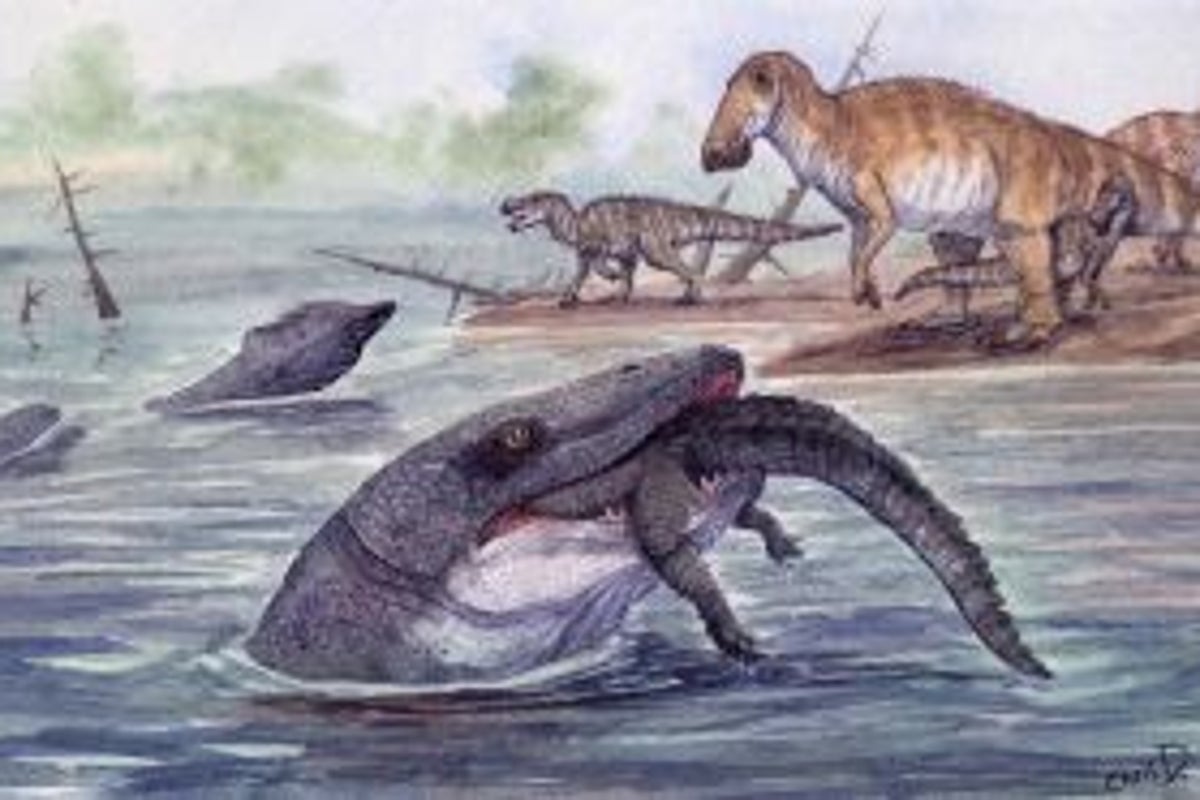
A recent discovery in North Dakota reveals that a prehistoric sea predator, known as a mosasaur, may have also hunted in freshwater environments, challenging previous beliefs about its habitat. Researchers from Uppsala University announced the finding of a 66-million-year-old tooth fossil in the Hell Creek Formation, indicating that this giant reptile, which could grow up to 12 metres (approximately 40 ft), might have adapted to living in rivers as well as the sea.
Traditionally, mosasaurs were regarded as marine reptiles that primarily occupied oceanic environments. The newly discovered tooth, however, shows signs of exposure to river water, suggesting that these creatures could inhabit freshwater ecosystems. This significant finding adds to the evidence that mosasaurs, often likened to modern-day saltwater crocodiles in their ecological role, were more versatile than previously thought.
Insights from Fossil Analysis
The tooth’s chemical signatures suggest a history of freshwater exposure, leading scientists to propose that it belonged to a member of the mosasaur group known as Prognathodontini. These findings were detailed in a study published in the journal BMC Zoology. Researchers noted similarities between the textured patterns on this tooth and those from other identified members of the group, reinforcing the connection.
Further analysis revealed the presence of variants of oxygen and strontium in the tooth, elements typically associated with freshwater environments. This points to the possibility that the mosasaur preyed on freshwater animals and was capable of thriving away from marine habitats. Additionally, the absence of signs suggesting transportation of the tooth implies that the mosasaur likely lived and died in the Hell Creek area.
Implications for Mosasaur Adaptation
Previous studies of mosasaur teeth and other fossils from the Western Interior Seaway region indicate that the habitat may have shifted from seawater to freshwater over time. This change could have prompted mosasaurs to adapt to new environments as salt levels decreased. The researchers speculate that ancient river systems like those in the Hell Creek Formation might have supported large-bodied species, despite the likelihood that younger, smaller individuals would typically exploit such habitats.
The adaptability of mosasaurs to different ecological niches during the Late Cretaceous period could have been crucial for their survival. As stated in the study, “This adaptability may indicate that large rivers of the Hell Creek Formation paleoenvironment could support large-bodied taxa.” The findings not only reshape our understanding of mosasaur behavior but also highlight the complexities of prehistoric ecosystems and their inhabitants.
Overall, this discovery underscores the importance of fossils in revealing the ecological dynamics of ancient species, providing new insights into the lives of creatures that once roamed the Earth millions of years ago.

Moyes Faces Referee Controversy Ahead of Everton vs Chelsea Clash

Man Hospitalised After Assault Outside Shop in Sandwell

Fred MacAulay and Ally McCoist Reunite for Special World Cup Show

NoOnes Targets $1 Trillion Gift Card Market to Enhance Crypto Access

Beloved Actor Matt Clark Passes Away at 89, Fans Mourn Loss

Discover How Milk Thistle Supplements Enhance Liver Health

Irish Community Care Celebrates 60 Years of Support in Liverpool

New Affordable Housing Development Planned for Crawley Site

Millions of Parking Tickets Issued Amid Calls for Reform

Claire Tomlinson Bids Farewell to Sky Sports After 27 Years

Iconic 90s TV Show House Hits Market for £1.1 Million

Nathan Cleary’s Family Celebrates Engagement Amid Romance Rumors

Tributes Flow for Kerry Gentle, Beloved RNLI Volunteer and Artist

Milk Bank Urges Mothers to Donate for Premature Babies’ Health

Shoppers Flock to Discounted Neck Pillow on Amazon for Travel Comfort

Alessia Russo Signs Long-Term Deal with Arsenal Ahead of WSL Season

Nuneaton Town FC Advances Plans for New Stadium in Stockingford

Exploring England’s Cathedrals: A Journey Through History and Architecture
-
 Lifestyle8 months ago
Claire Tomlinson Bids Farewell to Sky Sports After 27 Years
-
 Entertainment11 months ago
Iconic 90s TV Show House Hits Market for £1.1 Million
-
 Sports1 year ago
Nathan Cleary’s Family Celebrates Engagement Amid Romance Rumors
-
 Lifestyle8 months ago
Tributes Flow for Kerry Gentle, Beloved RNLI Volunteer and Artist
-
 Lifestyle1 year ago
Milk Bank Urges Mothers to Donate for Premature Babies’ Health
-
 Lifestyle1 year ago
Shoppers Flock to Discounted Neck Pillow on Amazon for Travel Comfort
-
 Sports12 months ago
Alessia Russo Signs Long-Term Deal with Arsenal Ahead of WSL Season
-
 Sports9 months ago
Nuneaton Town FC Advances Plans for New Stadium in Stockingford
-
 Lifestyle1 year ago
Exploring England’s Cathedrals: A Journey Through History and Architecture
-

 Politics1 year ago
Museums Body Critiques EHRC Proposals on Gender Facilities
-

 Business1 year ago
Trump Visits Europe: Business, Politics, or Leisure?
-

 Lifestyle1 year ago
Japanese Teen Sorato Shimizu Breaks U18 100m Record in 10 Seconds