
Top Stories
Ambassador Alkalaj Condemns Misrepresentation of Bosnia in U.S. Media

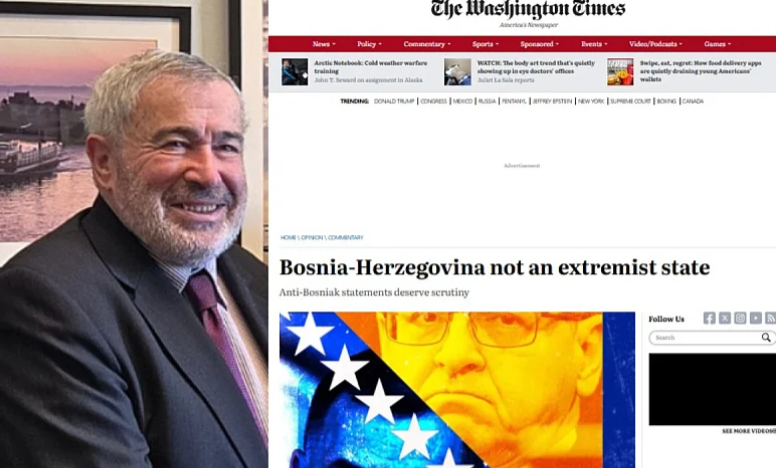
Ambassador Sven Alkalaj of Bosnia and Herzegovina has expressed serious concerns regarding articles published in The Washington Times, asserting that they portray the country as an extremist and unstable state. In a commentary released on February 23, 2024, Alkalaj addressed two specific pieces: an interview with Milorad Dodik, president of the SNSD party, titled “The Republic of Srpska Deserves Independence,” and a commentary by Max Primorac, which questioned the stability of Bosnia and Herzegovina in relation to NATO.
Alkalaj criticized these publications for their inflammatory claims. He noted the recent increase in synchronized xenophobic attacks against Bosnian society, which has a painful history marked by mass killings, persecution, and genocide. He highlighted that such rhetoric resonates with the dangerous language used by the former Serbian president Slobodan Milošević, often termed the “Butcher of the Balkans.” This historical context is crucial, as the conflicts of the 1990s led to more than two million refugees and over 100,000 deaths, culminating in the genocide in Srebrenica.
Historical Context and Responsibility
In his commentary, Ambassador Alkalaj emphasized the importance of assessing public statements with historical accuracy and moral clarity. He specifically identified Dodik as a “genocide denier” who has honored convicted war criminals responsible for the Srebrenica genocide. Alkalaj further noted Dodik’s self-identification as a “Chetnik,” referring to the historical role of the Chetnik movement during World War II.
Alkalaj referenced a description from the Israeli institution Yad Vashem, which outlines the Chetnik’s increasing collaboration with the Nazis and their deteriorating relationship with Jews, often equating them with hated communists. “These are historical facts, and we encourage you to verify them,” he stated.
He also reminded readers of a ruling from the European Court of Human Rights, which determined that Jews and members of other minorities cannot be candidates for the presidency of Bosnia and Herzegovina. This decision contrasts with the support from Bosniak political representatives for constitutional changes that could allow such candidacies, which Dodik and his allies have opposed.
Addressing Controversial Claims
Alkalaj responded to allegations regarding the supposed conversion of churches into mosques during the conflict. He pointed out that during the aggression against Bosnia and Herzegovina, the Army of Republika Srpska destroyed 534 mosques, while the Croatian Defence Council demolished 80. In contrast, he noted that Bosniaks protected churches and synagogues, ensuring none were destroyed in areas under the control of legitimate Bosnian forces.
Turning to Primorac, the ambassador accused him of advocating for the concept of a “third entity” and suggested that his views reflect ideological patterns linked to the Ustaša movement. Alkalaj disclosed that Primorac’s father had affiliations with émigré structures espousing Ustaša ideology but stressed that “a father’s sins do not necessarily dictate a son’s beliefs.” He called for a serious analysis of contemporary rhetoric that stigmatizes entire communities.
Alkalaj firmly rejected claims that authorities in Sarajevo planned to sell the Sarajevo Haggadah, declaring such statements a “shameful lie.” He asserted that Bosnia has preserved the Haggadah through war, occupation, and genocide, safeguarding its symbol of inter-religious heritage.
In conclusion, Alkalaj warned that distorting history and inciting ethnic tensions poses a significant social risk. “In a world still grappling with the legacy of the Holocaust and the Yugoslav wars, giving a platform to voices that align with genocidal ideologies represents a moral failure,” he remarked. He urged that before publishing or citing political figures, their historical connections, ideological positions, and public statements must be thoroughly verified.
“History teaches us how dangerous indifference to extremist narratives can be. Bosnia and Herzegovina, a country that has endured aggression, genocide, and ethnic cleansing, deserves its story to be told accurately and with moral responsibility,” concluded Ambassador Alkalaj.

Moyes Faces Referee Controversy Ahead of Everton vs Chelsea Clash

Man Hospitalised After Assault Outside Shop in Sandwell

Fred MacAulay and Ally McCoist Reunite for Special World Cup Show

NoOnes Targets $1 Trillion Gift Card Market to Enhance Crypto Access

Beloved Actor Matt Clark Passes Away at 89, Fans Mourn Loss

Discover How Milk Thistle Supplements Enhance Liver Health

Irish Community Care Celebrates 60 Years of Support in Liverpool

New Affordable Housing Development Planned for Crawley Site

Millions of Parking Tickets Issued Amid Calls for Reform

Claire Tomlinson Bids Farewell to Sky Sports After 27 Years

Iconic 90s TV Show House Hits Market for £1.1 Million

Tributes Flow for Kerry Gentle, Beloved RNLI Volunteer and Artist

Nathan Cleary’s Family Celebrates Engagement Amid Romance Rumors

Milk Bank Urges Mothers to Donate for Premature Babies’ Health

Shoppers Flock to Discounted Neck Pillow on Amazon for Travel Comfort

Alessia Russo Signs Long-Term Deal with Arsenal Ahead of WSL Season

Nuneaton Town FC Advances Plans for New Stadium in Stockingford

Museums Body Critiques EHRC Proposals on Gender Facilities
-
 Lifestyle6 months ago
Claire Tomlinson Bids Farewell to Sky Sports After 27 Years
-
 Entertainment9 months ago
Iconic 90s TV Show House Hits Market for £1.1 Million
-
 Lifestyle6 months ago
Tributes Flow for Kerry Gentle, Beloved RNLI Volunteer and Artist
-
 Sports11 months ago
Nathan Cleary’s Family Celebrates Engagement Amid Romance Rumors
-
 Lifestyle11 months ago
Milk Bank Urges Mothers to Donate for Premature Babies’ Health
-
 Lifestyle11 months ago
Shoppers Flock to Discounted Neck Pillow on Amazon for Travel Comfort
-
 Sports10 months ago
Alessia Russo Signs Long-Term Deal with Arsenal Ahead of WSL Season
-
 Sports8 months ago
Nuneaton Town FC Advances Plans for New Stadium in Stockingford
-
 Politics11 months ago
Museums Body Critiques EHRC Proposals on Gender Facilities
-

 Lifestyle11 months ago
Exploring England’s Cathedrals: A Journey Through History and Architecture
-

 Business11 months ago
Trump Visits Europe: Business, Politics, or Leisure?
-

 Lifestyle11 months ago
Japanese Teen Sorato Shimizu Breaks U18 100m Record in 10 Seconds