
Top Stories
Father’s Icy Plunge with Son Sparks Health Debate in Russia

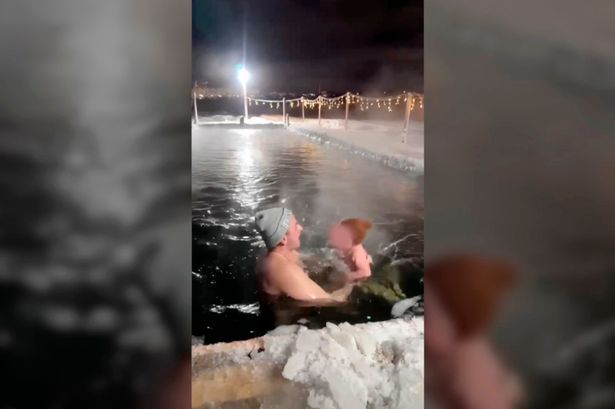
A recent video showing a father submerging his one-year-old son in icy water has ignited a heated discussion among parents and health professionals across Russia. The footage, which emerged on social media, captures Radmir Gaysarov, 31, plunging his 16-month-old son, Martin, into a Siberian ice hole amidst frigid temperatures of -30C.
The clip showcases the child being dipped into water with a temperature just above freezing, a practice that has garnered both praise and criticism. Some parents applauded Gaysarov’s actions as a means of “toughening up” their children. One approving viewer commented, “This is how to toughen up our children,” while another mother expressed her enthusiasm, stating, “That’s really cool… I’d like to start teaching my child as well.”
Despite the supportive comments, medical professionals have raised alarm bells regarding the potential health risks associated with such extreme exposure. In the video, Gaysarov can be heard cheerfully announcing, “Our walrus is one year and four months old,” while Martin appears startled but does not cry during the experience. Following the event, the local leisure center awarded Martin a ‘Walrus’ medal, celebrating his participation in the ice plunge, which was reported to have a water temperature of 0.9°C.
Health Professionals Voice Concerns
Health experts have reacted with caution, emphasizing the dangers of exposing young children to extreme cold. Rita Pikhtovnikova, a Russian paediatric cardiologist, stated, “Immersing a one-year-old child in an ice hole at a water temperature of 0-4°C is extremely stressful for the entire body, especially for an immature cardiovascular system.” She explained that the body’s ability to regulate temperature is not fully developed in infants, making them particularly vulnerable to cold shock, which can lead to severe medical conditions.
Pikhtovnikova outlined potential risks, including tachycardia, spikes in blood pressure, and even cardiac arrest. “A few seconds in icy water is enough to trigger a panic attack, loss of coordination, and can later lead to neurological complications such as developmental delays or seizures,” she warned.
Another medical professional, Dr. Galina Slobodina, reiterated that children of Martin’s age should not undergo “cold hardening.” She emphasized parental responsibility, stating, “If the child develops serious health problems in the future, only they will be held responsible.”
Guidelines for Cold Exposure
The Kremlin Health Ministry has established guidelines regarding ice dipping, recommending that such activities should involve a gradual acclimatization process and be medically supervised. Participants are advised to use properly equipped ice holes to minimize health risks.
While many Russians hold firm beliefs regarding the benefits of ice swimming, especially for children, the debate surrounding Gaysarov’s actions continues to intensify. As parents weigh these practices against potential medical consequences, the conversation around childhood exposure to extreme conditions appears set to persist, especially in a country where ice swimming is viewed as a cultural tradition.
This incident serves as a stark reminder of the delicate balance between cultural practices and the health and safety of children. As discussions unfold, parents will need to navigate the complexities of child-rearing in the context of both tradition and modern medical advice.

Moyes Faces Referee Controversy Ahead of Everton vs Chelsea Clash

Man Hospitalised After Assault Outside Shop in Sandwell

Fred MacAulay and Ally McCoist Reunite for Special World Cup Show

NoOnes Targets $1 Trillion Gift Card Market to Enhance Crypto Access

Beloved Actor Matt Clark Passes Away at 89, Fans Mourn Loss

Discover How Milk Thistle Supplements Enhance Liver Health

Irish Community Care Celebrates 60 Years of Support in Liverpool

New Affordable Housing Development Planned for Crawley Site

Millions of Parking Tickets Issued Amid Calls for Reform

Claire Tomlinson Bids Farewell to Sky Sports After 27 Years

Iconic 90s TV Show House Hits Market for £1.1 Million

Tributes Flow for Kerry Gentle, Beloved RNLI Volunteer and Artist

Nathan Cleary’s Family Celebrates Engagement Amid Romance Rumors

Milk Bank Urges Mothers to Donate for Premature Babies’ Health

Shoppers Flock to Discounted Neck Pillow on Amazon for Travel Comfort

Alessia Russo Signs Long-Term Deal with Arsenal Ahead of WSL Season

Nuneaton Town FC Advances Plans for New Stadium in Stockingford

Museums Body Critiques EHRC Proposals on Gender Facilities
-
 Lifestyle6 months ago
Claire Tomlinson Bids Farewell to Sky Sports After 27 Years
-
 Entertainment9 months ago
Iconic 90s TV Show House Hits Market for £1.1 Million
-
 Lifestyle6 months ago
Tributes Flow for Kerry Gentle, Beloved RNLI Volunteer and Artist
-
 Sports11 months ago
Nathan Cleary’s Family Celebrates Engagement Amid Romance Rumors
-
 Lifestyle11 months ago
Milk Bank Urges Mothers to Donate for Premature Babies’ Health
-
 Lifestyle11 months ago
Shoppers Flock to Discounted Neck Pillow on Amazon for Travel Comfort
-
 Sports10 months ago
Alessia Russo Signs Long-Term Deal with Arsenal Ahead of WSL Season
-
 Sports8 months ago
Nuneaton Town FC Advances Plans for New Stadium in Stockingford
-
 Politics11 months ago
Museums Body Critiques EHRC Proposals on Gender Facilities
-

 Lifestyle11 months ago
Exploring England’s Cathedrals: A Journey Through History and Architecture
-

 Business11 months ago
Trump Visits Europe: Business, Politics, or Leisure?
-

 Lifestyle11 months ago
Japanese Teen Sorato Shimizu Breaks U18 100m Record in 10 Seconds