
Top Stories
New Dutch Government Strengthens Ties with Balkan States

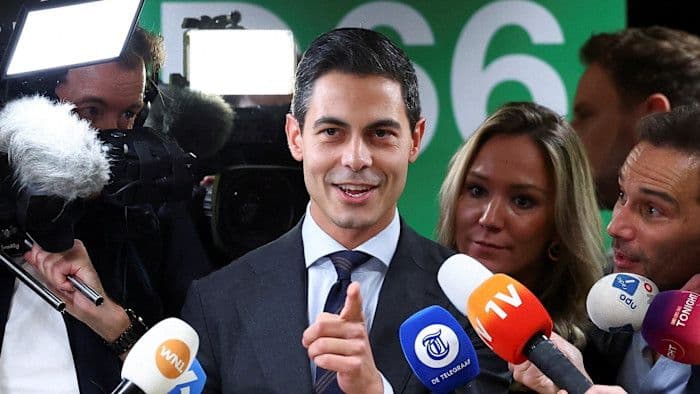
The newly formed Dutch government has outlined a strategic approach to deepen ties with Balkan states as part of its broader European Union (EU) expansion strategy. This initiative was presented in a coalition agreement released on October 27, 2023, which spans 67 pages and sets the direction for the future of the Netherlands under the leadership of Rob Jetten, the leader of the D66 party.
The coalition agreement emphasizes a realistic stance on EU enlargement, highlighting the importance of geopolitical considerations. It specifically mentions the need to connect candidate countries with strategic positions, such as those in the Western Balkans, to the Netherlands and the EU through intensified cooperation.
“We advocate for a Europe of different speeds,” the document states, underscoring the necessity for neighboring countries that share European values to have a clear path toward EU membership. To achieve this, the agreement reiterates that these nations must continue to meet the Copenhagen criteria, which outline essential requirements for EU membership, including a stable democracy, the rule of law, and respect for human rights.
In addition to the focus on the Balkans, the coalition agreement presents a range of ambitious goals led by Jetten and his partners: the CDA and the VVD. Jetten, at 38 years old, is poised to become the youngest Prime Minister in Dutch history, and he expressed a sense of optimism following the agreement’s announcement. “Today we embark on a new path,” he told reporters in The Hague, pledging to deliver “real breakthroughs” in governance and international relations.
The new government’s commitment to enhancing cooperation with the Western Balkans reflects a significant shift in Dutch foreign policy and aims to promote stability and development in a region that has faced numerous challenges. By fostering closer relationships with these nations, the Netherlands hopes to contribute to a more unified and resilient Europe.
The coalition agreement also indicates that the government will work on various domestic and international issues, aiming to address both national priorities and the broader European context. As the Netherlands steps forward with this renewed focus, the implications for the Western Balkans and the EU’s future integration processes will be closely observed by analysts and policymakers alike.

Moyes Faces Referee Controversy Ahead of Everton vs Chelsea Clash

Man Hospitalised After Assault Outside Shop in Sandwell

Fred MacAulay and Ally McCoist Reunite for Special World Cup Show

NoOnes Targets $1 Trillion Gift Card Market to Enhance Crypto Access

Beloved Actor Matt Clark Passes Away at 89, Fans Mourn Loss

Discover How Milk Thistle Supplements Enhance Liver Health

Irish Community Care Celebrates 60 Years of Support in Liverpool

New Affordable Housing Development Planned for Crawley Site

Millions of Parking Tickets Issued Amid Calls for Reform

Claire Tomlinson Bids Farewell to Sky Sports After 27 Years

Iconic 90s TV Show House Hits Market for £1.1 Million

Tributes Flow for Kerry Gentle, Beloved RNLI Volunteer and Artist

Nathan Cleary’s Family Celebrates Engagement Amid Romance Rumors

Milk Bank Urges Mothers to Donate for Premature Babies’ Health

Shoppers Flock to Discounted Neck Pillow on Amazon for Travel Comfort

Alessia Russo Signs Long-Term Deal with Arsenal Ahead of WSL Season

Nuneaton Town FC Advances Plans for New Stadium in Stockingford

Museums Body Critiques EHRC Proposals on Gender Facilities
-
 Lifestyle6 months ago
Claire Tomlinson Bids Farewell to Sky Sports After 27 Years
-
 Entertainment9 months ago
Iconic 90s TV Show House Hits Market for £1.1 Million
-
 Lifestyle6 months ago
Tributes Flow for Kerry Gentle, Beloved RNLI Volunteer and Artist
-
 Sports11 months ago
Nathan Cleary’s Family Celebrates Engagement Amid Romance Rumors
-
 Lifestyle11 months ago
Milk Bank Urges Mothers to Donate for Premature Babies’ Health
-
 Lifestyle11 months ago
Shoppers Flock to Discounted Neck Pillow on Amazon for Travel Comfort
-
 Sports10 months ago
Alessia Russo Signs Long-Term Deal with Arsenal Ahead of WSL Season
-
 Sports8 months ago
Nuneaton Town FC Advances Plans for New Stadium in Stockingford
-
 Politics11 months ago
Museums Body Critiques EHRC Proposals on Gender Facilities
-

 Lifestyle11 months ago
Exploring England’s Cathedrals: A Journey Through History and Architecture
-

 Business11 months ago
Trump Visits Europe: Business, Politics, or Leisure?
-

 Lifestyle11 months ago
Japanese Teen Sorato Shimizu Breaks U18 100m Record in 10 Seconds