
Top Stories
Political Critique: Blazic Exposes Flaws in Montenegro’s System

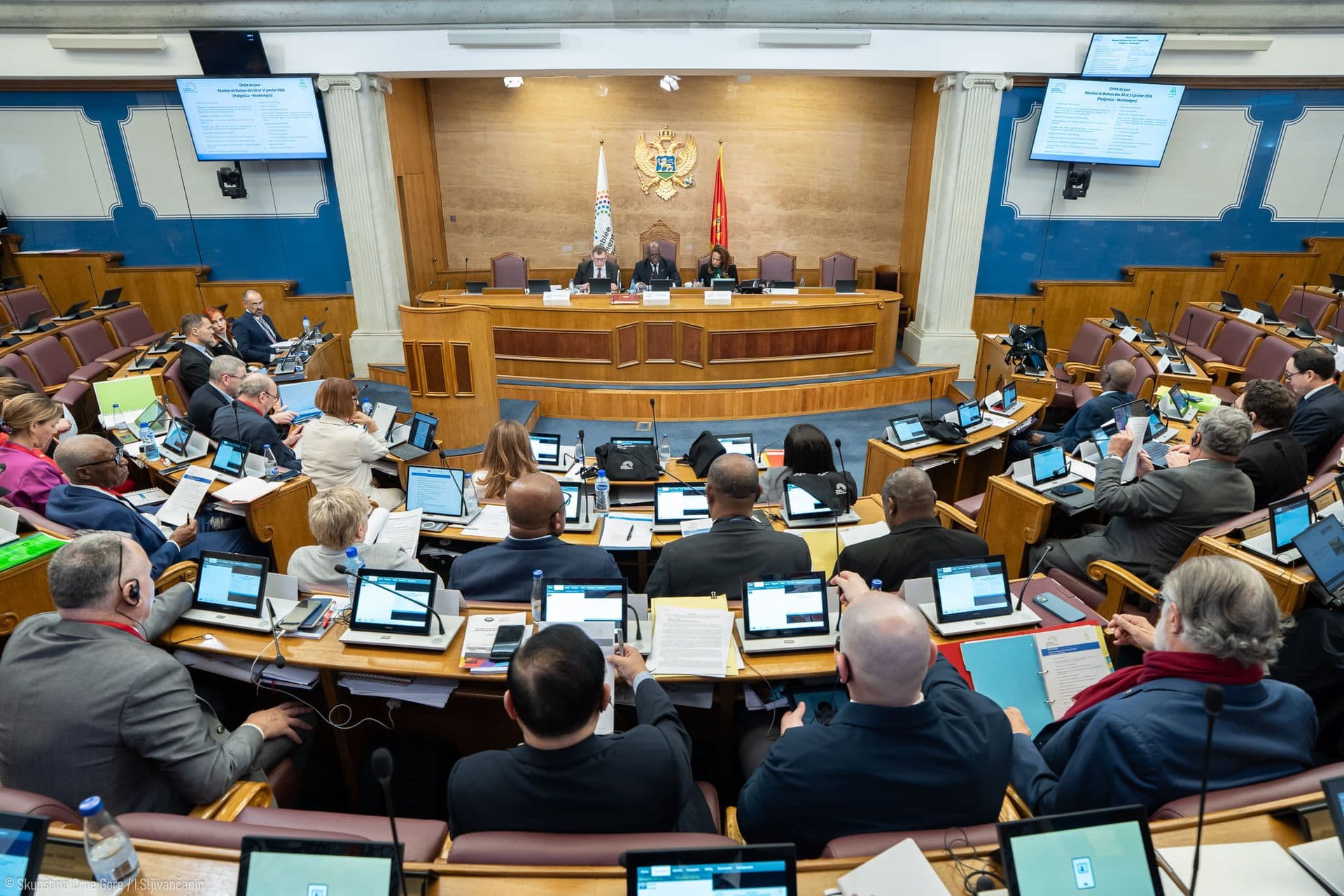
Professor Đorđije Blazic, a noted expert in administrative law and dean of the Faculty of State and European Studies, has issued a stark critique of Montenegro’s political landscape. In an interview with the news outlet Pobjeda, he asserted that political parties in Montenegro operate under a “pocket” and “armchair” ideology, devoid of genuine commitment to public interest or ideological principles. According to Blazic, this situation has persisted since he began observing the political climate in 1990.
Blazic argues that the political factions in Montenegro function more like cliques than legitimate parties. He emphasized that the distinction between the opposition and the ruling parties has become negligible, as they all adhere to a self-serving agenda. He stated, “There is no difference between the opposition and the government; they are all the same.” His observations reflect ongoing struggles within Montenegro’s governance and institutions, which he believes have deteriorated under decades of a partisan system.
In his view, the only potential remedy for the current situation lies in a fundamental change in the attitudes and actions of the citizens. Despite this, Blazic remains skeptical about the possibility of such a shift occurring anytime soon. He lamented that Montenegro lacks the characteristics of a true state, a problem he has been vocal about for over two decades. He noted that the issues surrounding constitutional law and governance have seemingly fallen on deaf ears.
Blazic pointed out that citizens, including himself, are complicit in the ongoing state of affairs by allowing political parties to dominate the landscape. He remarked, “There are no innocents here,” indicating that the citizens’ acceptance of party rule has perpetuated the status quo. He described current political discourse as lacking substance, asserting that understanding it requires little more than basic literacy.
Constitutional Issues and Sovereignty
Addressing Montenegro’s aspirations for European Union membership, Blazic contended that entering the EU will not equate to a loss of sovereignty. He clarified that Montenegro will retain its status as a sovereign state within the union. Nevertheless, he criticized how local politicians treat the country as if it lacks sovereignty. Blazic emphasized that true sovereign power, as defined in the Constitution, resides with the citizenry, rather than political parties.
He cited three specific articles from the Constitution to bolster his argument. Article 2 designates citizens as the bearers of sovereignty, while Article 45 specifies voting rights, including age and residency requirements. Article 83 outlines that elections must be general, equal, direct, and secret. Blazic lamented that the practical application of these provisions is failing, with citizens unable to directly elect representatives.
He argued that the current electoral system effectively transforms political parties into the primary decision-makers, stripping citizens of their rightful voting power. “What we have is not a direct election process,” he said, highlighting the need for citizens to vote directly for individuals rather than party lists. This system, he believes, has resulted in a “partitocracy” where parties have usurped the electoral rights of citizens.
Blazic noted that the proliferation of political parties—nearly 80 active entities in Montenegro—is symptomatic of a deeper issue. He argued that these parties operate as businesses more concerned with securing positions and financial gains rather than serving the public. For instance, while pensions were increased by a mere 38 cents, parliamentary salaries have risen by hundreds of euros.
Critique of National Councils and Legislative Procedures
Blazic also voiced concerns regarding the role of national councils representing minority communities in Montenegro. He contended that political parties have assumed roles that should rightfully belong to these councils, which are meant to advocate for the interests of minority groups without engaging in political maneuvering. He emphasized the importance of genuine representation for minority communities, arguing that the current system often exploits these groups for political gain.
On the legislative front, Blazic criticized the manner in which laws are adopted in Montenegro, suggesting that many processes occur without sufficient transparency. He expressed alarm at the absence of a robust legal framework that aligns with European Union standards and the Constitution of Montenegro. “There is no fundamental legal order established in accordance with EU standards,” he stated.
He pointed to the urgency for radical changes to address the systemic issues plaguing Montenegro’s governance. As an illustrative example, he referenced the Ukrainian parliament’s actions in 2014, where significant changes were made to remove ineffective officials. Blazic suggested that a similar approach might be needed in Montenegro to restore integrity and functionality to its political system.
In closing, Blazic’s reflections reveal a profound discontent with the political landscape in Montenegro. He posits that the existing political framework stifles true democratic governance and calls for a reassessment of the roles that both citizens and political entities play in shaping the country’s future. His insights underscore the pressing need for a transformation in both political practices and public engagement to foster a more democratic and representative system.

Moyes Faces Referee Controversy Ahead of Everton vs Chelsea Clash

Man Hospitalised After Assault Outside Shop in Sandwell

Fred MacAulay and Ally McCoist Reunite for Special World Cup Show

NoOnes Targets $1 Trillion Gift Card Market to Enhance Crypto Access

Beloved Actor Matt Clark Passes Away at 89, Fans Mourn Loss

Discover How Milk Thistle Supplements Enhance Liver Health

Irish Community Care Celebrates 60 Years of Support in Liverpool

New Affordable Housing Development Planned for Crawley Site

Millions of Parking Tickets Issued Amid Calls for Reform

Claire Tomlinson Bids Farewell to Sky Sports After 27 Years

Iconic 90s TV Show House Hits Market for £1.1 Million

Tributes Flow for Kerry Gentle, Beloved RNLI Volunteer and Artist

Nathan Cleary’s Family Celebrates Engagement Amid Romance Rumors

Milk Bank Urges Mothers to Donate for Premature Babies’ Health

Shoppers Flock to Discounted Neck Pillow on Amazon for Travel Comfort

Alessia Russo Signs Long-Term Deal with Arsenal Ahead of WSL Season

Nuneaton Town FC Advances Plans for New Stadium in Stockingford

Museums Body Critiques EHRC Proposals on Gender Facilities
-
 Lifestyle6 months ago
Claire Tomlinson Bids Farewell to Sky Sports After 27 Years
-
 Entertainment9 months ago
Iconic 90s TV Show House Hits Market for £1.1 Million
-
 Lifestyle6 months ago
Tributes Flow for Kerry Gentle, Beloved RNLI Volunteer and Artist
-
 Sports11 months ago
Nathan Cleary’s Family Celebrates Engagement Amid Romance Rumors
-
 Lifestyle11 months ago
Milk Bank Urges Mothers to Donate for Premature Babies’ Health
-
 Lifestyle11 months ago
Shoppers Flock to Discounted Neck Pillow on Amazon for Travel Comfort
-
 Sports10 months ago
Alessia Russo Signs Long-Term Deal with Arsenal Ahead of WSL Season
-
 Sports8 months ago
Nuneaton Town FC Advances Plans for New Stadium in Stockingford
-
 Politics11 months ago
Museums Body Critiques EHRC Proposals on Gender Facilities
-

 Lifestyle11 months ago
Exploring England’s Cathedrals: A Journey Through History and Architecture
-

 Business11 months ago
Trump Visits Europe: Business, Politics, or Leisure?
-

 Lifestyle11 months ago
Japanese Teen Sorato Shimizu Breaks U18 100m Record in 10 Seconds