
Top Stories
Trump’s Approach to NATO Raises Concerns Among Experts

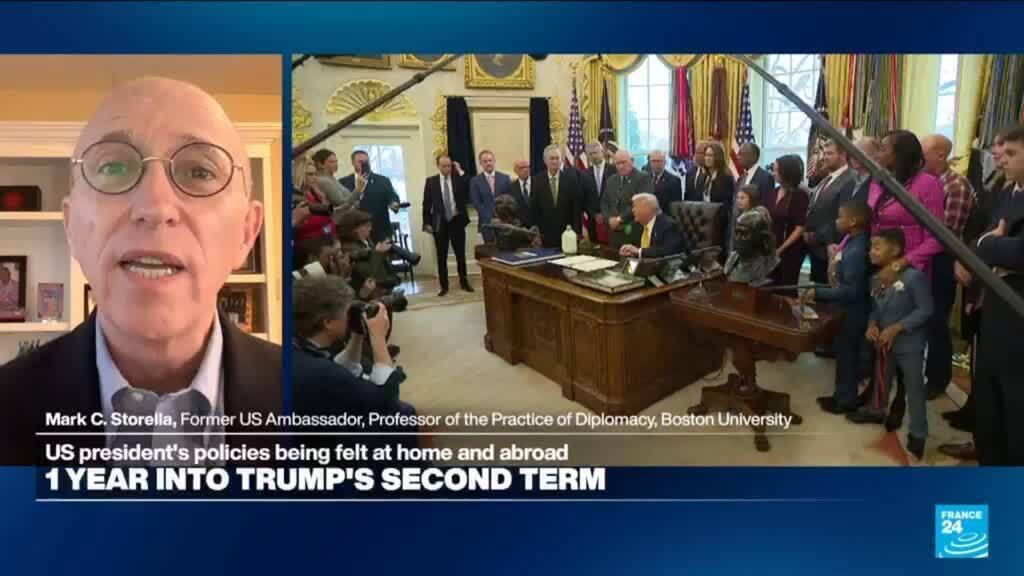
Former President Donald Trump has sparked discussions about the future of NATO, suggesting that his administration may be capable of achieving what past Soviet and Russian leaders could not: undermining the alliance. This assertion has drawn attention from experts, including former US Ambassador Mark C. Storella, who warns that such a shift could have significant implications for both US foreign policy and its global economic standing.
Storella, who is also a Professor of the Practice of Diplomacy at Boston University, provided an insightful analysis of current US immigration and economic policies. He argues that the United States is isolating itself on the world stage, a move that could ultimately weaken its economy and moral authority.
Concerns Over Isolationism
In his analysis, Storella highlights how the US’s current trajectory may lead to a reduction in its influence in international affairs. He notes that a form of authoritarian opportunism, often masked as pragmatic policy decisions, threatens the core values of democracy that the US has long championed. This perspective underscores a growing fear that America’s alliances could be jeopardized, along with the democratic norms that have defined its foreign policy for decades.
Storella emphasizes that the potential weakening of NATO is particularly alarming given the historical context. Over the years, various Soviet and Russian leaders attempted to fracture the alliance but failed to do so. Trump’s rhetoric and policies, according to Storella, might unintentionally succeed where they could not.
Storella’s concerns are particularly relevant as the US navigates a complex global environment. The implications of a less cohesive NATO could extend beyond military cooperation, affecting economic ties and diplomatic relations with key allies.
Future Implications for US Policy
The ramifications of these shifts could be profound. Storella warns that continued isolationist policies could lead to reduced economic opportunities for the US. As other nations form stronger alliances, the US risks being left behind, both politically and economically. He urges policymakers to reconsider the trajectory of US foreign policy, advocating for renewed commitment to multilateralism as a means to uphold shared values and economic interests.
Storella’s insights reflect a wider sentiment among political analysts who are concerned about the implications of current leadership choices. Without a clear strategy for maintaining strong international relationships, the US may find itself increasingly marginalized in global discussions.
The analysis serves as a reminder of the delicate balance between national interests and global responsibilities. As Trump’s influence remains a significant factor in American politics, the potential for a shift in NATO’s dynamics could redefine not only the alliance itself but also the position of the US in a rapidly changing world.

Moyes Faces Referee Controversy Ahead of Everton vs Chelsea Clash

Man Hospitalised After Assault Outside Shop in Sandwell

Fred MacAulay and Ally McCoist Reunite for Special World Cup Show

NoOnes Targets $1 Trillion Gift Card Market to Enhance Crypto Access

Beloved Actor Matt Clark Passes Away at 89, Fans Mourn Loss

Discover How Milk Thistle Supplements Enhance Liver Health

Irish Community Care Celebrates 60 Years of Support in Liverpool

New Affordable Housing Development Planned for Crawley Site

Millions of Parking Tickets Issued Amid Calls for Reform

Claire Tomlinson Bids Farewell to Sky Sports After 27 Years

Iconic 90s TV Show House Hits Market for £1.1 Million

Tributes Flow for Kerry Gentle, Beloved RNLI Volunteer and Artist

Nathan Cleary’s Family Celebrates Engagement Amid Romance Rumors

Milk Bank Urges Mothers to Donate for Premature Babies’ Health

Shoppers Flock to Discounted Neck Pillow on Amazon for Travel Comfort

Alessia Russo Signs Long-Term Deal with Arsenal Ahead of WSL Season

Nuneaton Town FC Advances Plans for New Stadium in Stockingford

Museums Body Critiques EHRC Proposals on Gender Facilities
-
 Lifestyle6 months ago
Claire Tomlinson Bids Farewell to Sky Sports After 27 Years
-
 Entertainment9 months ago
Iconic 90s TV Show House Hits Market for £1.1 Million
-
 Lifestyle7 months ago
Tributes Flow for Kerry Gentle, Beloved RNLI Volunteer and Artist
-
 Sports11 months ago
Nathan Cleary’s Family Celebrates Engagement Amid Romance Rumors
-
 Lifestyle11 months ago
Milk Bank Urges Mothers to Donate for Premature Babies’ Health
-
 Lifestyle11 months ago
Shoppers Flock to Discounted Neck Pillow on Amazon for Travel Comfort
-
 Sports10 months ago
Alessia Russo Signs Long-Term Deal with Arsenal Ahead of WSL Season
-
 Sports8 months ago
Nuneaton Town FC Advances Plans for New Stadium in Stockingford
-
 Politics11 months ago
Museums Body Critiques EHRC Proposals on Gender Facilities
-

 Lifestyle11 months ago
Exploring England’s Cathedrals: A Journey Through History and Architecture
-

 Business11 months ago
Trump Visits Europe: Business, Politics, or Leisure?
-

 Lifestyle11 months ago
Japanese Teen Sorato Shimizu Breaks U18 100m Record in 10 Seconds