
World
Holocaust Survivor Reflects on Trauma and Resilience at Bergen-Belsen

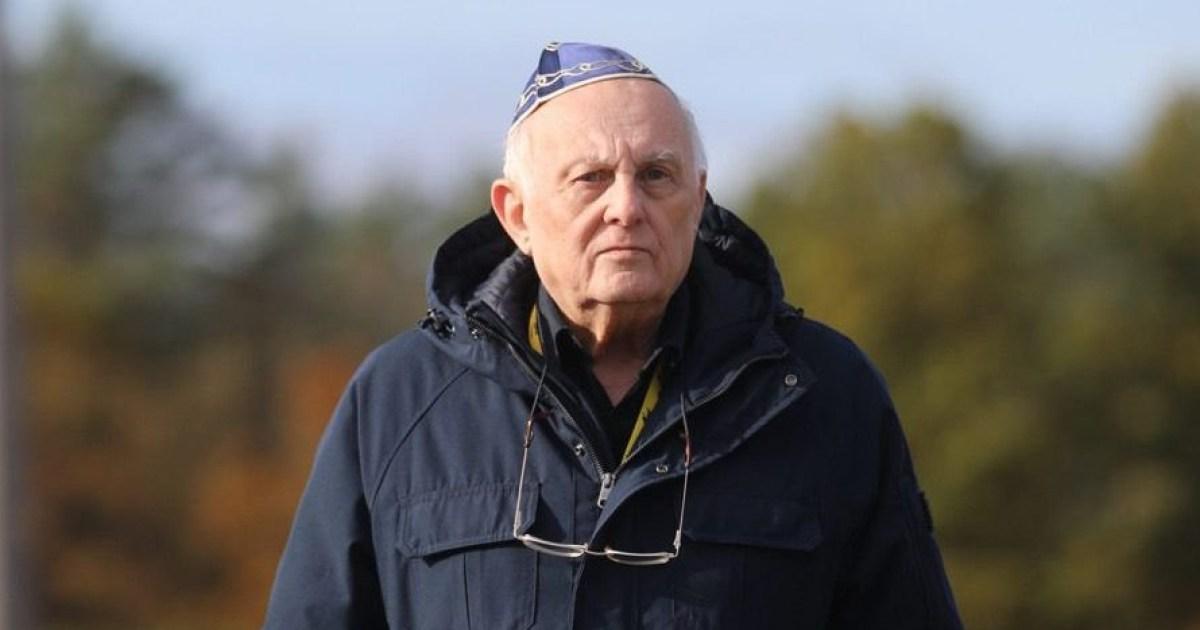
Alfred Garwood, a Holocaust survivor, returned to the Bergen-Belsen concentration camp in 1990 for the first time since his childhood experience there. This visit evoked a powerful emotional response, as he confronted the trauma embedded in his body, even though his mind struggled to recall specific memories. Born in October 1942 in the Przemysl ghetto in southeastern Poland, Garwood’s early life was marked by profound anguish and loss.
At the time of his birth, anti-Jewish sentiment was rampant, and the conditions in the ghetto were dire. His family, which included his sister and approximately 60 relatives, faced imminent extermination. When Garwood’s mother was six months pregnant with him, Gestapo officers conducted a selection process that led to the deaths of several family members, including his grandfather and pregnant aunt, who were sent to the gas chambers at the Belzec death camp.
Holocaust Memorial Day, observed on January 27 annually, commemorates the six million Jewish men, women, and children murdered during the Holocaust. The day also marks the liberation of Auschwitz-Birkenau, the largest Nazi death camp. The Holocaust Memorial Day Trust emphasizes the importance of remembrance in a world still grappling with prejudice and persecution.
Garwood’s family managed to survive largely due to his father’s bravery. His father regularly risked his life to obtain food. In June 1943, a notice in the ghetto called for individuals with allied or neutral ancestry to come forward for possible hostage exchanges. As a British citizen, Garwood’s father was eligible, leading to their transfer to Bergen-Belsen in a cramped cattle truck.
Upon arrival, Garwood and his family were placed in the Sternlager, or star camp. Conditions were horrific, with daily roll calls in freezing temperatures and minimal food rations. By April 1945, over 100,000 individuals had been held at Bergen-Belsen, with an estimated 70,000 dying from disease and starvation. The camp experienced a catastrophic collapse, with bodies piling up and instances of cannibalism reported.
A week before Bergen-Belsen was liberated, Garwood’s family was ordered onto trains bound for Terezin concentration camp. After two weeks of travel, they were intercepted by the Soviet army. Fortunately, Garwood’s father, who spoke Russian, was able to communicate their true identity, leading to their liberation.
At just two and a half years old, Garwood was malnourished and underdeveloped. After a brief recovery in a nearby village, his family returned to Przemysl, only to discover that only two of their 60 relatives had survived the Holocaust. Despite this tragedy, Garwood’s immediate family remained intact, a small miracle amidst the devastation.
With antisemitism rampant in post-war Poland, the family relocated to England in January 1946. Garwood’s childhood was challenging, marked by physical and emotional scars from his early experiences. His mother refrained from discussing the past, further complicating his understanding of their trauma.
Garwood’s life took a significant turn when he met his future wife, Diana Garwood, in the mid-1960s. They married in 1968 and had two daughters, Anna and Catherine. Throughout their marriage, Diana supported Garwood as he pursued a career in medicine. Tragically, Diana was diagnosed with multiple sclerosis, leading to her death in March 1989.
In the wake of this personal loss, Garwood dedicated himself to his work as a general practitioner and focused on understanding childhood trauma. He organized a trip to Bergen-Belsen with his family in 1990, seeking healing for their shared pain.
During his first day at the camp, Garwood felt emotionally numb. However, returning the following morning, he experienced a powerful reaction that opened the floodgates to long-repressed trauma. This journey also fueled his desire to connect with other child survivors, leading to the formation of the Child Survivors Group of Great Britain, where he provided therapy as a psychiatrist and psychotherapist.
Garwood later remarried and had three more children: Aaron, Esther, and Joshua. He feels fortunate to have a loving family and has made several returns to Bergen-Belsen. In recognition of his contributions, he received an MBE and published a biography detailing his experiences.
Garwood emphasizes that while child survivors may have unclear memories, their trauma remains valid. Liberation did not free them from the anguish of their past. Reflecting on his life, Garwood expresses pride in his journey and accomplishments, viewing them as a testament to resilience and a gift he cherishes deeply.

Moyes Faces Referee Controversy Ahead of Everton vs Chelsea Clash

Man Hospitalised After Assault Outside Shop in Sandwell

Fred MacAulay and Ally McCoist Reunite for Special World Cup Show

NoOnes Targets $1 Trillion Gift Card Market to Enhance Crypto Access

Beloved Actor Matt Clark Passes Away at 89, Fans Mourn Loss

Discover How Milk Thistle Supplements Enhance Liver Health

Irish Community Care Celebrates 60 Years of Support in Liverpool

New Affordable Housing Development Planned for Crawley Site

Millions of Parking Tickets Issued Amid Calls for Reform

Claire Tomlinson Bids Farewell to Sky Sports After 27 Years

Iconic 90s TV Show House Hits Market for £1.1 Million

Tributes Flow for Kerry Gentle, Beloved RNLI Volunteer and Artist

Nathan Cleary’s Family Celebrates Engagement Amid Romance Rumors

Milk Bank Urges Mothers to Donate for Premature Babies’ Health

Shoppers Flock to Discounted Neck Pillow on Amazon for Travel Comfort

Alessia Russo Signs Long-Term Deal with Arsenal Ahead of WSL Season

Nuneaton Town FC Advances Plans for New Stadium in Stockingford

Museums Body Critiques EHRC Proposals on Gender Facilities
-
 Lifestyle6 months ago
Claire Tomlinson Bids Farewell to Sky Sports After 27 Years
-
 Entertainment9 months ago
Iconic 90s TV Show House Hits Market for £1.1 Million
-
 Lifestyle6 months ago
Tributes Flow for Kerry Gentle, Beloved RNLI Volunteer and Artist
-
 Sports11 months ago
Nathan Cleary’s Family Celebrates Engagement Amid Romance Rumors
-
 Lifestyle11 months ago
Milk Bank Urges Mothers to Donate for Premature Babies’ Health
-
 Lifestyle11 months ago
Shoppers Flock to Discounted Neck Pillow on Amazon for Travel Comfort
-
 Sports10 months ago
Alessia Russo Signs Long-Term Deal with Arsenal Ahead of WSL Season
-
 Sports8 months ago
Nuneaton Town FC Advances Plans for New Stadium in Stockingford
-
 Politics11 months ago
Museums Body Critiques EHRC Proposals on Gender Facilities
-

 Lifestyle11 months ago
Exploring England’s Cathedrals: A Journey Through History and Architecture
-

 Business11 months ago
Trump Visits Europe: Business, Politics, or Leisure?
-

 Lifestyle11 months ago
Japanese Teen Sorato Shimizu Breaks U18 100m Record in 10 Seconds