
World
Yamagata Celebrates Its Title as Japan’s Ramen Capital

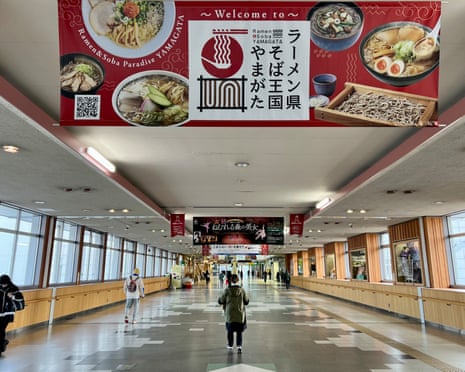
Yamagata, a city in Japan’s northeast, has officially reclaimed its status as the nation’s ramen capital, boasting a remarkable dedication to this beloved noodle dish. An aggressive campaign to outpace its closest competitor, Niigata, has seen Yamagata’s households spend an average of ¥22,389 (approximately £106) on ramen, significantly higher than Niigata’s ¥16,292. The announcement of the 2025 winner by Japan’s Internal Affairs Ministry is eagerly anticipated, with Yamagata’s culinary scene at the forefront of this cultural pride.
The vibrant ramen culture in Yamagata is palpable at establishments like Men Endo, located on a suburban street near schools and apartment blocks. On a chilly afternoon, the restaurant buzzes with a mix of slurps and heartfelt exchanges between diners and chefs. Customers can choose from various options, including classic shoyu ramen in different portion sizes and the unique maji soba, a soupless dish inviting patrons to blend toppings and sauce with their chopsticks.
Osamu Higuchi, assistant manager in Yamagata’s brand strategy section, notes, “People here don’t ask each other where they want to go for dinner, but which ramen restaurant to go to.” This deep-rooted dedication to dining out rather than preparing ramen at home has solidified Yamagata’s identity as a ramen haven.
Yamagata’s rise to ramen prominence follows a period of intense competition. After Niigata unexpectedly captured the title in 2021, Yamagata’s residents rallied to reclaim their pride. Higuchi remarked on the emotional blow of losing the title: “Eating ramen is a big part of daily life here… to be honest it hurt our feelings.”
Despite the joy of culinary victory, experts warn of potential health risks associated with frequent ramen consumption. A recent study conducted by Yamagata University involving nearly 7,000 individuals aged 40 and over revealed that those who consume ramen three or more times a week face a mortality risk 1.52 times higher than those who eat it once or twice weekly. The study, published in the Journal of Nutrition, Health and Aging, emphasized the importance of considering overall lifestyle factors, including salt intake and alcohol consumption.
Higuchi, who has already consumed 225 bowls of ramen this year, acknowledges the challenge of moderation. “I’ve been trying not to drink all of the soup, but it’s very moreish,” he admits, reflecting the deep-rooted connection many locals have with this dish. Households in Yamagata typically spend around ¥2,000 (approximately £9) monthly on ramen, which many consider a reasonable expense given the cultural significance of the dish.
Ramen’s history in Japan dates back to the Meiji era (1868-1912), with its popularity surging in the post-World War II era, when returning soldiers brought back fond memories of the dish from their time in Japanese-occupied China. Ramen critic Rikiya Yamaji highlights how Yamagata has mastered the art of adapting this originally Chinese dish to suit Japanese tastes. “A distinctive feature of Japanese food culture is its ability to ‘localise’ dishes introduced from overseas,” he explains, noting the evolution of ramen into a uniquely Japanese culinary experience.
The roots of Yamagata’s ramen obsession can be traced back to the aftermath of the 1923 Great Kanto Earthquake, which devastated the Tokyo area. Ramen chefs fleeing the destruction shared their skills with the local populace, who embraced the warming comfort of noodles during bitter winters. This tradition of serving ramen to guests further established its place in Japanese culture, creating lifelong fans from childhood.
In response to the loss of its title, ramen shop owners and local officials in Yamagata have united to form an organization aimed at restoring the city’s reputation as Japan’s “ramen kingdom.” Higuchi remains optimistic about the future, asserting, “If our ramen businesses do well, then so does the local economy – farmers and soy sauce manufacturers, even the companies that produce hot towels for restaurants.”
As anticipation builds for the upcoming announcement, Yamagata’s residents are ready to celebrate their culinary heritage, confident that their passion for ramen will secure their place at the top once again. “I don’t think it’s going too far to say that Yamagata is ramen,” Higuchi concludes, encapsulating the spirit of a city united by its love for this iconic dish.

Moyes Faces Referee Controversy Ahead of Everton vs Chelsea Clash

Man Hospitalised After Assault Outside Shop in Sandwell

Fred MacAulay and Ally McCoist Reunite for Special World Cup Show

NoOnes Targets $1 Trillion Gift Card Market to Enhance Crypto Access

Beloved Actor Matt Clark Passes Away at 89, Fans Mourn Loss

Discover How Milk Thistle Supplements Enhance Liver Health

Irish Community Care Celebrates 60 Years of Support in Liverpool

New Affordable Housing Development Planned for Crawley Site

Millions of Parking Tickets Issued Amid Calls for Reform

Claire Tomlinson Bids Farewell to Sky Sports After 27 Years

Iconic 90s TV Show House Hits Market for £1.1 Million

Tributes Flow for Kerry Gentle, Beloved RNLI Volunteer and Artist

Nathan Cleary’s Family Celebrates Engagement Amid Romance Rumors

Milk Bank Urges Mothers to Donate for Premature Babies’ Health

Shoppers Flock to Discounted Neck Pillow on Amazon for Travel Comfort

Alessia Russo Signs Long-Term Deal with Arsenal Ahead of WSL Season

Nuneaton Town FC Advances Plans for New Stadium in Stockingford

Museums Body Critiques EHRC Proposals on Gender Facilities
-
 Lifestyle6 months ago
Claire Tomlinson Bids Farewell to Sky Sports After 27 Years
-
 Entertainment9 months ago
Iconic 90s TV Show House Hits Market for £1.1 Million
-
 Lifestyle7 months ago
Tributes Flow for Kerry Gentle, Beloved RNLI Volunteer and Artist
-
 Sports11 months ago
Nathan Cleary’s Family Celebrates Engagement Amid Romance Rumors
-
 Lifestyle12 months ago
Milk Bank Urges Mothers to Donate for Premature Babies’ Health
-
 Lifestyle11 months ago
Shoppers Flock to Discounted Neck Pillow on Amazon for Travel Comfort
-
 Sports10 months ago
Alessia Russo Signs Long-Term Deal with Arsenal Ahead of WSL Season
-
 Sports8 months ago
Nuneaton Town FC Advances Plans for New Stadium in Stockingford
-
 Politics11 months ago
Museums Body Critiques EHRC Proposals on Gender Facilities
-

 Lifestyle11 months ago
Exploring England’s Cathedrals: A Journey Through History and Architecture
-

 Business11 months ago
Trump Visits Europe: Business, Politics, or Leisure?
-

 Lifestyle11 months ago
Japanese Teen Sorato Shimizu Breaks U18 100m Record in 10 Seconds