
Science
Exploring the Biological and Ethical Challenges of Mars Colonization

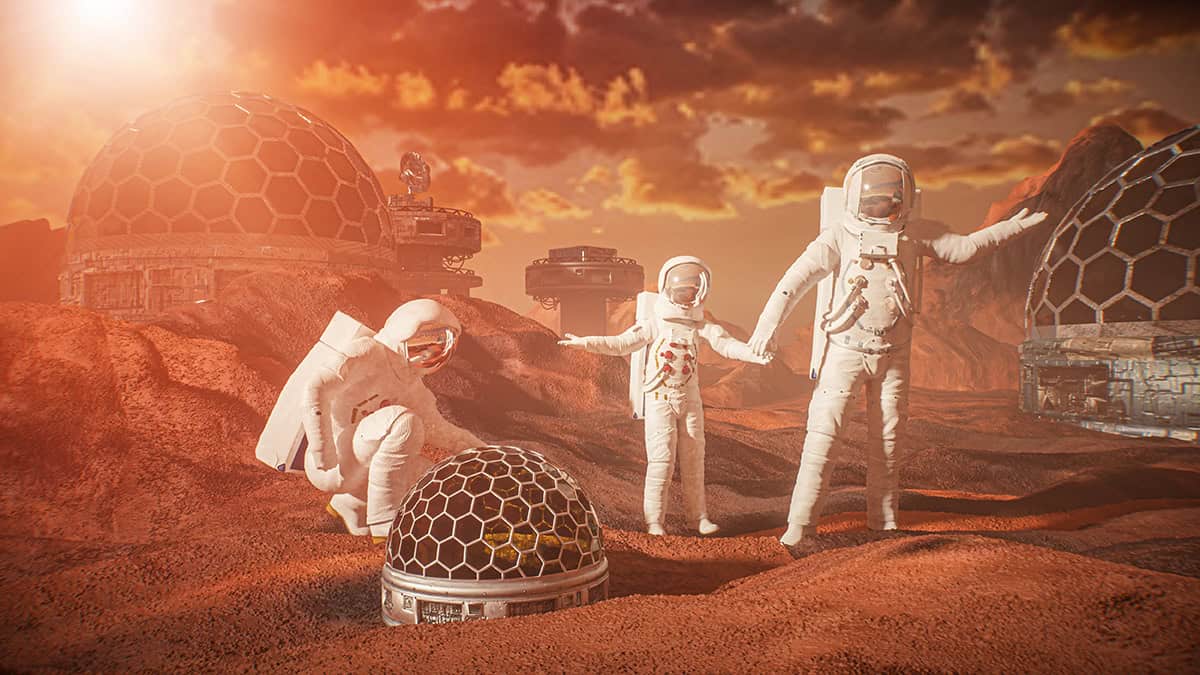
In his insightful book, Becoming Martian: How Living in Space Will Change Our Bodies and Minds, author Scott Solomon examines the profound biological and ethical challenges humanity faces in the quest to colonize Mars. With an increasing focus on space exploration, Solomon’s work brings attention to the complexities of human adaptation to life on the Red Planet.
The concept of sending humans to Mars has evolved significantly over the past decade. What once seemed a distant dream is now a tangible goal, with the first generation potentially destined for the Martian surface already born. The necessary technology to transport humans and sustain their lives on Mars exists, at least theoretically. Yet, Becoming Martian shifts the focus from engineering marvels to the biological ramifications of living in a foreign environment.
Solomon, a research biologist at Rice University, offers a unique perspective not typically found in space exploration literature. His exploration begins with a comprehensive overview of Mars, incorporating elements of mythology, culture, and modern exploration to underscore the fundamental differences between Earth and its neighboring planet. He emphasizes that adapting to life on Mars will pose significant challenges.
The book outlines known health issues associated with space travel, including anaemia, muscle wastage, and bone density loss. These physiological changes will impact human reproduction on Mars, where gravity is approximately one-third that of Earth. Solomon predicts that childbirth will become increasingly complicated, likely necessitating C-sections due to the risks associated with reduced muscle and bone strength.
Moreover, the implications extend beyond individual health. As Solomon notes, the human microbiome will also undergo transformation in the Martian environment, potentially leading to a heightened risk of disease transmission between Earth and Mars inhabitants. He asserts, “More than any other factor, the risk of disease transmission may be the wedge that drives the separation between people on the two planets.” This suggests that Martians may adopt a vegan lifestyle, as the risk of zoonotic diseases could render traditional practices involving animals impractical.
Human Adaptation and Ethical Considerations
The author delves deeper into the psychological and social dimensions of establishing a Martian colony. Solomon argues for the necessity of having teams with odd numbers to facilitate decision-making and maintain social cohesion. He posits that a sustainable colony should consist of between 10,000 and 11,000 individuals to ensure sufficient genetic diversity, protecting against the risks of genetic drift and population decline.
Interestingly, the subject of procreation has not received the attention it deserves in discussions about sustainable colonies. Solomon highlights a past incident where a NASA scientist suggested the need for private, soundproof spaces for couples, only to face backlash that prompted the agency to assure Congress that taxpayer funds were not being allocated to encourage sexual activity among astronauts.
Solomon’s writing is both concise and thoroughly researched, addressing a range of topics from historical health studies during the Apollo missions to contemporary ethical dilemmas in space exploration. He presents conflicting viewpoints without bias, allowing readers to form their own opinions on the complexities of colonizing Mars.
The book culminates in a thought-provoking epilogue where Solomon shares his personal views on the colonization of Mars. He contends that humanity’s biological limitations may ultimately dictate our ability to thrive on another planet. Overcoming these challenges could lead to significant changes in our very nature, raising profound ethical questions about what it means to be human.
Becoming Martian stands out as a compelling addition to the popular science genre, balancing engaging storytelling with deep scientific inquiry. It provides a hopeful yet realistic look at the future of human life on Mars, making it a must-read for anyone interested in the intersection of biology, ethics, and space exploration. Whether contemplating life as a Martian or curious about the feasibility of human reproduction in space, this book is a valuable resource for a wide audience.

Moyes Faces Referee Controversy Ahead of Everton vs Chelsea Clash

Man Hospitalised After Assault Outside Shop in Sandwell

Fred MacAulay and Ally McCoist Reunite for Special World Cup Show

NoOnes Targets $1 Trillion Gift Card Market to Enhance Crypto Access

Beloved Actor Matt Clark Passes Away at 89, Fans Mourn Loss

Discover How Milk Thistle Supplements Enhance Liver Health

Irish Community Care Celebrates 60 Years of Support in Liverpool

New Affordable Housing Development Planned for Crawley Site

Millions of Parking Tickets Issued Amid Calls for Reform

Claire Tomlinson Bids Farewell to Sky Sports After 27 Years

Iconic 90s TV Show House Hits Market for £1.1 Million

Nathan Cleary’s Family Celebrates Engagement Amid Romance Rumors

Tributes Flow for Kerry Gentle, Beloved RNLI Volunteer and Artist

Milk Bank Urges Mothers to Donate for Premature Babies’ Health

Shoppers Flock to Discounted Neck Pillow on Amazon for Travel Comfort

Alessia Russo Signs Long-Term Deal with Arsenal Ahead of WSL Season

Nuneaton Town FC Advances Plans for New Stadium in Stockingford

Exploring England’s Cathedrals: A Journey Through History and Architecture
-
 Lifestyle8 months ago
Claire Tomlinson Bids Farewell to Sky Sports After 27 Years
-
 Entertainment11 months ago
Iconic 90s TV Show House Hits Market for £1.1 Million
-
 Sports1 year ago
Nathan Cleary’s Family Celebrates Engagement Amid Romance Rumors
-
 Lifestyle8 months ago
Tributes Flow for Kerry Gentle, Beloved RNLI Volunteer and Artist
-
 Lifestyle1 year ago
Milk Bank Urges Mothers to Donate for Premature Babies’ Health
-
 Lifestyle1 year ago
Shoppers Flock to Discounted Neck Pillow on Amazon for Travel Comfort
-
 Sports12 months ago
Alessia Russo Signs Long-Term Deal with Arsenal Ahead of WSL Season
-
 Sports9 months ago
Nuneaton Town FC Advances Plans for New Stadium in Stockingford
-
 Lifestyle1 year ago
Exploring England’s Cathedrals: A Journey Through History and Architecture
-

 Politics1 year ago
Museums Body Critiques EHRC Proposals on Gender Facilities
-

 Business1 year ago
Trump Visits Europe: Business, Politics, or Leisure?
-

 Lifestyle1 year ago
Japanese Teen Sorato Shimizu Breaks U18 100m Record in 10 Seconds