
Science
National Trust Launches 10-Year Hedgerow Restoration Project

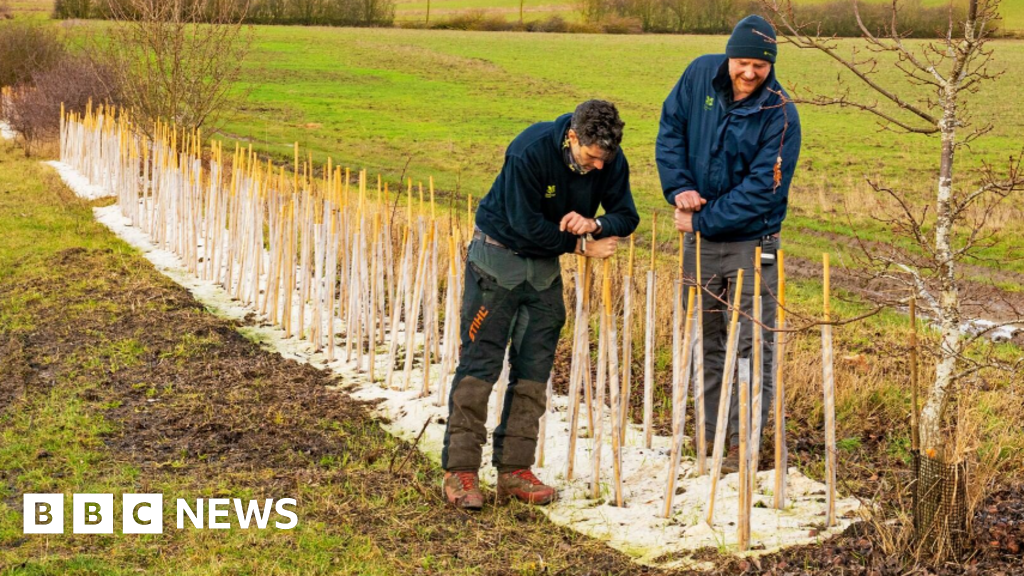
A significant hedgerow restoration initiative has commenced at the National Trust’s estate in Wimpole Hall, Cambridgeshire. This ambitious ten-year programme aims to plant or restore approximately 23 km (14 miles) of hedges across the 1,000-hectare (2,500-acre) estate. The project, designed to enhance wildlife habitats, also supports the operational farm by establishing firebreaks and mitigating soil erosion.
According to Dave Hassall, the farm and countryside manager at Wimpole, the restoration of each hedgerow section contributes to a more interconnected and resilient landscape. “Each section of hedge that we restore makes the whole network bigger and better,” Hassall stated. He emphasized the importance of these efforts in adapting to the changing climate, stating that the project improves “how the landscape functions as a connected system.”
The Wimpole Estate features a grand mansion, extensive parkland, and flourishing gardens, alongside its working farm. As part of this winter’s efforts, staff and volunteers have already planted 30,000 trees and managed 2.3 km (1.4 miles) of existing hedgerows through coppicing and laying techniques. These activities are intended to promote the growth of flowering and fruiting plants, which provide essential food and shelter for various wildlife species.
Hedgerows play a critical role in supporting biodiversity, particularly for red-listed farmland birds such as the corn bunting, yellowhammer, and linnet. They also offer vital winter sustenance for migratory species like fieldfares and redwings. Hassall noted the effectiveness of traditional restoration methods, stating, “Laying and coppicing hedgerows can seem quite extreme, but the hedges quickly grow back bigger and better than before.”
The long-term restoration programme was formulated in 2023, with plans to coppice about 10% of the existing hedges. The initiative includes laying 6.7 km (4.1 miles) of hedgerows and planting 13.8 km (8.6 miles) of new hedgerow, which translates to around 83,000 native trees and shrubs, as reported by the National Trust.
This extensive restoration effort not only aims to bolster the ecological integrity of the estate but also reinforces the National Trust’s commitment to enhancing natural landscapes across the UK. As the project progresses, it is expected to yield significant benefits for both wildlife and the agricultural community at Wimpole Hall.

Moyes Faces Referee Controversy Ahead of Everton vs Chelsea Clash

Man Hospitalised After Assault Outside Shop in Sandwell

Fred MacAulay and Ally McCoist Reunite for Special World Cup Show

NoOnes Targets $1 Trillion Gift Card Market to Enhance Crypto Access

Beloved Actor Matt Clark Passes Away at 89, Fans Mourn Loss

Discover How Milk Thistle Supplements Enhance Liver Health

Irish Community Care Celebrates 60 Years of Support in Liverpool

New Affordable Housing Development Planned for Crawley Site

Millions of Parking Tickets Issued Amid Calls for Reform

Claire Tomlinson Bids Farewell to Sky Sports After 27 Years

Iconic 90s TV Show House Hits Market for £1.1 Million

Tributes Flow for Kerry Gentle, Beloved RNLI Volunteer and Artist

Nathan Cleary’s Family Celebrates Engagement Amid Romance Rumors

Milk Bank Urges Mothers to Donate for Premature Babies’ Health

Shoppers Flock to Discounted Neck Pillow on Amazon for Travel Comfort

Alessia Russo Signs Long-Term Deal with Arsenal Ahead of WSL Season

Nuneaton Town FC Advances Plans for New Stadium in Stockingford

Museums Body Critiques EHRC Proposals on Gender Facilities
-
 Lifestyle7 months ago
Claire Tomlinson Bids Farewell to Sky Sports After 27 Years
-
 Entertainment10 months ago
Iconic 90s TV Show House Hits Market for £1.1 Million
-
 Lifestyle7 months ago
Tributes Flow for Kerry Gentle, Beloved RNLI Volunteer and Artist
-
 Sports12 months ago
Nathan Cleary’s Family Celebrates Engagement Amid Romance Rumors
-
 Lifestyle12 months ago
Milk Bank Urges Mothers to Donate for Premature Babies’ Health
-
 Lifestyle12 months ago
Shoppers Flock to Discounted Neck Pillow on Amazon for Travel Comfort
-
 Sports10 months ago
Alessia Russo Signs Long-Term Deal with Arsenal Ahead of WSL Season
-
 Sports8 months ago
Nuneaton Town FC Advances Plans for New Stadium in Stockingford
-
 Politics12 months ago
Museums Body Critiques EHRC Proposals on Gender Facilities
-

 Lifestyle12 months ago
Exploring England’s Cathedrals: A Journey Through History and Architecture
-

 Business12 months ago
Trump Visits Europe: Business, Politics, or Leisure?
-

 Lifestyle12 months ago
Japanese Teen Sorato Shimizu Breaks U18 100m Record in 10 Seconds